LinkedinTwitterThe DetailsConnectBlog Facebook Meet the TherapistHome For Writers
Showing posts with label Trauma. Show all posts

Friday, April 4, 2014

Dear Jeannie: Dealing with Abandonment

Dear Jeannie, 

Barrow is a young knight in a country ravaged by a never-ending war. His father died when Barrow was a baby, and Barrow idolizes his cousin Aelor, who is quite rebellious. When Aelor betrays his family and country and joins the antagonists in the war, Barrow is crushed and refuses to look up to anyone after this. He chooses instead to find his own way and be his own leader, which causes conflict between him and my MC, the leader of the group. Is it realistic that Barrow shuns role models because of this betrayal? Throughout the course of the story, he is always trying to prove himself to his father and Aelor, even though neither of them is around to see him. Does this happen to people who have lost someone they admire?

Hazy in Hutto 


Dear Hazy,

It's absolutely feasible that Barrow would resist allowing someone to be a role model for him. He essentially has PTSD to be so affected, but it's feasible. When the human brain can't shut off the emotional connection to certain events (like the betrayal of Aelor crossing sides), it fears repeated exposure to similar events. If Barrow can just avoid that at any costs, he'll be ok. I can more readily see Barrow trying to prove himself to his deceased father rather than Aelor. Once crossed or betrayed, especially at the beginning (you didn't mention how much time passed), Barrow would shun anything to do with Aelor, even mentally (such as proving himself). He'd react negatively to even the suggestion. But perhaps after time passes, he might want to prove himself as better than Aelor, a more stand-up guy. Deep-seated abandonment issues can come out this way...but a father's death when Barrow was a baby is also a form of abandonment. So essentially he's been abandoned by the two men who meant the most to him. A very sad state for our poor Barrow! Definitely in need of therapy. Let me know if I can help further. Thanks for writing in!


Dear Jeannie,

Roma is special, and she knows it. The only heir to a family with odd 'powers' they don't share with outsiders, she doesn't so much rely on her gifts and training as she does expect family and friends to spoil and shelter her. When her dependence on the protection and favor of others gets her into hot water, she lets her best friend rescue her. By marrying her. She's not too young to marry, but she's definitely immature. And their rushed wedding now makes her a wife in an unfamiliar territory. She's not welcome, or wanted, by her husband's family. She wants to hold on to the way she's used to thinking about things--not taking responsibility and letting her family's reputation carry her--but I have got to make an adult out of her. She's not making friends with her new relatives, and she's not engaging in social and civic duties that might thaw her in-laws some. What will it take for her to put aside her childhood and accept her place as a woman? Also, she faces a lot of prejudice from her husband's family. What might warm them to her?

Thanks,
Shell-Shocked in Charlotte


Dear Shell-Shocked,

Nothing is more sobering than being protected in a cushy way and having that stripped from you. The more independent activities her husband's family expects of her to do, the more she'll have to learn (trial-by-fire sort of way). A whole lot of growing up, though, happens when people are faced with calamity. You could see how the youth in America grew up after 9-11. I'd think that if the entire family faced some sort of ordeal together, then they'd be more likely to grow closer. If you could figure out how Roma could use her powers to help the family in some way, even better. When she engages in her childish ways, you might have her win over another married girl around her age, and have her slowly be introduced to the more subdued facts of life, and even feel compassion for the other girl. She'd more readily learn from a peer at her age than from an adult, so you could work this angle. Best of luck!


Got Questions?

I might have some answers! Leave your question anonymously in the comment section below, using monikers like Sleepless in Seattle. I'll post my responses in future Dear Jeannie columns. Since the queue is getting longer, I'll post a mid-week Dear Jeannie column next week!

Friday, January 3, 2014

Dear Jeannie: Dressing Drab and Losing a Child

Dear Jeannie,

My heroine is the oldest of five, a member of the highest class of her society, was abused by her father as a child. Everything in her life is about protecting her sisters, and she's very bitter about men and her mother's obliviousness to what happened. Her father always told them little girls should never dress in colors because they attracted unwanted attention, which was immediately followed by said unwanted attention. As a kid her wardrobe was gray, brown, black, and very drab. As an adult she wears bright colors to make sure she isn't lost in a crowd and easy to dismiss if some man makes any kind of advance. With her mother's death she's now in the public eye as a High Lady, in a science fiction universe. She's torn between wanting to be left alone and not wanting to get lost in a crowd and becoming another statistic. I want to make sure her color choices make sense on a psychological level.

Lost in the Future


Dear Lost,

What happens between her childhood and adulthood will answer this question. If she does wear the bright colors, then she must have gone through a rebellious phase or an "I don't care" type phase. She would have to change her basic thinking about colors, and maybe come to the conclusion that brighter colors equals more protection (perhaps she saw this in action?). You don't specify when or how her mother dies, but an event such as that (especially if she was estranged with her) could prompt such drastic changes in her wardrobe. But this would need to be carefully thought out, because childhood trauma of abuse (I assume sexual in nature?) would be intricately tied to the need to dress drably an blend in. More info is needed about how she became a High Lady (and what that even is) for this to be fully fleshed out. Feel free to respond in the comment section below...but she sounds fascinating!


Dear Jeannie,

Reva has grown up in a demoralized martial-law state (following a failed coup). Her parents were big supporters of the put-down rebels, and she's grown up being fed a steady diet of bitter anger and frustration. Trouble is, she's fallen in love with (and married) a state sympathizer. He's fun, kind, solid--hard to resist. In an effort to start fresh, they've moved to a new frontier. My question is about the dynamics of their marriage. They had one child, who died right before the move, and Reva can't have any more children. What kind of grief/trauma is she going to face, especially cut off from the family and friends she grew up with? How is she going to react to other children they encounter in their new life?

Starting Over in Statesville


Dear Starting Over,

That is not where I thought you were going with this question (I thought it'd focus on the marriage itself between two people with opposite philosophies). Having a child die is considered one of the most traumatic experiences an adult can go through. It's unnatural in the life scheme of things, and will stay with her forever, made doubly traumatic by not being able to have any more children. She will experience grief, of course, and this can look as different as each individual is. I imagine she'd be more depressed without any of her regular support system around. She would have one of two prominent reactions to other children, which can and will change over time. 1) She can isolate away from them, not wanting to be reminded of her loss (which might be more likely in the beginning), or 2) She will want to be around children in any way possible, to take what joy she can have in them (more likely later on, I'd think). Best of luck writing her!


Got Questions?

Maybe I've got answers. Leave your question anonymously in the comment section below, using monikers like Sleepless in Seattle. I'll post my answers in future Dear Jeannie columns.

Hope your Christmas was wonderful, and that you're off too a good start in the new year! :)

Friday, October 11, 2013

Dear Jeannie: Sci-Fi Exclusive


Dear Jeannie,

Dahlia has spent her young life focused on escaping the mining outpost where her family lives so she can get an education and spend more time with fewer aliens (sci-fi alert). She was taken over by a parasite who hijacks her body and dominates her words and actions, even to the point of forcing her to commit crimes. She is eventually rescued from her attacker/parasite, but she spends the next several books coping with the rape-like trauma. I'm concerned about her relationships post-rescue. She formed some friendships while the entity had her, and I'm not sure how she's going to interact with them in the aftermath. Distancing herself? Codependency? Promiscuity and/or social marathons (this would be extremely out of character for the old Dahlia)?

Whiplashed in Space


Dear Whiplashed,

This makes me think of The Host somewhat. Having your body taken over by something else would probably have some traumatic symptomology not unlike PTSD, yet Stephenie Meyer doesn't address this at all. Her heroine is just peachy when the alien is taken out. But for your book, the biggest question is should she be fully aware or not when she's "not herself." If she's not fully aware (i.e., dissociated), then she wouldn't even know who the friends are she made while the parasite had her. I think there's more tension if she is aware, because then she'll have to deal with more angst afterward, having been privy to everything she was "forced" to do. I think she'd stay away from these friends, given that the Dahlia they knew isn't who she is. Even more so, they would remind her of this traumatic period in her life that she's trying to move on from. Not sure how to answer your promiscuity question...was she promiscuous with the friends? At any rate, people who have experienced trauma generally try to avoid anything that could connect them with that trauma. Hope this helps!


Dear Jeannie, 

Conner and Sierra are from the same world. Conner was sent to Earth as a baby by his father in an effort to save his life. He grew up as an orphan and has always felt like an outcast, especially when he develops powers he can't control. Sierra is developing her skills as a Light Mage in Conner's old world. She's told she needs to summon a Guardian Spirit to help protect and defend her. Inexperienced, she inadvertently summons Conner from Earth. Since Conner is used to being on his own and not growing close to others (mainly from fear of abandonment and being used by those he came to trust), how would Conner react to suddenly being thrust into this new world where he is magically bound to protect this girl he doesn’t know? And would it make sense that Conner grows close to Sierra and comes to realize he loves her, or would he be distant to her for fear of her abandoning or using him?

Muddled in Missouri

Dear Muddled,

I like this plot line...reminiscent of Emma's story in Once Upon A Time. Conner has grown up extremely distrustful of others. Most system kids are, whether orphaned or fostered. Adults are synonymous with unsafe and untrustworthy. The only thing Sierra would have going for her is that she's his age. You didn't mention whether Sierra's father was in the picture, but it's also in her favor (and by that, I mean Conner won't be turned off by her) that she's somewhat orphaned as well. This will make them kindred spirits underneath all the awkwardness and confusion about mages summoning mages and being bound to protect her, something no one did for Conner (that he can remember). He's going to be resistant, resentful, and fearful, though he'd never admit it to anyone. But yes, love can develop amidst the most extreme circumstances, so that shouldn't be a problem. But let them get to it slowly. Thanks for writing in!


GOT QUESTIONS?

Post them anonymously below using monikers like Sleepless in Seattle, and I'll post my answers in next week's column. The queue is EMPTY!

And if you haven't taken my writer's survey about whether your partner is supportive of your writing, please do so now! I'm closing in on 100 responders!

Friday, October 4, 2013

Dear Jeannie: Adverse Childhood Experiences and Alopecia (Hair Loss)

Dear Jeannie,
 

I'm writing about an over-sized family of kids orphaned in contemporary America. After several years in the foster care system (some good experiences, some bad), these siblings are finally under one roof again. I'm thinking they'll have anger management issues, identity conflicts (for the elementary/middle school kids), and serious power/authority struggles (for the older teenagers). Some are in therapy and responding well, but a couple of the boys don't respond well to counselors or foster parents. What am I leaving out, and what can be done to help these kids as they grow up?
 

Wigged Out in Writersville 


Dear Wigged Out,

Well done! What you're describing, several children, separated from each other for years, then reunited under one roof...this is called an adverse childhood experience (ACE). Research has been done indicating that the more ACEs a child has, layered on top of each other or ongoing, the worse the outcomes will be. [Here's a handy quiz you can download to determine a child's ACE score, based on this research.] You can also download this informative flyer that gives the research results in easy-to-understand language. On that flyer, you'll see all manner of additional problems you may or may not want to give your orphans. Research also indicates that the if you want these children to get better, you need to provide them healing relationships that are safe and secure. Here's one of my quotes in my office:
“The more healthy relationships a child has, the more likely he will be to recover from trauma and thrive. Relationships are the agents of change and the most powerful therapy is human love.”
Dr. Bruce Perry
The Boy Who Was Raised as a Dog
Hope this helps!


Dear Jeannie,
 

Layla was an only child who struggled with her weight for most of her life. Her mother was a domineering woman who told her how to dress, how to speak, whom to date and so on. Her mother was the one who demanded she become a plus-size model, because ‘at least she has a pretty face,’ in spite of the fact that Layla dreamed of opening her own soap making business. She became quite successful as a model, but her make-up and fancy clothes were masks to hide how insecure she was about her looks and weight. Much to Layla and her mother’s surprise, she was able to garner the interest of a rich, good looking (but very superficial) man. Despite her doubts and under the strong urging of her mother, she accepted his marriage proposal. Later, she is diagnosed with alopecia (hair loss), and her fiancé went MIA as a result. How will this effect her state of mind, emotions about dating again, and feelings about her mother and her fiancé, should he come crawling back to her?

Sincerely,
Writer in the Tropics


Dear Writer in the Tropics,

When a woman's fiancé leave her due to a physical malady of some kind (in her case, alopecia), the effect on her self-esteem would be traumatic. The only circumstance I could think of her ever taking him back is if her self-esteem is so low that she thinks she'll never "land" anyone else better or anyone else at all. The idea of a second chance after so harsh a blow seems ludicrous to someone on the outside looking in, so it would be hard to suspend reader disbelief if she did contemplate getting back with him. She'll be self-conscious about her hair, for sure, and short of therapy and major ego strokes from people she knows and loves, she would not be able to hold her head up high enough to model that "bald is beautiful too." Since she wants to go into a different business anyway, I'd believe it more likely that she squirrels away with her soap making. I would imagine it much more likely for her to be cajoled into a date by feeling an obligation to do so (i.e., he did something for her and asked her to return the favor by being his date somewhere), or making good on some word she gave him (perhaps before the diagnosis). Thanks for writing in!

                                             Got questions of your own?  

I might have some answers. Leave your questions in the comment section below, anonymously, by using monikers like Sleepless in Seattle. I'll post answers in future Dear Jeannie columns!

If you're a writer and haven't taken my survey on whether you have a supportive partner or not, please click here!

Friday, September 13, 2013

Dear Jeannie: Emotional Trauma and Dissociation


Dear Jeannie,

Callie was raised by humans in San Francisco during the California gold rush. Callie's father spent his days panning for gold and her mother was a very cautious laundry woman who spent a lot of time teaching her children the basics of self defense. Callie's family (including her three younger brothers) were killed by gunslingers when she was six. She, in a moment of terrified panic, killed said gunslingers with a hatchet, leaving Callie the only survivor. She was informally adopted by Alfred and is moved to New York City, where she learned that she had an older brother in Texas. Callie and her brother eventually got in touch through letters and became good friends before the outbreak of the Civil War in 1861. Her brother  joined the Confederate army and Callie was ordered to enlist in the Union army alongside Alfred no matter what she had to do. Despite this, Callie and her brother make an effort to keep writing to each other throughout the war. What kind of emotional baggage might she be carrying?

Sincerely,
Stressing in the States


Dear Stressing,

By far the most traumatic thing mentioned is that her family was killed by gunslingers and that she then killed them with a hatchet. Hel-lo, Lizzie Borden. Major trauma. And at 6 years old, too. Very impressionable age. She might well have to mentally repress this in order to continue to function. I can only imagine the amount of blood she saw. So insert her into a war, and this could bring flashbacks. Also learning that she still has family left, even if she never has met her brother...this could be something she latches on to...some semblance of belonging, however meager or thin. Anyway...hope this helps. Thanks for writing in.


Dear Jeannie,

I have some further questions about Dissociative Disorders. Can my character Charlie be aware of other identities he has, but not know them other than what the doctors have observed and reported? Then, his true identity - Brian, married to Susan with four daughters across the Atlantic - is just buried so deep that it hasn't found a trigger? As an undercover he'd want to bury it, right? What about Mary/Susan? Is it possible she could remember her actual childhood, but be stuck in the adult cover of childless Mary and Nick, and not remember Brian's name, or their daughters?

Sincerely,
Splitting Hairs in Alaska 


Dear Splitting Hairs,

People's experience with dissociation is as varied as people are. I've worked with several individuals over the years, and they all have different stories. One woman had other personalities within her that she was unaware of until she would read journal entries she wrote while in that altered state (incidentally, in a completely different penmanship). One woman knew exactly how many alters she had, and they communicated "within" her, for lack of better words. People who have split personalities (as it used to be called and I find actually rather an apt description) may well remember their childhood as in tact (meaning all the personalities have the same memories of the same childhood). You're adding an additional fictional later of the undercover agent storyline, which would further complicate things in a reader's mind, I feel sure (b/c I'm a bit fuzzy on it), but it also opens up possibilities to you that may well could suspend reader disbelief. I wish you the best on this intriguing idea!


Got questions of your own? Leave them in the comment section, using monikers like Sleepless in Seattle, and I will post my answers in next week's column.

Friday, August 2, 2013

Dear Jeannie: Oedipus Complex and Trauma Regression

Dear Jeannie, 

In a medieval fantasy story, my protag is the second-in-line to take over a noble house. His Father, the Lord, and his mother pile unreasonable expectations on him to be the perfect successor. Since divorcing himself from those expectations and trying to find a true path for himself (something he has yet to find), his parents have treated him coldly. During this time, he has been having frequent sexual relations with both male and female prostitutes (despite being entirely heterosexual), selected due to their resemblance to his parents. Later in the story, he gets extremely drunk and attempts to seduce his Mother with the hope of sleeping with her. Could this be explained as an unhealthy desire for their praise, love and affection, or is it likely there is something else going on? What would a psychologist conclude about him?

Unknown in the UK


Dear Unknown,

Welcome back again. :)

Freud would call this a classic Oedipus Complex. In so striving to be like his father (relate to him, identify with him as a male), he is attracted to his mother, who obviously finds his father attractive, or she wouldn't have had sex with him and procreated. (Or so the theory goes.) You could explain his coming on to his mother by the fact that he got extremely drunk. However, since you have him purposefully selecting prostitutes because they "resemble his parents," this adds a psychological element to the story for sure. It's also pretty extreme for a heterosexual to engage in homosexuality without a very good reason. I'd want to know what does sleeping with the men (and the women) do for him? Is it a sense of power over [those who look like] his parents? Is this his way of being in control? I'd probably go that route rather than the love and affection route, but the answer is found in how he feels about his actions.

A therapist would conclude that he has daddy and mommy issues. :)


Dear Jeannie,

Why is it that some people never grow up, emotionally, or psychologically? I mean, we all know middle aged, older, and even elderly men and women who act like spoiled kids, and feel entitled to whatever they want--but what is it that lets them stop developing? They lose their tempers if they have to wait in lines, you can't get them to stay for a doctor's appointment because they won't sit that long in the waiting room; and everything is always somebody else's fault. I get how that part looks, I've seen it. What I don't get is what lets an adult keep that child's mindset.

Trying to Remember What It Felt Like to Be Two


Dear Trying to Remember,

In a nutshell, trauma can arrest a person's development, keeping them stunted and stuck with the mindset of a much younger person. The adult population I work with have many of the same traits as their children...but sometimes it's worse. Adults are more savvy, manipulative, and coercive. Research is showing that trauma affects the way a person's brain develops, and if the trauma occurs prenatally or during the first five years, the damage done to the brain is significant. The adult is not aware that they are "stuck," of course. They might have fleeting moments of clarity when they look at other adults and wonder why they haven't finished high school or, more likely, why these other adults have had such an "easy ride" (lack of seeing their responsibility in the matter). It's tough, but treatment essentially harkens them back to their childhood, to try to get them unstuck. Let them be a kid without fear of repercussion, and introduce them to adult concepts (b/c they probably never were taken care of very well by their parents)...and so on. Vicious cycle, that trauma.

Best of luck to you!

Got Questions?
 
Post them anonymously below, using monikers like Sleepless in Seattle.
I'll get to them in future Dear Jeannie columns.

Wednesday, May 8, 2013

Character Clinic: PTSD in Action

I've got Nathan, Earl of Tavishton, on my couch today. He's had quite the upbringing, with an inconstant tart for a mother and a father perhaps with more foolishness than sense, who gave up his life in a duel for her dubious honor. Nathan witnessed his father's gun backfire, which severed the elder Earl's hand, and watched from the top of a carriage as his father's opponent murdered him. Nathan is no rake internally, though he tries hard not to look like he's not trying to hard. (You Regency folk will get that, I'm sure.) He tries to look like a wastrel to punish his mother for his father's death.

Nathan's author, Robin, wants to know: Is having a fear or guns so bad that it makes Nathan freeze normal? How difficult should he find forgiving his mother? Is there something that must occur for that forgiveness? Would the guilt of not stopping his father be strong enough motivation to make Nathan go to such an extreme length as to steal from his best friend to keep what little connection with his father he has?

This is a perfect example of a character who has a ton going on and would really benefit from a full analysis. However, I'll do my best with this mini-assessment to make it worthwhile, I hope.

First and foremost, a reaction of freezing in place when faced with a gun or "flintlocks" as they were is totally reasonable. That would be a trauma reaction to an inanimate object he had previously witnesses carnage as a result of its use. In particular, watching his father's hand explode would be highly traumatizing, and no doubt would result in a complete revulsion of a gun.

What would this look like? Not wanting to touch one, carry one, be around them, have them in his house. He would likely show hypervigilance and paranoia when other people carry them or shoot them in close proximity to him. He might have nightmares of the event, or even reenactments of the trauma during the day (i.e., visualizing it happen when around open fields with carriages). You can safely say he'd never set foot in a duel field ever again. Very realistic...and likely not something he would get over for a long time, if ever.

As for forgiving his mother...it would be tricky, but if you could write it well, I saw a great character arc for him to not only forgive his mother, but also his father for his "stupidity" for putting his life on the line. What if Nathan had someone for whom he would protect her honor...no matter what? If Nathan could somehow be put in the shoes of his father...who clearly loved his flawed mother, and was willing to die for her. Having him learn the lesson that no one is perfect, and that yet people are still worthy of sacrifice. I think he could do it.

It was rather unclear from the intake form that Nathan really suffers from guilt of not stopping his father (from the duel, I presume). However, if he does indeed feel guilt at sitting atop the carriage and not stopping the duel, I would think it would have the opposite effect on him wanting to act like a wastrel. Punishing his mother by acting like a dandy would hardly honor his father's name. Don't have time to go deeper here, but I hope you get what I mean.

Thanks for writing in...I realize you wrote in many, many months ago when I was slammed with mini-assessments. Thanks for your patience, Robin!

Let's Analyze

If you felt guilty for the death of someone, how would you try to honor their memory? By being the best person you could be and assuming their "title" (i.e., mantle, position, etc), or by punishing the person you truly felt responsible for the death?

Monday, March 18, 2013

A New Question to Ask Your Characters

There's a new push in the mental health field, and I'm proud to say that California truly is on the cutting edge of this research. It's being called trauma-focused perspective or having a "trauma lens" with regards to treatment and diagnosis.

With the new Diagnostic and Statistical Manual, 5th Edition, coming out in the next month or so, changes are being made to how trauma is defined, determined, and dealt with.

It's becoming very clear that most people have some sort of trauma in their background. It's not so much a question of IF the person has trauma, but HOW MUCH trauma they have. Therapists who do not assess for trauma are doing their clients an injustice.

So how should this inform your writing?

The medical model influences the way we think about a lot of things. Instead of looking at positives and strengths, we often focus on areas of weakness or symptoms. As a result, a typical question to our characters (and to other people) is couched this way:

What is wrong with you?

There is an assumption when reading (and writing) a book that something is wrong with the characters...something that needs to be fixed before the end of the book.

Character's can't remain static, they have to change. We use the character flaw to inform our writing and the character arc process, much like a therapist uses a diagnosis to inform treatment. Flaws need to be "healed" or at the very least improved upon by novel's end.

But I'd like to propose another question that you should ask your character, based on the field of psychology and the trauma lens that we need to view people (and characters!) through:

What has happened to you?

This is a huge shift from thinking about symptoms (flaws, if you will) and thinking about story. No one develops a flaw in isolation or out of the blue. Their environment, family, friends, etc., all play a role in shaping that character, giving them a reason to do what they do, or think the way they do.

What this question is really asking for is BACKSTORY.

Having a solid understanding of your character's background, their upbringing, their family dynamics, whether or not they had an attachment to caregivers, their social supports...all of this factors into the development of their flaw, which is where your story starts, in medias res (in the middle of things), before their world gets rocked by the call to action.

A character's flaw does not define them. Their backstory gives context to the flaw's development. (Click to tweet!)

So take time to understand your character's backstory. It'll be the skeleton on which you hang the muscles and skin of your story. Just like a real skeleton, the readers will never see it, but it will govern and guide the story start to finish.

Let's Analyze

What do you think about asking the new question of "What happened to you?" instead of "What's wrong with you?" How might this impact your understanding of characterization...and people in general?

Tuesday, December 20, 2011

Holidays and Trauma: Making Connections

Holidays can be a really tough time for people who don't have mental health challenges, much less those who do. In fact, the holidays themselves often bring about trauma for many people.

Christmas in particular is one of the toughest holidays for some to soldier through (pun sort of intended). Perhaps because it's a holiday where expected family interaction is coupled with presents, unlike Thanksgiving. Whatever the reason, Christmas can actually usher in a reexperience of pain for people with Post-Traumatic Stress Disorder.

These individuals might feel like Ebeneezer Scrooge instead of Santa's Little Helper. Holidays can reinforce the feeling of being "outside and looking in," like you're watching a movie filled with happy, smiling people while you're stomach is twisted into knots as past events swirl around in your head instead of visions of sugar plums.

Of course, this further isolates the trauma survivor. A typical reaction of family or friends who don't "get" trauma might be, "What's wrong with you?" Even worse, trauma survivors might not even be able to verbalize what's wrong with them. Instead, they feel humiliated and wish they hadn't shown up at the holiday event or party.

For those of you who have family members in your life (or characters!) who have PTSD, be cognizant of how you offer to include them, as well as sensitive to even subtle cues from the person that they aren't comfortable. Survivors may need to create new rituals to help in their healing, and it's important for people in their life to support this by being open to change as needed.

Let's analyze: What have been your traumatic experiences over the holidays, either your own or someone you know? What helped to overcome those feelings?

Tuesday, September 20, 2011

Character Clinic: Tanner Sheppard

Today's character on the couch is Tanner Sheppard, the brainchild of author L. Blankenship. Tanner resides in a science fiction book as an ex-pirate (think spaceships instead of ships). He's killed, betrayed, and slaved people. He was sentenced to fifteen years of inpatient therapy under new PTSD treatment modalities (re-recording the memories and taking the stress out of them so they aren't "panic on tap"), but his friend Maggie broke him out after a year.

Louise wants to know: I’ve done a little reading and I got some helpful feedback from an abuse survivor, but when it comes down to it I have zero experience with the kind of sustained, violent (maybe sexual) abuse Tanner went through… I want to represent it honestly, make his progress an honest fight and not a miraculous recovery. So I’m looking for thoughts on what he’s like when he’s still new to wrestling with the idea of being worth something, of being different. And what sort of steps he may be able to take on his own.

Tanner -

Depending on your age when you had the brunt of the traumatic beatings, whether just physical or sexual, that could have some impact on how you present with traumatic symptoms in therapy and in the present day. The tender psyche of a young child going through those types of things can split into multiple personas as a way to protect the main identity. Later, something can trigger these personas to show up (such as the murder of your dad). This is just FYI.

But as to having a particular formula to follow for abuse victims--that'd be impossible. Based on my experience with clients who suffer from sustained violence or trauma, it's a constant battle, one they never "arrive" from. They can be doing really well and then one memory triggers them into their panicked state and damage control is needed to get them back on track.

For Tanner to even contemplate that he's worth something, he'll have to have someone show him through actions that he is. Whether this is Maggie or one of his sisters or some other mentor-type person...they will have to be patient and consistent with him to help him help himself. If they believe it in, then he will have a less-hard time believing in himself (notice I didn't say easier time). It's an uphill battle.

I'm not familiar with the re-recordings of PTSD memories...unless you mean working with trauma survivors using EMDR (eye movement desensitization and reprocessing). This theory is controversial, but some swear by it. I've never used it myself, as it requires specialized training in just that theory. It has similarities with exposure therapy (essentially repeatedly exposing a client to what they fear until they become less sensitized to it) and cognitive-behavioral therapy. The idea is that by reprocessing an upsetting emotion/event while bilaterally stimulating the brain (tapping meridians on both sides of the body on the chest, head, face, etc) moves the upsetting emotion that has been stored in the right side of the brain into the left side, where they are processed differently...in theory, taking the disturbing feeling away from the memory, which doesn't go away, but remains, just processed differently. (Hopefully this makes sense...here's a video that demonstrates it.)

Hope that this helps some. I'll gladly welcome additional questions in the comments section. if you want to take him deeper, click here.

For a chance to win Julie Lessman's newest release, A Heart Revealed, click here!

Monday, July 18, 2011

Character Clinic: Frankie Gilchrist

Today's assessment is for Josie. She's writing a modern thriller-type book featuring 26-year-old Frankie, a telepath who keeps to herself as much as possible. Her father was violent with mob connections. He murdered her mother when Frankie was 9 and locked Frankie in the hotel room with her mother's dead body for 3 days before Frankie managed to escape. She can erase people's memory with a touch of her hand, but she isn't often with other people to even worry about it.

Josie wants to know: How can Frankie get a life? A real one that involves other people? How can she overcome her fear and her past and just be happy?

Frankie -

The kind of trauma that you suffered at the tender age of 9 isn't the kind one is likely to get over soon, if ever. (Not to be fatalist here, but realistic.) You'll carry it with you, but that doesn't necessarily have to be a bad thing.

Since you're sorta searching for a goal, I've got one to throw out. Just a thought, but there are so many wounded healers out there, people who go into career fields simply because of their own pain. You could be a social worker, determined to help orphaned children who remind you so much of yourself. Children who've come from homes of violence or neglect.

It's be interesting to see your struggle in this type work because you'd have to weight the benefit of your talent of erasing memories (which might be seen as a courtesy to extend these traumatized souls) against the moral implications.  In fact, I could see this as a huge decision for you to make later in the book...and coming to grips with your own past and the fact no one was around to erase it for you and that what you went through made you into the person you are today might help you make the right decision.

I also think that this type goal would give you lots of internal angst, because social workers are by their very nature social. They have to be around people to help them. But perhaps since you'd work mainly with kids, you wouldn't feel as much anxiety with them. But dealing with other professionals might be challenging. But what if one of them were a super cute lawyer or police officer? That might make it a bit more palatable to face your fear...

Speaking of, I want to ask you why you're so scared of other people. Your father, I understand. He's out there somewhere, and the more you show your face or are noticed, the more likely he might be to make a reappearance. But what has another soul done to you that has made you scared of them? If you live off your fear that they will find out about your telepathy and use you in experimentation, that would only apply to a very few select individuals, perhaps in a science field. See where I'm going? I'd need more info as a reader for this to really ring true.

I hope that you've enjoyed your time on the couch today. If you want to go deeper, flesh out your fear of others and find healing from your trauma, purchase a full assessment from me and get another spin on the couch!

Thursday, July 14, 2011

Character Clinic: Keisha Campbell

M.J. Kane is writing a multicultural chick-lit-style romance about 26-year-old Keisha Campbell, a driven black woman whose dreams of being a D.V.M. and moves 3000 miles cross-country to attend UCLA to follow that dream. She decides to enter a relationship with Brian, a white guy. Brian's roommate (who is also the boyfriend of Keisha's best friend and roommate) rapes Keisha and then uses her fear of rejection from her family/peers to force her to keep the rape a secret. 

M.J. wants to know: Since the key theme to this story is dealing with the effects of rape, I wanted my character to do the opposite of what most rape victims do. She continues to have a sexual relationship, go to school, and work. She's more afraid of what will happen to those around her who she loves than seeing her abuser brought to justice. How can my portrayal be as realistic as possible so that readers--who may or may not be dealing with the same thing--can honestly relate to her trying to deal with the biggest secret she's ever had alone?

Keisha -

I can't imagine the kind of hurt, anger, and frustration you must have boiling just underneath the surface. To be betrayed by your boyfriend's roommate in such an intimate way and to feel powerless to do anything about it--this must be torture.

Yet, if you're more afraid of how the people around you will receive the news of your rape, perhaps the anger remains latent, only bubbling to the surface at erratic times, throwing people off when they see an unusual reaction from you that's out of character.

Because that hurt, that anger, has to come out at some time. You won't be able to bottle up this secret forever. Not without doing physical damage to your body, that it. So you might have some signs of sickness show up--unaccountable by anything other than stress. Like I mentioned, you might be experiencing some temper problems you didn't have before, lashing out at others and constantly having to say you're sorry later.

This fear of rejection is what I'd want to work with you on. What caused that to be? Did you suffer a significant rejection in early childhood from either family or friend? If you focus on simply how the news will affect other people, you're allowing your rapist to victimize you all over again almost every time you see him. You know that he knows, and he'll hang over your head one wrong look or word that he misinterprets.

It's not unfeasible for you to "pull yourself up by your bootstraps," so to speak, and really strive to forget about the rape, focusing on your goals. The reason why it's not unfeasible is that our mind does this funny little defense mechanism called denial.  You're living in it, so I'm sure you're familiar. Denying something works for a while (or we wouldn't do it), but it's a band-aid.

I hope you've enjoyed your time on the couch today. If you want to go deeper, flesh out that fear of rejection and steps to finding healing from your trauma, purchase a full assessment from me and get another spin on the couch!

Tuesday, June 15, 2010

Treatment Tuesday - A Hitman Hitwoman

This week features a science fiction/action character created by Angela. Her character is Alaura*, an orphan who witnessed her mother's violent murder when she was 4 or 5. At age 8, the orphanage caretaker began to engage her in molestation. He liked it rough and would get very angry if Alaura cried or showed signs of pain. Alaura endured for several years before she hid a knife in the sheets and murdered him. The other orphans helped cover up the crime and Alaura moved on to become a hitman for a criminal organization. She feels that nothing she does can make her any more "unclean" than she already is. She thinks she's damaged goods and irredeemable.

Interesting quirks about Alaura: she's fixated with blood: it's patterns, color, taste, and consistency. She can find enjoyment in killing if the victim is "bad" in her mind. She has masochistic (enjoyment of pain) tendencies which really flare up when she's hurt or wounded during fights. She also has recurring nightmares where a "demonic" version of herself attacks or comforts her. She mimics this version of herself by tattoos and body modifications.

Angela wants to know: Does it make sense for a character to have as many psychological fixations as Aurora does? Does her mentality as a survivor of abuse justify her criminal behavior?

From reading your detailed sketch, I don't think you've got too many psychological problems wrapped up in this character. You do, however, have some serious issues that you've given her.

Childhood abuse can lend itself to serious mental and physical consequences for the victim. It very well could make a person unstable enough to murder their abuser, as you've had Alaura do. I'd probably include a flashback scene to that murder (depending on when you start the story) and really show how her fixation on blood got started. Maybe she killed the guy and was fascinated at how the blood soaked into the sheets like kitchen yuck onto a Bounty towel in a commercial. His blood flowing out might have been freedom or power infusing her own veins. No doubt that was a critical moment in time for her development.

She'd feel justified in this kill since he was hurting her. This justification could for sure translate to other victims if they were "bad," but I'd never say that her mentality as a survivor of sexual abuse justifies her criminal behavior. That's a slippery slope I wouldn't want to get on. Nothing justifies murder. (Although I'm sure someone, somewhere would get into a debate over this.)

The part that has me concerned is how connected do you want the reader to be to this woman's plight? You've given her some characteristics that are disturbing, such as the fixation on blood, masochism, and enjoyment in killing. I can only assume with the enjoyment comes no feeling of remorse, and that's a scary trait found in most antisocial serial killers, psychopaths, etc.

You mentioned that you didn't want her to think she's redeemable, so she would figure, "What do I have to lose?" That's a different mindset from a psychopath, for sure, because they don't see the value in human life the way a normal person does. Alaura probably values human life, but her job is to take it, which leaves the reader wondering what need is being fed by her occupation to put her in such a quandary. There's dynamic tension there, but why?

Maybe a crucial question to ask would be how she got into the hitman business. Does she just have the stomach for it (with the whole blood fixation and thinking its cool)? Does she have a knack of going undercover to be what the victim needs her to be before offing them? (Kinda reminiscent of how she took it from the orphanage caretaker for so long before killing him.... learning not to cry out in pain, etc.) What's the ultimate reason behind her doing her job?

I'm reminded of the action movie Wanted with Angelina Jolie and Morgan Freeman. They were in a "fraternity of assassins" and they killed people whose name popped up in cloth (which is weird, but go with it). They ruthlessly killed, and felt no remorse, mainly because they believed in Fate. Fate would direct them to kill the right people, people who might go on in life to kill others. The good of the many versus the death of one. Something like that. They were able to kill because they believed they were doing the right thing (until it all blows up at the end and they come to find out that all of the assassins names had come up in the cloth, yada yada). If we thought they were just killing for the heck of it, we might not have appreciated the story as much. It would have just been a bunch of pointless gore.

Maybe her being a hitman should have something to do with the vague memory of her mother's violent crime that she witnessed. I think you should revisit this early childhood memory at some point, because things do remain latent in a person's memory like that. That motivation would at least be forgivable by readers...they'd understand that she's seeking revenge, or to seek recompense for her mother's death one death at a time until she gets to the right person. We can at least understand why then. (Oh, and FYI...while she might not remember the actual event, she might retain a sense of anxiety or apprehension around a certain type of man, who she might later find out resembles the killer. Just something to consider.)

Is it possible that she's become a criminal because she was criminalized (although I don't think this justifies it, but I said that before)? Kind of like a self-fulfilling prophecy? The man abused her, made her think that's all she was good for, so she just likely falls in with a criminal gang/group of people and does what they do. Perhaps it never feels natural to her, but it's all she knows? Or what if they are "abusing" her by threatening her to do their dirty work for her? Does she have to find any pleasure in it?

To redeem her, I'd give her a very soft spot somewhere. You don't want the reader thinking she's lost her humanity even when she may think she has. Maybe she takes care of a baby rabbit or cat. Maybe there is a street urchin she goes out of her way to feed or protect. And maybe that little street urchin ends up saving her life someway (either literally or metaphorically) because she invested time and love into him, perhaps not even knowing what it was she was doing.

All food for thought. :) Interesting assessment, although I'm not sure I've met my end of the bargain. If I missed something crucial, please let me know in the comment section.

IMPORTANT: If you missed my announcement yesterday that you can pick my brain without writing in with a character sketch, click here or just scroll down.

Wordle: signature

Tuesday, March 30, 2010

Treatment Tuesday - Abuse Resulting in Self-Harm

This week's assessment comes from Lisa, who was told by someone that a young teenager has to be abused over and over again throughout a lifetime in order to develop pathological tendencies. Lisa's story features Jared*, a young boy who was molested by a member of the family as a toddler. His mother developed cancer before he reached his teens and then the cancer recurred as he entered his teen years. Jared wants his mother to go ahead and die because he believes his father, who travels a great deal on business and practices a different faith, will stay home more. He also thinks his mother's caretaker will take over, which he would prefer since he has developed a closer relationship with her. The boy also has a cutting problem that he's successfully hidden from his parents and teachers.

* Names have been changed to protect the fictional.

Lisa's first question was, "How realistically can I pull this off?" Her question likely originated from having been told that children have to be abused over and over again throughout a lifetime to develop severe, pathological tendencies.

Oh...the perils of bad advice! Let me try to correct a wrong.

Whoever told you that was DEAD WRONG. I've seen many clients who have only had one experience with abuse (both young clients and teenagers) who developed many pathologies, the least of which is cutting. And then there are the people who were never abused, sexually or physically, who also develop a self-harm habit.

For those who don't know, cutting is a typical coping mechanism employed by those with prior abuse. While I don't pretend to understand it, from what I've read and heard clients say, there is something about the act of cutting (or burning yourself with erasers/car lighters/cigarettes; pulling hair, picking at wounds, self-flagellation, or otherwise hurting yourself) that relieves the emotional pain the person is in. This could be for several reasons:

1) The person feels like they deserve to be injured. Either they think they are "evil" or that they should be punished for having good thoughts. They might also hope that hurting themselves in some way will stop a worse punishment later from someone/something else.

2) The person wants to distance themselves from emotional pain/numbness. Cutting (or self-harm) is a way to feel something. Don't think of people cutting themselves in a frenzy. It's actually calm, calculated. It can help distract a person from what their going through internally.

3) The person is expressing something for which they have no words. Literally, the term for this is alexithymia ("no words feeling"). There just isn't a label to use to express how they feel. Cutting themselves can display anger, show emotional depth of pain, and shock others. It can also get them help without actually having to ask for it (if a friend were to see an uncovered arm of someone who cuts, they would be extremely concerned).

Jared might very well be suffering from Borderline Personality Disorder, based on all the nuances we went over in our email. Cutting is common in those with BPD, but not everyone with BPD cuts, and not every cutter has BPD. You can see my post on BPD to decide for yourself whether he fits the criteria or not. (And yes, parents often do ignore signs of their children's personality disorders until it's too late for treatment to do much more than maintain. Earlier intervention would be better to try to direct, to answer that question from your email.)

You mentioned that he cuts under his ribcage, so that he can wear gym uniforms and sleeveless shirts. If this is what he has to do, it works for your story. Far more common would be along the top or bottom of the forearm, mainly from the wrist to the elbow, and the upper thighs (which is an alternative you could use so people can't see Jared's cuts...and probably a bit more likely than the ribcage...but you do what you need to do to make it fit.) People really do cut everywhere and anywhere depending on their situational needs.

[One of the best posts I've ever read from someone who cut for years was on the blog, The Secret Life of a Manic Depressive. The description Seaneen uses to illustrate her body, and how she sees her skin is beautiful in its transparency. The post is her thinking about her cutting habit in retrospect. She includes pictures, so be forewarned if you have a tendency toward being triggered by photos.]

Props on giving him another self-harm/other-harm fascination with guns/hunting. His hunting blog is a great way to deflect his extreme interest in the subject...but yet keep him connected to it at the same time. I'd make his articles impersonal a bit, which will make your huge downward spiral moment of him wanting to use his gun against his mother to put her out of her misery once and for all that much more shocking. Yet the signs were there...it'll be one of those things the reader will probably thumb back through your book to try to pick up on the signs.

You mentioned not wanting the reader to have an "oh, come on!" moment when Jared tried to make sure his mother dies instead of torturing them with more treatment and false promises. His does his "research," which will be likely connected to his blog, and tries to use his hunting rifle to do the deed. The real driving motivation behind this attempt is his fantasy world...the one he's created about the caretaker and his father coming home more. His lack of bonding with his mother will fuel this fantasy even more, so I say well done!

Thanks for writing in. Hope this was helpful. If there are any other questions about Jared's assessment (or if anyone has a question about self-harm), email me or drop your question in the comment section.

If you missed my survey about character stereotypes, you can still take it! Click here!

This service is for fictional characters only, so any resemblance to real life examples is entirely coincidental. Any other fictional character assessment questions can be directed to charactertherapist (at) hotmail (dot) com.

Wordle: signature

Tuesday, December 15, 2009

Treatment Tuesday - A Teen Mother's "Brother"

We’ve got our first secondary character assessment on The Character therapist, people! I nearly clapped when Steena from Chocolate Reality emailed me back and confirmed that Rhonda* is indeed secondary in this spiritual thriller! But I gotta tell you…she’s WAY interesting. Read on.

Rhonda is a 46-year-old cookbook author. Never married, although she had one child, Ned*, when she was 16 years old who was the result of a rape. Her parents, local ministers, “covered up” the pregnancy by telling the congregation that Rhonda’s mother was pregnant. So Rhonda’s little boy becomes her “brother.” Ned—30 by the time the book starts—is the main character. Rhonda was raped by Stan*, a boy 4 years older than her whose alcoholic father murdered his mother. Rhonda’s family took him in, and he had been Rhonda’s hero. Now, at 50 years old, he’s the “bad guy,” playing head games with Rhonda and using his sphere of influence to manipulate her. Rhonda suffers panic attacks when she sees Stan and has an intense fear of him.

* Names have been changed to protect the fictional.

Steena has re-written Rhonda many times, something we can all relate to. When she started, she thought Rhonda was 30 in her head, but when she discovered Rhonda’s relationship to Ned, the main character (i.e., when Steena realized Ned was Rhonda’s son), Steena needed her to be older, but not “too old.” (Steena, by any chance are you a Pantster?)

Steena wants to know how she can make Rhonda’s reactions to the rapist and her “brother”/son be more realistic. Also, she wants more consistency with Rhonda at her current age of 46.

Let's start with young Rhonda. At the tender age of 16, she gets raped...for many women, their worst nightmare. But she wasn't raped by a stranger. She was violated by someone she knew; worse, someone she looked up to. Then, just as the initial shock wears off, she misses her monthly period and then her body begins to change, from that of a youth to a soon-to-be-mother. Her nightmare doesn't end, but now includes a 9-month gestation of a child conceived in the worst way possible.

Being raped is a traumatic and shaming thing, but Rhonda's is even more so because the ramifications of her rape--a child--are now being "covered up." Francine Rivers wrote an excellent book about a woman who carries her baby to term after being raped. It's called The Atonement Child. So good, and it gives some ideas of how Rhonda might feel, even though the heroine is older in Francine's book.

Depending on how Rhonda handles stress, her response could be very different. But I imagine that any young teen faced with the difficulty of raising a child she hadn't wanted, conceived in an act of violence with someone she probably thought she could trust, would feel some relief at her parents stepping in to help take care of the child. She likely doesn't know how to feed a baby or change diapers or deal with cholic or burp or bathe a baby. She's really just a child herself. With that in mind, it's feasible that she could slip right into her normal teenage role, but things wouldn't be business as usual.

Why? Because she gave birth. Any female who's ever sat on that table, legs splayed wide, to bring life into this world, knows the other-worldly connection a woman can have with this tiny infant that she's never met. A 16 year old might not fully grasp all the significance in the way of say, a 26-year-old, but she's certainly old enough to feel a bond. I imagine her being in awe of this child she carried, perhaps even scared to hold him, thinking she's not experienced enough or might hurt him. She might even be proud of how beautiful he is as she lets her mother cradle him in her more matronly arms.

As she watches him grow from her "sisterly" role, I imagine she looks on with more interest than average as Ned learns to crawl, walk, potty train, and ride a bike. Depending on how the parents deal with this, it may or may not look odd. Many 16-year-old older siblings babysit and have a lot of involvement with younger siblings, so it's not a stretch, really, for any level of involvement she'd have. She could easily go in lieu of her parents to the school principal's office at 30 years old when her 14-year-old "brother" gets suspended. So lots to play with there, even if these interactions never make the book. They still make up Rhonda.

The older she gets, maybe the more she'd want to "claim" him, too. More life experiences = more confidence. Her parents might try to talk her out of it..."for the health and well-being of Ned." This could be a source of contention with her parents, for sure. But you mention that her parents die (or at least her mother) and that Rhonda steps up to take care of Ned more, so it might be a very natural response for her to want to tell him. But I'd think as his mother, she'd also take into account how the revelation would affect him.

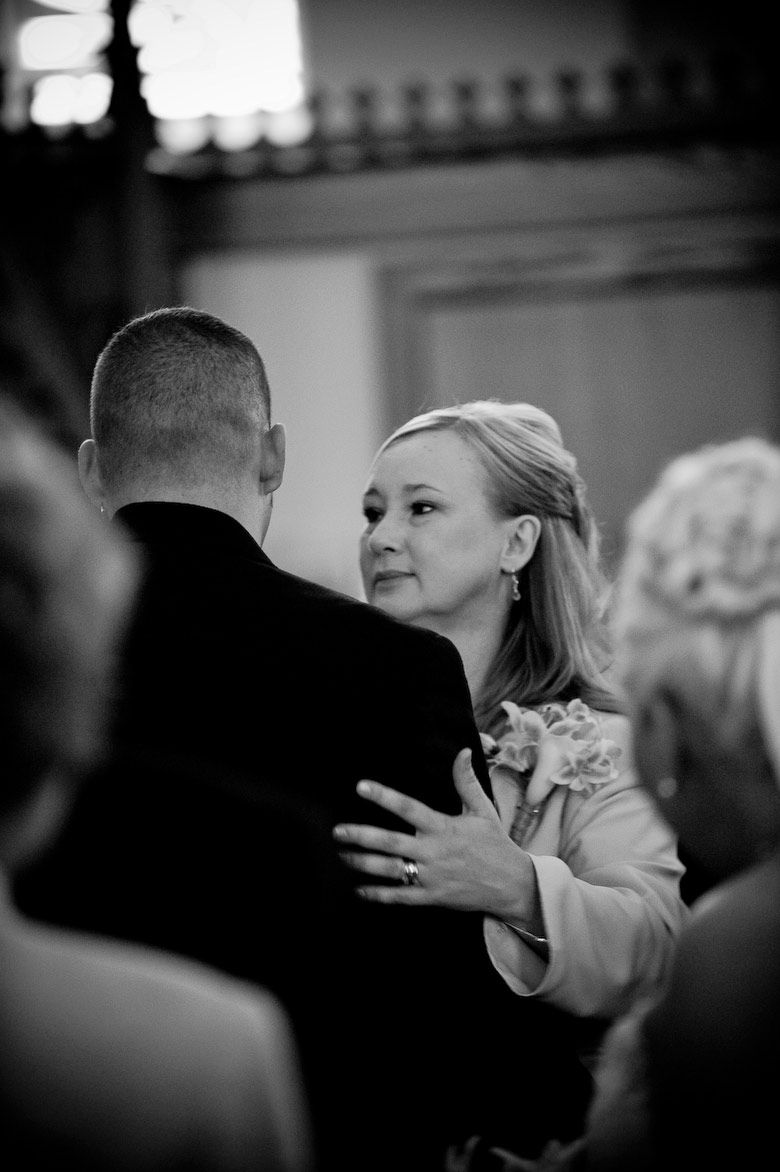
Oooo--total aside here, but one scene I'd just love to read...gosh! it'd be so poignant...is a scene where Ned gets married. Every mother has the right to sit at the front of the church while her offspring ties the knot, and I just wonder what Rhonda felt in her sisterly role relegated to a position other than her own? My own heart just about breaks thinking about that. And what about when she would get to dance with him? Oh...so sad.

But back to my assessment...ah, yes. The revelation. You mentioned in our emails that Ned experiences a heartbreaking loss of his family in a car crash. He gets mad at God, and turns his back on him, at which point lots of bad things happen in the town in which he is a pastor. Only once he starts to believe in God again does he learn the secret that Rhonda is his mother. Talk about PUNCH. Best-seller, Steena. Seriously gripping stuff.

I think it would be better on Ned to learn the truth in some sideways manner. I would think Rhonda wouldn't tell him due to everything else going on with him. If he truly leans on Rhonda for emotional and moral support, than her revelation would possibly devastate him. But if he kind of put two-and-two together on his own, I would think he'd be more likely to see past the 30-year lie and know his mother had lied to him with good reason, at least in her heart. (And no, I won't get into the debate about good lies v. bad ones, but feel free to do so in the comments section.)

One way I thought about doing this would be for Ned to have some contact with Stan. A cool twist could be some little-known fact about Stan, like a health deficit or allergy, also being present in Ned. Give them both an unlikely mannerism to boot and it wouldn't take a smart preacher-man to figure it out, especially given Rhonda's reactions to Stan, but it's just a suggestion.

So on to those reactions to Stan. Panic attacks would be a result of some post-traumatic stress Rhonda has regarding her rape. If you're wanting the man to be really mean, I'd have him play with her mind by sending her to the place where the rape happened. That would really do a doozie on poor Rhonda. (Aren't we authors mean?) People with PTSD will go to extreme lengths to avoid anything that reminds them of the trauma, including people, places and things. Extreme lengths. So this could garner Ned's attention.

Her fear isn't going to lessen because she gets older. The old adage of "time heals all wounds" just isn't true for everyone. The way you wrote Rhonda's initial meeting with Stan sounds like it's dead on. She's be beside herself, so it's very likely she'd let something slip, like the fact she had a baby, so kudos on that. But she's a MOMMA at heart. If Stan were to threaten Ned in any way...big Momma Bear would come roaring. I think it'd be a fantastic way to get Rhonda to face her fears of Stan.

Man, I want to read this book! Great job. Hopefully I've been of some help. As always, questions welcome in the comments section to continue the "session."

This service is for fictional characters only, so any resemblance to real life examples is entirely coincidental. Any other fictional character assessment questions can be directed to charactertherapist@hotmail.com.

Wordle: signature

Tuesday, November 17, 2009

Treatment Tuesday - Childhood Trauma

Today’s assessment comes from Cathy over at Word Vessel. She’s writing a contemporary romance that includes a 6-7 year-old boy who witnesses his father's injury from a horse kick to the head. The father dies a month later from the injury. The boy’s disobedience caused the accident. Her story is going to start 6-8 months after this accident.

Cathy wants to know: What are some possible behaviors that he would take on as a result of this? What steps would a counselor take to help him through the trauma? How long would the process take?

I love questions like this, Cathy, mainly because there are some general predictors of human behavior, but nothing is set in stone. This boy witnessed a horrific sight. Not only that, but he had a personal connection to. A young child is going to feel tremendous guilt, but because of his developmental level, he won’t be able to convey this any other way except by anger.

It’s important to remember that children have the capacity to feel the same things adults do, but they lack the ability to communicate those emotions. Very typically, children will begin to “act out,” as this is the only way they have of expressing themselves. Unfortunately, adults all too often misread the acting out and think the child is doing bad things just to be annoying and that they can control it better. Maybe they can, but just as an adult might utter a curse quickly after enduring pain or blow up at a spouse for belittling them in public, children have reactions, too. But they might not be able to immediately express what they felt. It may take months or even years.

So my first suggestion to you is to consider some way in which this child could act out…and school is the primary place this would happen. Children spend more time at school than anywhere else, so this makes sense. Some typical behaviors you might give him would be hitting, kicking, biting, spiting, choking (most of which would occur on the playground or in the cafeteria when the day’s activities aren’t as structured…these behaviors are less likely in the classroom); defiance, disobedience, inattention, self-isolation, daydreaming, not getting work done on time or at all (all of which could happen at any time). Many of these could also happen at home or with other authority figures at church, baseball practice, what-have-you.

You mentioned a fear of horses as a possibility. Definitely. As an adult, if I had witnessed an accident like that, I’d be scared to be around horses for a while. So a specific phobia (or crippling fear) of horses is more than feasible for a child. What would be interesting is to have the child go see a therapist who specializes using therapeutic animals in their practice. (You find these type therapists out in the country on ranches, mainly, which sounds like it would fit your book.) I don’t know much about this personally, but I found an interesting article here and here about Pet Therapy. Just a suggestion to consider.

The other things you mentioned (sucking his thumb, bed-wetting, not letting his mother out of his sight) are all possibilities. Those behaviors would be considered “regressive” in a child his age. But sometimes children regress to former behaviors because they find comfort in them. You can see my post here about enuresis, also known as bedwetting.

Now to a bit about the process. Every therapist goes about this a bit differently, so I can only tell you how I would approach this young boy. The most important thing would be for the child to feel safe and comfortable around me. This is during the rapport-building stage, which could take months all by itself. But a good therapist can achieve a relatively good rapport within 3-4 sessions. During this time, I do non-threatening activities, like free play (where they can play with whatever’s in the room and I join them), art, games (many of mine are therapeutic, which reveal things about the child unbeknownst to them) or outside sporty stuff (if the space allows).

Once the child is comfortable with me, then I start to do more directive play where I choose activities that are more pointed toward what the child is dealing with. I’ll give you two examples that you are free to use in your novel.

With a child having gone through trauma like this, I like to use a book called Brave Bart, which is called bibliotherapy (using books with therapeutic messages). You can find info and an excerpt about this book here. This book is great because it’s generic and applicable to ANY kind of trauma. The questions at the end of the book are designed for the child to project what happened to them on to the cat Bart, giving the therapist an idea of how to better help the child.

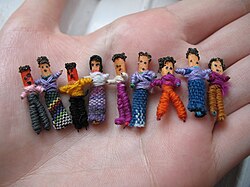
Another popular activity with children I use is a mini-trash can I bought. With the help of one young client, we named it Mr. Trashy, but you can insert your own name. Mr. Trashy “eats” pictures of things that make the child sad, angry, scared, etc. It’s an age-appropriate variation of what’s called ritual. The child gets their emotion out on the paper, but the trash can “eats” it so they child doesn’t have to deal with it. There’s also the ritual of worry dolls (read about them here) where the child whispers their worries (or what causes nightmares, etc) to the dolls and put them under their pillow, which relieves their minds and enables them to go to sleep. Adults do this type ritual at Christian camps everywhere when they write down their sins and nail them to the cross or throw them in a bonfire.

The idea is that by talking and processing through what happened, the child’s behavior improves. And this works. It just does. The child feels heard and understood, and as a result, no longer has the compulsion to act out (which really is just a cry for help). I’ve spent anywhere from 6-8 weeks with a child up to 2 years. Time frame depends on a lot of things (like willingness of the parents to allow the child to come, insurance, etc).

So hopefully this has given you quite a lot to go on for your WIP. I enjoyed sharing some of my therapist tools with everyone. Feel free to leave additional questions in the comments.

This service is for fictional characters only, so any resemblance to real life examples is entirely coincidental. Any other fictional character assessment questions can be directed to charactertherapist@hotmail.com.

Wordle: signature