LinkedinTwitterThe DetailsConnectBlog Facebook Meet the TherapistHome For Writers
Showing posts with label Parenting. Show all posts

Monday, March 19, 2012

St. Paddy's Day Drama

On Saturday, we decided to head to the snow-covered mountains about an hour inland from where we live on the northern California coast. We hopped in my husband's truck, armed with snow gear, tire chains, McDonald's, and Thomas the Train DVDs. We were ready for epic family adventure.


We bundled our little girl up very much like Ralphie on A Christmas Carol. (She could put her arms down, but think  l a y e r s  here. This becomes vitally important later in the story. And I know you moms out there know exactly where I'm going with this. Points to you all.) Here she is, being pulled in our sled up hill as we snowshoed.

We made it to a secluded destination, away from all the other riffraff out there sliding around. We had epic family adventure, including the joint undertaking of making a snowwoman, complete with frond-like locks and a little chest hair.


I got the slide in of my life. Started out very gently, then I leaned back and literally took off screaming. Here I am on my way to the exhilarating ride of a lifetime. (I did manage to convince Maddy that her Mommy was actually very excited instead of afraid...and that was a part-truth. The excitement came after I realized I wasn't going to inconveniently careen off the side of the mountain.)


Just as Dad was making his way to outdo my sledding prowess, Maddy starts the bathroom dance. Usually it's a gentle flitting about, but this time, she's gyrating as if her life depended on it. She said, "Mommy! I have to go the bathroom right now.  I've needed to go this whole time!" Now whether that meant she had just held it or simply gotten too excited in the events of the day to actually remember she needed to go, I will never know. I took one look at her in all of her gear and paraphernalia and almost said, "Forget it. We'll never make it in time." How's that for mom of the year? "Go ahead and pee on yourself. We've got a change of clothes."

Of course, we didn't do this. My husband and I went into lock-down mode. I was very focused on getting toilet paper from our pack. He was very focused on getting her undressed. I still don't know why I focused on the paper. Of course, I'm a female, and paper is a dire need. At any rate, we peeled clothes off her like we were in a race. She's crying, saying she's cold, and we're like, "Don't pee on yourself! Hold it!" I'm sure this was very traumatic for her, as was having to pee with her butt extended up, suspended mid-air by her father's arms and arcing a spray that would rival a tomcat.

I should mention that this occurred around 3 p.m., and Maddy was most definitely feeling a sudden onslaught of exhaustion. My husband hands her to me, in flagrante, while he gets the paper. We finally get her clothes back on (panties, sweatpants, overall bibs, snow shoes, overcoat, gloves, hat) and I just hold her to get her to calm down.

The trip is ruined. She wants to go home, but we're still 35 minutes from the truck or so. We lay her out in the sled like we're on a rescue mission and the sled is our litter. She falls asleep as we trudge back to the truck, occasionally wincing as some wayward snow from our shoes falls around her face. We didn't even get a family photo.

This type of drama in our family isn't a one-time kind of thing. We've gone out to the mountain a few times and have usually wound up asking ourselves why we try to do certain things with a child. We want her to have fun with us, of course, but perhaps we're still learning that age-appropriate limit? It was just sad to see such fun spiral out of control so quickly. Everyone was ticked off, Maddy was traumatized, I feel sure, and in my best therapeutic voice, I soothed her with cold McDonald's fries.

Let's Analyze: Tell me I'm not alone in this thing called parenthood drama.

Monday, April 26, 2010

A Little Transparancy

We write what we know, right? From the roots of our pain or happiness or guilt can come words that can heal, trap, or free ourselves. Writing is just that powerful.

I recently finished an article that had it's origins in tender teenage years, and I decided to be transparent in the hopes that other teen girls might learn from my mistakes. My article for SAGE Girl's Ministry for May is out already, and I wanted to share this little piece of my painful history--and subsequent joyous revelation--with my blogging friends, as well.


Here's the link to my Parent Pointers article on Modest Waiting:

http://www.sageministries.org/parent-pointers-modest-waiting

If you know of a young person who might benefit from reading this and other articles like it, please share this site with them. While it's intended for young girls, parents and others can benefit as well.

Happy Monday!

Wordle: signature

Thursday, March 25, 2010

T3 - "Balanced" Parenting Style

Before I get into the ins and outs of a "Balanced" parent (also called a Democratic, Active, or Equalitarian parent), a brief history lesson is in order.

DON'T LEAVE YET.

Based on what year your protagonists were born (or their parents were born), this information will actually be useful to figuring out which type of parenting style he or she most likely grew up with.

Children born before and during the 1950s most likely grew up with the Over-Controlling parenting styles (Power Patrol or Micromanager). Those generations resembled society in that there was a clear-cut pecking order. The father (man) was the supreme ruler, and mother was to be obedient to him, while children were to be obedient to both of them. This led to some awful things like child abduction and sexual victimization because children were taught to blindly obey authorities at the expense of their own rights.

By the 1960s, though, there was a major shift in society, from a superior/inferior structure to an emphasis on equal rights and self-worth. Civil rights became front and center, and children (especially teenagers) resented adults telling them what to do. They wanted to voice their opinions (loudly, and with music), and Over-Controlling parenting didn't allow for such individuality. Teens turned to drugs and the "sexual revolution" to escape and rebel, and parents had no idea what to do. Professionals who tried to help encouraged parents to loosen the reins, which swung the pendulum to permissive, Under-Controlling (Avoiders or Over-Indulgers) parenting.

These same teenagers of the 60s blamed their parents and authority figures for their problems. As a result, they vowed to raise their children differently and went to the other extreme in their parenting. By the 1980s, the problems in the 60s had reached epidemic proportions. Drug use had increased, teenage pregnancy, AIDS, gangs/violence, sexual victimization...all a result of permissive, Under-Controlling parenting.

The pendulum began to swing back toward Over-Controlling parenting as a way to gain control, but since both styles resulted in negative results for children and society. So it's wise to avoid both of these extremes, because they are inbalanced, and aim for Balanced parenting.

What do Balanced parents believe? They believe that their job is to teach children the life skills they need to be self-sufficient, responsible members of society. They believe that children are equal in worth and dignity, and that they deserve to be treated with respect. They want children to learn how to meet their own needs and not be unnaturally dependent on their parents to do so. They encourage children to learn from their mistakes and avoid blaming or criticizing them. Children are unique, not little Mini-Mes of the parent or balls play dough to mold into what the parent thinks they should be.

How do Balanced parents discipline? Balanced parents try to prevent discipline by telling children what they can do instead of what they can't. They focus on the value of a rule rather than the power of the rule-maker. They teach behavior skills, and then reveal to their children what the possible outcomes of their behaviors could be. Children misbehave and the parent tries to consider their child's goal and help them meet their goal through a more positive behavior. If the child still chooses to behave inappropriately, Balanced parents allow the revealed outcome to happen. They use logical and natural consequences for misbehavior and don't add suffering or verbal abuse to their punishments.

Long-Term Effects (obviously all of these will be positive):

1) Children learn how to operate within limitations and rules.
2) Children make responsible decisions and now how to be responsible.
3) Children are self-motivated/self-disciplined.
4) Children have excellent leadership and communication skills.
5) Children have good time management and organizational skills.
6) Children are less likely to rebel against authority.

So this wraps up our parenting series. If you missed the quiz somehow, and are totally confused about what I'm talking about, go here to take the quiz and find out what style you or your characters are. Ideally, learning about parenting styles will help you portray your protagonists' (or antagonists') backgrounds and histories more realistically...to understand what type of family they came from. Hope you've enjoyed it as much as I have.

If you have any other ideas for series for the Thursday Therapeutic Thoughts, I'm all ears.

If you haven't left a comment to be entered to win Roseanna White's A Stray Drop of Blood (drawing will be on Palm Sunday for this terrific Easter-themes book), then click here.

Have a great weekend!

Wordle: signature

* A lot of the information in this series was derived from Jody Johnston Powel's book, The Parent's Toolshop. Quite a bit is also from my own clinical experiences and opinions.*

Tuesday, March 16, 2010

Treatment Tuesday - Over-Critical Parent

This week's assessment is for T. Ruby Johnson, who's working on a contemporary category romance. Her heroine, Sonya*, was raised by a very loving, but critical woman. Ruby's debating on what role her father played, or if Sonya even knew one. Sonya is extremely shy, very self-conscious, and full of insecurities. Her boss is in love with her, but she can't accept that anyone would be interested in her. Sonya is a very dedicated Christian, but not completely free.

* Names have been changed to protect the fictional.

Rubywants to know: If Sonya's controlling mother is the cause of Sonya's insecurity, what would that look like? What would finally open Sonya's eyes to the truth or change her mind that it is possible for someone to love her? Also, would it be realistic for her to open up and even joke with the man she adores when it is just the two of them?

Great questions, Tammy. I'll just dive right in. If you're going to have Sonya's insecurity be a direct result of her critical mother, then the critical nature of their interactions during her childhood will have to be fairly harsh. Going on the excerpt you sent, the mother criticizing Sonya for not making her bed would be incredibly mild.

The focus of the mother's criticism would have to be Sonya herself. Some choice words that Sonya could remember when she sees her boss would only solidify in her mind that he couldn't possibly be interested in her. For example, she might question her clothes matching (blue doesn't go with green) or her style (mother told her to never wear silver with linen or some other such nonsense), or her usage of makeup (too much, too little, wrong colors).

If she doesn't criticize her on her looks or clothes, then on her actions. Based on your excerpt, it looks like you've gotten a start on this. Nothing Sonya does would have been good enough, perhaps, even when it comes to making the bed. So it stands to reason in her mind that a guy wouldn't be interested in someone with her because her internal mantra would be, "I'm not good enough." She's inferior.

What I suggest you add in is her father. A girl's view of her father is very important in how she grows up to view men. Let's say her father was a perfectionist, or very concerned with appearances. If this was the case, then her father would be a convenient reason to give the mother motivation to be so critical. Perhaps the mother was only trying to live up to the father's expectations, and found herself always lacking, so she displaced that disappointment into criticizing her daughter. But adding her father would really add some great backstory, in my personal opinion.

What could open her up to the possibility that someone could be interested in her? Gosh, I don't know. If you're wanting something external to happen, the sky's the limit. How about a nice, long kiss out of left field? I'm such a romantic, though. You could still have her rationalize the kiss off as a "slip," or that he was simply being polite. Or a heartfelt letter or declaration of love? If you want something internal to change for Sonya, that will take a bit more effort.

You could have Sonya come to the realization that not everything her mom said was true. This would take the Lord working in her life, of course. Jesus looks on everyone of his creations as being perfectly made in his image. So even if she doesn't match, or coordinate, or iron all the wrinkles out of everything...he still loves her. You might consider this as her spiritual/faith journey...coming to the conclusion that living up to her mother's expectations isn't nearly as important as living up to Christ's expectations.

I think it would be in keeping with her character to have her joke with her boss, in particular if she makes herself the butt of the joke. You wrote that you have her locked in a storage closet with him with soup spilled on her skirt and she jokes about wearing her soup well. That's a great example of the type of semi-awkward joke she might have, which in essence just puts herself down. Look at how she can't even eat soup without getting it all over her. She must be damaged in some way to not accomplish this simple feat. She might also open up to her boss because of her firm belief that he couldn't be interested in her. That might make him "safe" to disclose things to.

I had a client who had a mother who was as critical as you have made Sonya's. Everything was up for grabs: grades, clothes, friends, chores, food, make-up. My client thought if she could just do a little more, be a little "better," then she could earn her mother's love more. You wrote that Sonya's mother was very loving, but my guess is that Sonya might not feel that love due to the nature of their relationship It also might be that her mother didn't know how to share her love any other way. I believe my client's mother was critical simply because she wanted her daughter to live a better life than she had. If my client could maintain a certain look, a certain grade point average, a certain weight, then life would just come easier for her. That motive is out of love, but it doesn't seem very loving. Some of the things this girl's mother said to her have stayed with her forever. I imagine it'd be the same for Sonya.

So whether you want her internal mantra to be "I'm not good enough," or something else, I'd think about that question long and hard. What do you want Sonya's driving motivation to be when she puts herself down by thinking her boss could never be interested in her? What's the nagging little voice inside her head saying constantly about her? What's that core truth? Make her internal/external motivation solid enough so that the reader will stay with you as she goes through romantic encounter after romantic encounter essentially being a blind dolt. :)

I'm afraid I didn't get around to the boss...that'll have to be in another post. Send me some more on him and I'd be happy to help. Hope this got you thinking about where you want to go with Sonya.

This service is for fictional characters only, so any resemblance to real life examples is entirely coincidental. Any other fictional character assessment questions can be directed to charactertherapist (at) hotmail (dot) com.

Q4U: Any of you have critical parents in your books? You might want to take a look at the series I'm doing right now on parenting styles, in particular, click here for the Micromanager style. Sounds like Sonya's mom fits perfectly in that category.

Wordle: signature

Tuesday, December 15, 2009

Treatment Tuesday - A Teen Mother's "Brother"

We’ve got our first secondary character assessment on The Character therapist, people! I nearly clapped when Steena from Chocolate Reality emailed me back and confirmed that Rhonda* is indeed secondary in this spiritual thriller! But I gotta tell you…she’s WAY interesting. Read on.

Rhonda is a 46-year-old cookbook author. Never married, although she had one child, Ned*, when she was 16 years old who was the result of a rape. Her parents, local ministers, “covered up” the pregnancy by telling the congregation that Rhonda’s mother was pregnant. So Rhonda’s little boy becomes her “brother.” Ned—30 by the time the book starts—is the main character. Rhonda was raped by Stan*, a boy 4 years older than her whose alcoholic father murdered his mother. Rhonda’s family took him in, and he had been Rhonda’s hero. Now, at 50 years old, he’s the “bad guy,” playing head games with Rhonda and using his sphere of influence to manipulate her. Rhonda suffers panic attacks when she sees Stan and has an intense fear of him.

* Names have been changed to protect the fictional.

Steena has re-written Rhonda many times, something we can all relate to. When she started, she thought Rhonda was 30 in her head, but when she discovered Rhonda’s relationship to Ned, the main character (i.e., when Steena realized Ned was Rhonda’s son), Steena needed her to be older, but not “too old.” (Steena, by any chance are you a Pantster?)

Steena wants to know how she can make Rhonda’s reactions to the rapist and her “brother”/son be more realistic. Also, she wants more consistency with Rhonda at her current age of 46.

Let's start with young Rhonda. At the tender age of 16, she gets raped...for many women, their worst nightmare. But she wasn't raped by a stranger. She was violated by someone she knew; worse, someone she looked up to. Then, just as the initial shock wears off, she misses her monthly period and then her body begins to change, from that of a youth to a soon-to-be-mother. Her nightmare doesn't end, but now includes a 9-month gestation of a child conceived in the worst way possible.

Being raped is a traumatic and shaming thing, but Rhonda's is even more so because the ramifications of her rape--a child--are now being "covered up." Francine Rivers wrote an excellent book about a woman who carries her baby to term after being raped. It's called The Atonement Child. So good, and it gives some ideas of how Rhonda might feel, even though the heroine is older in Francine's book.

Depending on how Rhonda handles stress, her response could be very different. But I imagine that any young teen faced with the difficulty of raising a child she hadn't wanted, conceived in an act of violence with someone she probably thought she could trust, would feel some relief at her parents stepping in to help take care of the child. She likely doesn't know how to feed a baby or change diapers or deal with cholic or burp or bathe a baby. She's really just a child herself. With that in mind, it's feasible that she could slip right into her normal teenage role, but things wouldn't be business as usual.
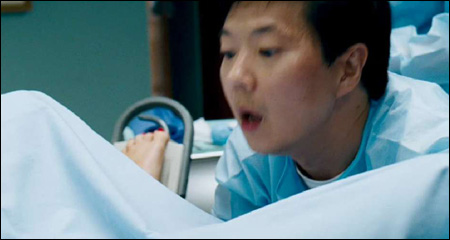
Why? Because she gave birth. Any female who's ever sat on that table, legs splayed wide, to bring life into this world, knows the other-worldly connection a woman can have with this tiny infant that she's never met. A 16 year old might not fully grasp all the significance in the way of say, a 26-year-old, but she's certainly old enough to feel a bond. I imagine her being in awe of this child she carried, perhaps even scared to hold him, thinking she's not experienced enough or might hurt him. She might even be proud of how beautiful he is as she lets her mother cradle him in her more matronly arms.

As she watches him grow from her "sisterly" role, I imagine she looks on with more interest than average as Ned learns to crawl, walk, potty train, and ride a bike. Depending on how the parents deal with this, it may or may not look odd. Many 16-year-old older siblings babysit and have a lot of involvement with younger siblings, so it's not a stretch, really, for any level of involvement she'd have. She could easily go in lieu of her parents to the school principal's office at 30 years old when her 14-year-old "brother" gets suspended. So lots to play with there, even if these interactions never make the book. They still make up Rhonda.

The older she gets, maybe the more she'd want to "claim" him, too. More life experiences = more confidence. Her parents might try to talk her out of it..."for the health and well-being of Ned." This could be a source of contention with her parents, for sure. But you mention that her parents die (or at least her mother) and that Rhonda steps up to take care of Ned more, so it might be a very natural response for her to want to tell him. But I'd think as his mother, she'd also take into account how the revelation would affect him.
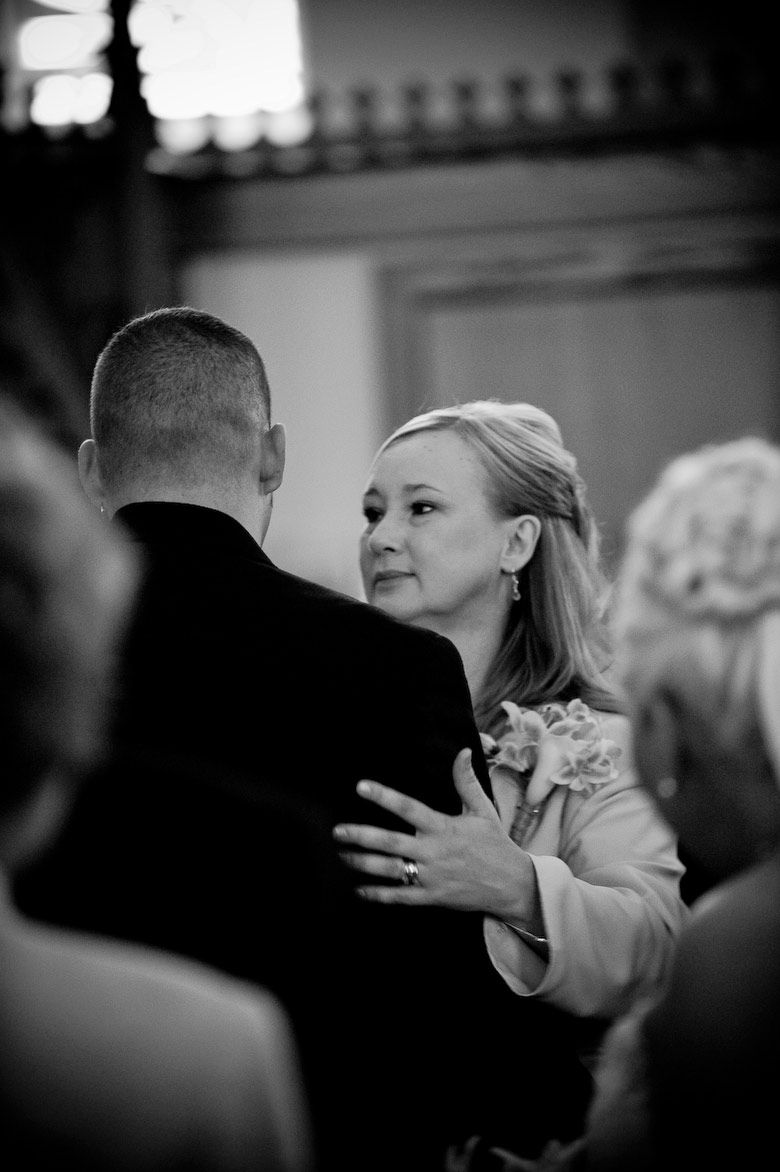
Oooo--total aside here, but one scene I'd just love to read...gosh! it'd be so poignant...is a scene where Ned gets married. Every mother has the right to sit at the front of the church while her offspring ties the knot, and I just wonder what Rhonda felt in her sisterly role relegated to a position other than her own? My own heart just about breaks thinking about that. And what about when she would get to dance with him? Oh...so sad.

But back to my assessment...ah, yes. The revelation. You mentioned in our emails that Ned experiences a heartbreaking loss of his family in a car crash. He gets mad at God, and turns his back on him, at which point lots of bad things happen in the town in which he is a pastor. Only once he starts to believe in God again does he learn the secret that Rhonda is his mother. Talk about PUNCH. Best-seller, Steena. Seriously gripping stuff.

I think it would be better on Ned to learn the truth in some sideways manner. I would think Rhonda wouldn't tell him due to everything else going on with him. If he truly leans on Rhonda for emotional and moral support, than her revelation would possibly devastate him. But if he kind of put two-and-two together on his own, I would think he'd be more likely to see past the 30-year lie and know his mother had lied to him with good reason, at least in her heart. (And no, I won't get into the debate about good lies v. bad ones, but feel free to do so in the comments section.)

One way I thought about doing this would be for Ned to have some contact with Stan. A cool twist could be some little-known fact about Stan, like a health deficit or allergy, also being present in Ned. Give them both an unlikely mannerism to boot and it wouldn't take a smart preacher-man to figure it out, especially given Rhonda's reactions to Stan, but it's just a suggestion.

So on to those reactions to Stan. Panic attacks would be a result of some post-traumatic stress Rhonda has regarding her rape. If you're wanting the man to be really mean, I'd have him play with her mind by sending her to the place where the rape happened. That would really do a doozie on poor Rhonda. (Aren't we authors mean?) People with PTSD will go to extreme lengths to avoid anything that reminds them of the trauma, including people, places and things. Extreme lengths. So this could garner Ned's attention.

Her fear isn't going to lessen because she gets older. The old adage of "time heals all wounds" just isn't true for everyone. The way you wrote Rhonda's initial meeting with Stan sounds like it's dead on. She's be beside herself, so it's very likely she'd let something slip, like the fact she had a baby, so kudos on that. But she's a MOMMA at heart. If Stan were to threaten Ned in any way...big Momma Bear would come roaring. I think it'd be a fantastic way to get Rhonda to face her fears of Stan.

Man, I want to read this book! Great job. Hopefully I've been of some help. As always, questions welcome in the comments section to continue the "session."

This service is for fictional characters only, so any resemblance to real life examples is entirely coincidental. Any other fictional character assessment questions can be directed to charactertherapist@hotmail.com.

Wordle: signature

Tuesday, September 29, 2009

Treatment Tuesday - Bonding with an Estranged Child

This week’s assessment comes from Anita. She’s writing about Brenda*, a widowed mom whose husband was killed in a hit-and-run accident. Brenda’s 12-year-old daughter, Haley*, was always closer to her dad than Brenda, and Brenda is wondering how she can build a bridge to quiet and introverted Haley.

*Names have been changed to protect the fictional.

This is a fairly loaded question, and by loaded, I mean the possible answers are endless. I think everyone has read a book or watched a movie where one parent is widowed and left with a hurting child to comfort and console and try to “reach.”

Because of this, I think it would be helpful to go down the road of what NOT to do (i.e., what’s been overdone, clichéd, etc.) and then look at some genuine possibilities for Brenda and Haley.

So what are the ways NOT to try to win over the affection/love of a child?

1) GIFTS/MONEY – Giving gifts is so temporary. Yes, the child is thrilled when they get the gift, and perhaps for days after, but this is very much a band-aid solution. A 12-year-old girl would certainly catch on to the pattern, as well. (An aside, I’ve seen this “parental intervention” too often in my line of work as a general way of rearing children, and I’ve also seen it not work…ever.)

2) EXPANDED PRIVILEGES – This would be a desperate parent’s attempt to be cool, hip, down with it, insert-new-21st-century-lingo-word here. The idea being if they can come across almost as nonchalant, then the child will open up to them more or respect them for their coolness. Reality does not support this. The later you let them stay up/go out or the longer you let them watch tv/play video games does not correlate with warm fuzzies in the parent’s direction. More realistic would be for the child to take the rope they’re given and hang him or herself with it later.

3) LACK OF DISCIPLINE – A widowed parent might feel guilty at having to discipline a child, especially if one parent usually did the disciplining and the other did the nurturing. So it’d be easy to conceive of a single woman backing off in this department and letting a child get away with much more than the child normally would were both parents living. This is to do a child a disservice in the worst kind of way. In fact, keeping discipline the same would be more secure for them…something that didn’t change with the death of a parent. But widowed/separated/divorced parents make this mistake all the time…and kids can totally manipulate it out of them.

4) ALLOWING THEM TO SLACK OFF – Say a child’s been doing certain chores. Parent dies, everything is thrown into confusion and chaos. The last thing they might want to do is this chore, and so the surviving parent gives in and lets the child “off the hook,” which is the beginning of the end, some might say. Taking away their responsibilities or your expectations of the child (whether its with chores, grades, dating relationships, friends, whatever) is only a recipe for more rebellious behavior. The child sees the surviving parent’s guilt and soft-heartedness and takes advantage of it because—let’s face it—children can be conniving.

5) MAKING THE CHILD THE PARENT'S CONFIDANT - So not cool. Parents should still keep in mind appropriate conversations to have with their children. There is a mistake in thinking that the more adult-like topics brought up will bond the child to the surviving parent. Children still need to be children, not "peers" with their parents. They don't need to be privy to anything more than appropriate for their age level...and even once they reach adulthood it's important to keep some things sacred to the marital union, even if one partner is deceased (like finances, sex, and other private things).

The list can go on, but these are five basic ways parents can mistakenly try to bond with reticent children.

Now let’s focus on some ways a parent like Brenda could try to bond with Haley in a good way (I’ll be keeping in mind some of the additional things Anita emailed me during an email Q&A “session.”)

Since Haley is a rather quiet, introverted child, Brenda would do well to use ways that fit with Haley’s personality. Understated, consistent methods that eventually will show Haley Brenda’s heart and desire to be there for her daughter.

One way is simply TIME. Being available really speaks volumes to a child, even if during that “available time,” nothing of any real import transpires. Children need to know that even when they’re acting up, being defiant, or worse, being angry and rude, that their parent(s) are there for them. Parents have to be PATIENT with this, especially if the child isn’t used to turning to the surviving parent for comfort or companionship. Brenda wouldn’t want to make Haley feel that Haley has to talk to her. It’ll come in time…two hurting people thrown together in the same house should eventually seek solace with one another. Healing may take years, especially if Haley in any way blames the death on her mother or herself.

FORGING NEW TRADITIONS is also a great way to start fresh in the midst of tragedy. Having a time to remember the deceased parent together, like on the anniversary of his death or on his birthday. Instituting this from the beginning will help it stick. This would be a good time for the surviving parent to make a weekly goal or some sort of FAMILY TIME (or course, to remain low-key at first for the vulnerable child who might not want to feel pressured into talking). Maybe a game night or movie night or just a pizza night where no one has to do dishes. Something like that.

Finding a NEW PASTIME to do together would be helpful, some activity that isn’t like an emotional millstone around the child’s neck to remind them of the deceased parent. If Haley and her father worked in the garden a lot, then I wouldn’t suggest that Brenda try to spirit Haley off to do gardening work. Think outside the box on this one…something fun for a kid and an adult, too. Children know when the parent isn’t have a good time and is just trying to pander to them.

It'll be important for Brenda to also recognize her limitations and to embrace the idea (should this be the case) that perhaps Haley will bond to someone else during her most needy time. Anita mentioned Haley had a fondness for a local librarian, and if she spent a lot of time there, it's not unfeasible for her to latch on to this person as an anchor in her world. Brenda would need to let this happen, and not make Haley feel bad for talking with this woman. It might be hard, but in the long run, Haley will be better adjusted if she has someone to talk to.

So that's a sampling of some things that come to mind as being healthy and appropriate for a surviving parent to try with a distant child.

This service is for fictional characters only, so any resemblance to real life examples is entirely coincidental. Any other fictional character assessment questions can be directed to charactertherapist@hotmail.com.

Q4U: What are some other ways--good or bad--that a parent might try to bond with an estranged child?

Don't forget to sign up to win a copy of Mary DeMuth's new book in the Defiance, Texas trilogy, A Slow Burn, and it's prequel, Daisy Chain, at my other blog, Where Romance Meets Therapy.

Wordle: signature

Tuesday, August 18, 2009

Treatment Tuesday - Blended Families, cont.

This week I’ll be concluding Anna’s assessment on blended families. To read more about her scenario, go here. We had a great discussion in the comments section, so be sure to check that out as well. And like last week, I invite your questions in the comment section again.

So, now for the rest of Anna’s questions about large blended families.

6) Will the fact that they were all cousins before they became stepsiblings change things?

I guess this depends on how much they interacted before. But my professional gut opinion is to say that no…this won’t matter that much. They are still just children who are being combined into one family, regardless of previous relational status. So I’m not sure I’d make this a big deal.

7) And can you tell me about large family logistics in general?

Mike or Carol or both will have to have a job that pays, MONEY will be a huge factor. Sharing rooms, hand-me-down clothes, not able to go out for cheerleading because parents can’t afford the uniforms, lots of mouths to feed….you see where I’m going.

And it’s not like this family will go anywhere in regular vehicles, either. They will have to get a 15-passenger van (and insurance to drive it, which is phenomenally high) just to get them all to school or church. And don’t forget friends, and significant others that will come around as the kids get older. You’ll have to think about bedroom space, as I’m sure many will have to share. Privacy will have to be supreme and upheld if this is the case.

And due to them having so many children, likely they will need to move into a new house. This is actually preferred than having one set of children move into the domain of another, and all of sudden the other family has to share their toys and things. It would be better to move into a new house where neither group has any sort of influence. It’s all new to everyone….an equal playing field, so to speak.

8) Will there be cliques and alliances or just individual jealousies and annoyances?

Oh, yes. Yes, yes, yes. To all of it. The main thing to remember is that each sub-family will be it’s own group, especially initially. They will likely gravitate towards each other, as you can well imagine. There is comfort in the familiar. Siblings who formerly didn’t get along might suddenly form an alliance with each other against the other sibling group. This is simply a case of aligning with the lesser evil.

And as with any family, each of the children will have their own individual differences that will lead to petty jealousies. Maybe Mike allowed his kids to always stay up later than Carol allowed hers. So of course Carol’s kids will be jealous of the bedtime freedoms Mike’s kids have. This is a very simplistic example, but one that would surely cause problems in the blended family and have to be addressed.

The children will most likely be jealous of either the children who are in their same grade, as the competition between them will be fiercest (for highest grades, better at sports, etc) or with children younger than them, as younger children typically take up more parental time. Older kids can be objects of jealousy as they get more privileges, but it probably wouldn’t exceed inter-grade level jealousies.

9) How will the fact that they're all similar in age (fifteen kids over a 10-12 year age range) affect things?

This question was answered some in the last paragraph above. Just as there are some great positive features of having the children all fairly young when the remarriage occurs, there are drawbacks. Children who are further apart in years aren’t as close as those who are near each other in ages. It’s just logistically not as likely. They wouldn’t go to the same school, have the same teachers, have the same friends at church, etc, so there would be a natural gap there.

With the same age group come different inherent difficulties. What about two brothers falling for the same girl in their class? This wouldn’t even be an issue if one brother were two years or even one year older. And what if one child in the same age range as several others happened to have special education needs? How would his like-aged siblings who didn’t have a learning disability treat that child?

10) I want to incorporate some authentic family tension into my story. Any hints you could give me as to what that would look like?

I think I’ve given you lots of ideas of ways tension can creep into this type of family. One type of tension you won’t be able to escape is that between Mike and Carol. Each of them would still be in love with their deceased spouse when they get married (that’s assuming that they were in happy marriages), and there would be the tension of whether to sleep in the same beds and be roommates or lovers and how did they want to present their relationship in front of the children? What are the expectations of each other?

A HUGE area for tension is discipline. Who is going to do it? How will it be done? Both parents need to be on the same page about this, and so often they aren’t. I’ve listened to couples complain that they didn’t want the new spouse disciplining their child. And of course children don’t want to disciplined by anyone other than their own parent, so they wouldn’t take kindly to the new parent trying to tell them what to do or spank them or whatever. (BTW, it is preferred for the biological parents to do most of the disciplining for their own children whenever possible…but when pitted against the new spouse by a conniving child, the new spouse would need to know the “rules” and support the bio parent. I hope this made sense.) ☺

I mentioned this last week, but if Mike and Carol don’t move into a new place (which might be necessary to accommodate all these kids!), then there will for sure be tension as one sub-group of siblings moves into the domain of the other sub-group. Watch out…serious catfights and boxing matches going on. The one group is invading the other group’s nest where they rule the roost.

House rules would need to be gone over at length…with all the children either in attendance or privy to the outcome. Bedtimes might need to be changed. Chores rearranged. The list could go on. But both parents need to have a say, and if possible, listen to the childrens' opinions.

Now, for some positive helps for poor Mike and Carol, who have a long road to haul. If you decide to incorporate them going to a therapist, this is likely some of the things that might come up.

I would always suggest to each parent that they spend time with each of their biological children every day, even if its only a few minutes a day. As traumatized at the adults might be at the loss of their life partner, the children are just as traumatized...but with less cognitive ability to be able to express it. So spending time with them--even though their days are bound to be even crazier once they combine families--will be highly important. Letting the child know they are still a crucial part to their remaining parent's live.

I mentioned last week about having a ritual where the children get to watch home videos or look at picture albums. it would be a good idea for each sub-group to look at the videos and pictures of the other sub-group, to gain an understanding about where each other came from. And there can be some bonding that goes on over the mutual grief each family has experienced. Pictures of the remaining parent with the deceased parent don't need to be covered up or not displayed. the children need to see these pictures prominently displayed (just not like a shrine).

It's a great idea to come up with other family rituals...and if you can have them incorporate a little from both families, even better. Say Mike's children always got to open all their gifts on Christmas Eve and Carol's always waited until Christmas morning. A great family ritual compromise would be to open or two gifts on Christmas Eve and the rest on Christmas...or half-and-half, even. Compromise would be key to trying to re-think family traditions. each family has their own quirks, and now you've got two sets of quirks to deal with. The parents would need to be sensitive about this. There is no wrong or right way to do a holiday or birthday, but children sometimes seem to think so. Creating NEW rituals will circumvent this type of problem.

One more thing. I did a little research online about blended families so I could give some accurate statistics last week. I ran across one of the most comprehensive, easy-to-understand web pages on blended families I'd ever seen, and wanted to share it with you. Click here to go to the site.

Okay...that's all. Finally. Anna...hope this helped. Lots of info, I know! Please drop me any questions in the comments or email me if you want further info.

Wordle: signature

Tuesday, August 11, 2009

Treatment Tuesday - Blended Families

This week’s assessment comes courtesy of Anna. She’s writing a “mega family” series about a blended family. I love Anna’s questions, because they are so pertinent to understanding blended families with his, hers, and their children.

Here’s the scenario (in the spirit of the Brady Bunch): Carol*, the mom, has about five children and is pregnant with twins when there is a huge accident where she looses her husband and one of her sisters. Her bro-in-law, Mike*, grieves the loss of his wife with several young kids of his own. They both want to get remarried sooner than later, but feel the changes of meeting someone willing to jump into a ready-made, full-time parental role are slim. So Mike and Carol eventually marry each other (3-4 months later!), thinking they will better be able to care for their children together than separately. The children are ALL under the age of 10 at the time of the marriage, and likely Mike and Carol will have some little ones of their own.

Anna had several questions about blended families that she posed to me, but before I get to them, I want to give you an idea of how prevalent blended families are today. About 65% of remarriages involve children from previous relationships and form blended families. In 2001 5.4 million children lived with one biological parent and either a stepparent or adoptive parent (Kreider & Fields). One source I looked at said that blended families are now more common than biological families. Another source said approximately half of all Americans are involved in a step relationship.

This is something that is so prevalent in our world today that it’s bound to be in some of your works-in-progress! If YOU have any questions about blended families for your WIP, type them up in the comment section and I’ll see what I can do about answering them.

Without further ado, Anna’s first five questions are:

1) What I can expect from this extra-large family as the kids start to enter their teens and twenties?

For sure, you’ve got an unusual family situation here. The kids will know that. Certainly as they get older, they could have a reaction against how “weird” their family is, or they could rally together…like their own football team against the world sort of thing. A lot will depend on how you depict the parents. If they just get married after 3-4 months, they won’t even be 1/4th of the way through a typical grieving process for a loss spouse (2 years). If you portray them as frantic, desperate people scraping the bottom of the barrel when they reach for each other…this will affect the way they run their home and family.

As the kids get older (after graduation), you’ll have college tuitions and fees to worry about. I would think older children would be encouraged to hold down jobs, but this could even be an undue stressor on the family unless the working children have cars (which cost money!). So I’d spend considerable time figuring out just how much you want to make them struggle. The Bradys seemed to have it all together, what with Mr. Brady being an architect and all.

This house will likely be like Grand Central Station the older the kids get, too. Some might opt to spend as much time away from home as possible, to avoid the crush of all the bodies and all the noise. But girlfriends, boyfriends, and spend-the-night parties…these children are going to want all of that. Imagine if each kid brought home a friend from school just one day out of the week. That’s like 10 additional mouths to feed a snack to and dinner….you see where I’m going. It’s chaos. But the attitude of the parents will have a BIG impact on how the children see it, so we’re back to that again.

2) Will the kids hate each other and resent the stepparent?

These children were already cousins. So chances are they’ve spent considerable time around each other as it is and probably have gotten along up to date when all the family was together (with maybe a squabble or two here or there). But throw grief into the mix. These children will be grieving the loss of one parent, and children respond to grief usually with anger and acting out. A few will get the classic depressed symptoms, but for the most part, younger children just don’t know how to handle all the strong sad emotions, so that’s why they “act out” at school and home. So to be realistic, you’ll need to pick one or two “problem children” who are going to give the parents and maybe even each other a run for their money. This is just real life. To quote the back of my high school Peer Counselors tee shirt, “Life is not a rerun of the Brady Bunch show.”

As for resenting the stepparent…that’s a different beast. These children won’t want a stand-in mother or father to replace the one they loss. The really young ones might slip right into calling the new parent mom or dad, but the older ones (8-10 years) might not be comfortable doing this. Again, it depends on how the parents handle it. I see your question four addresses some of this, so I’ll stop here.

3) Will they bond well because they were young at the time of the marriage?

Most likely, yes. Of course, there are always exceptions. But the younger children are when parents remarry, the better the outcome seems to be. Some of this might have to do with inability to retain memories (how much do you remember when you were 4?) at young ages. But one of the positives in your scenario is that they are young.

4) Will the younger ones remember the parent that they lost, and if not should they be reminded?

The younger ones will need help remembering as time passes. And yes, I think they should be reminded. I’m not one for having some sort of shrine in the house to the deceased parent, though. And I don’t think they should be reminded every day. Initially, like maybe even up to a year or so, younger children will be more likely to remind the adults than need reminding. They’ll remember. But eventually, in their mind’s eye, the deceased parent’s face will start to fade. They will no longer be able to recall the sound of his or her voice. It’s totally fine (maybe even preferred) to replay home videos or go through picture albums to help them remember. In fact, it might should be part of a ritual you have the family start. (More on this next week.) It might even be a good idea to have everyone sit around each others' albums to help the children from the opposite family to understand a bit about their cousins’ past history.

5) Someone who was once the oldest won't be the oldest anymore. Will that be a problem?

Yikes. Having the throne usurped isn’t easy for anyone. Have you ever heard the old adage, “Don’t disrupt the pecking order?” Here, it sounds like it will be unavoidable. I think it will be very important for the parent of the child who is no longer the “oldest” of the family to have a discussion with them, hopefully prior to the remarriage to prevent any foreseen problems. Also the living parent should affirm to their firstborn that his or her worth is in no way tied up to actually being firstborn. We no longer live in Bible times where only the firstborn inherits the majority.

I would advocate not fixating on age at this conversation, but on maturity levels. In some families, there might be a child who is only 12, but has a mental maturity of 15. Or vice-versa. More privileges are usually granted to the older children…but make sure the privileges come when the child is truly mentally mature enough for them. Girls shouldn’t automatically date when they reach a certain age if they aren’t ready for it. (So setting aside a specific birthday for when they can do this can be a fallacy!) But the short answer to your question is yes. Expect this to be a problem for that child. And the first oldest kid from the other marriage will very possibly lord this over the second oldest…because it’s something he or she will have control and power over in a powerless situation for them.

That's it for this week's assessment...but join me next week as I conclude this fascinating look into blended families. And be sure to leave your own blended family questions in the comment section!

Wordle: signature