LinkedinTwitterThe DetailsConnectBlog Facebook Meet the TherapistHome For Writers
Showing posts with label movie assessments. Show all posts

Monday, May 27, 2013

Just Keep Swimming, Just Keep Swimming...

Over 2 years ago, I wrote a post about Finding Nemo and all the mental illness implications within the movie.

Courtesy of Pixar
Little did I know that this post would become the runner up to the most popular post on my blog. Since 2/23/11, the post has received over 11,200 hits.

That's a lot of people checking out Finding Nemo.

So perhaps folks might be interested in knowing that Pixar is coming out with a sequel called...yep. You guessed it: Finding Dory.

There is a lot of speculation about how Pixar will handle having a main character who suffers from significant mental and cognitive disabilities. One can only assume that she gets lost somehow, courtesy of her disorder, and Marlin and Nemo will likely be looking for her. While she was a only a supporting character fish in Finding Nemo, she will take center stage. 

Dory isn't just quirky. That's important to put on the table. She not only suffers from short-term memory loss, she also has a lot of anxiety, confusion, and disorientation when she's left on her own. There is arguably some dependent personality disorder traits exhibited as well, but this is muddied by her mental handicap which prevents her from living independently. 

Michael Arbeiter of Hollywood.com likened Dory and Marlin's relationship to that of the relationships between Tom Cruise and Dustin Hoffman in Rain Man. This got me thinking of all the similarities. Tom Cruise utilized his mentally compromised brother to forward his goal of getting their father's inheritance. He took advantage of him, and Marlin does the same with Dory's ability to read English and talk whale. Tom Cruise was frustrated by his brother's handicaps (such as not being touched, not being able to fly, having to watch certain shows at certain times, wear certain types of underwear, etc). Marlin wants to pull his hair scales out with Dory's mental handicap, and eventually leaves her alone toward the end of the movie, which really does a number on Dory.

I just want to see Pixar show a heroine challenged by mental illness but not beat down by it. People (and fish) can rise above their limitations. Pixar has shown that they can go deep with certain movies, such as Toy Story 3 and Wall-E. I sincerely hope that they go there with Finding Dory.

Let's Analyze

Have you heard that Pixar will be releaseing Finding Dory in 2015? What do you hope they do with the film?

And I'm still offering a giveaway of Julie Lessman's newest, Love at Any Cost! Just click here to enter the giveaway!

And HAPPY MEMORIAL DAY! I'm so proud so many of my family members have served or are currently serving. Thank you to Allan, Marion, Dave, Cheryl, Jason, Gene, Mark, Wes, and George. Your service is and always will be greatly appreciated.

Monday, March 11, 2013

A Therapist's Take on Silver Linings Playbook

I saw Silver Linings Playbook over the weekend, and I have to say....this is one movie that gripped me start to finish. Excellent acting and real-to-life portrayal of life with mental illness.

Bradley Cooper astonished me. Until now, I've always thought of him as the quintessential  good-looking romcom actor, but he proved himself with this flick.

Don't read any further if you don't want a few spoilers!

Here is a synopsis if you want to reacquaint yourself with the movie.

The Good

1) Bradley Cooper, Jennifer Lawrence, and Robert DeNiro blow the acting out of the water. 

All three suffer from significant mental illnesses (Cooper has bipolar, Lawrence is a reformed sex addict with recurring bouts of depression, and DeNiro has a serious gambling problem combined with OCD-like superstition. When they first meet, Cooper and Lawrence share a funny, yet inappropriate, dinner conversation about the types of medications they have taken. Cooper has no filter on what he says, and combined with Lawrence's reckless, brash, and devil-may-care attitude, they make quite the pair.

2) The family dynamics are so true to life of families dealing with mental illness.

Cooper's older brother is the "good" son, the overachiever. He rubs his successes in his brother's face at their very first meeting after Cooper gets out of the mental hospital. Cooper's mother checks him out right after his 8 months is over, against doctor's advice, and brings him home. She enables not only her son's issues, but also her husband's. DeNiro is amazing as the superstitious bookmaking (gambling) father, and he shamelessly feeds his addiction by using his Cooper and putting him situations he's not ready for.

3) There is a great mix of laugh-out-loud and gut-wrenching moments.

The dance competition that Cooper agrees to be a part of with Lawrence is just one of the funniest scenes I've ever witnessed. Their attempt at a "dirty dancing" style life ends with her crotch in his face for several moments. Great big belly laughs! There's also another hysterically dysfunctional scene when DeNiro is negotiating the biggest gamble of his life and the scene is so chaotic and loud...it's just something you don't want to miss.

On the other hand, it's so sad to realize that Cooper walked in on his wife, snapped, and nearly killed someone. The song that was playing while his wife had the affair is a constant trigger for him, and he goes into a rage when he hears it. When Cooper goes off his meds, thinking he's doing better, he had a breakdown that wakes up the entire neighborhood. It had me and my therapist friend holding our hands over our mouths, totally wrapped up in the drama.

The Bad

The therapist would lose his license in real life.

Not sure how the the author of the book portrayed the therapist, but in the flick, he behaves unethically. He plays the song that triggers Cooper while he's in the waiting room, an uncontrolled environment. Cooper loses it and scares everyone in the waiting room, and the therapist just says, "I wanted to see if it was still a problem for you." WHAT? If a therapist was going to do something like this, it would be in session where no one would be in harm's way.

The therapist runs into Cooper at an Eagles game and tells him that on that day, they aren't therapist and client, but "brothers." I get that he's referring to rooting for the same side in a sports competition, but you are always in a therapeutic relationship with a client...no matter where you are. You're never friends.

Perhaps the most damning thing he does is go to Cooper's house after they all get arrested at the game for fighting. The therapist is there while the very dysfunctional scene ensues with DeNiro and the gambling, and stands by while his client is placed in a horrible situation as part of a parlay of the bet. He says nothing. He attends the dance competition and gives the whole incredibly unstable betting thing his silent seal of approval. In all honesty, he should lose his license.

Let's Analyze

As you can see, the good far outweighs the bad! Go see this film if you haven't already. If you have seen the film, what did you think of it? Wasn't the acting amazing?

Monday, November 26, 2012

A Therapist's Take on Brave: Not Disney's Typical Princess Movie

Over Thanksgiving, I was finally able to watch Brave, thanks to some major sales on DVDs at Target during Black Friday. My daughter and I watched it together, which is something I highly recommend mother-daughter pairs to do.

Merida was such a refreshing take on Disney princesses. She's got the unruliest red hair, and her brogue is thick, certainly unrefined by Cinderella and Snow White standards. She likes to ride horses and can shoot a mean arrow. She's independent and strong-willed, and actually has a mother in her life. To me, she's a great role model for young girls as far as image goes because she's more real.

Now her mother, Elinor, is quite the refined queen. She loves her daughter and husband very much, but she has the highest expectations for her daughter. At one point in the film, poor Merida is subjected to the ministrations of her mother as far as her schooling, ladylike hobbies, decorum, social graces, manners, walking style, and tone of voice.

Soon the heart of the film is unraveled...a true mother-daughter feud/disagreement over expectations due to tradition that clash with Merida's inner desires and goals. This is as age-old as it gets. Audiences from every culture and even gender can identify with Merida's struggle to meet parental hopes while not squashing her own.

Ironically, they both "practice" what they want to say to each other, but end up saying little of it because they end up fighting. Merida slashing a tapestry Elinor has been working on, which separates the mother figure from the rest of the family in the picture. In anger, Elinor throws Merida's bow into the fire.

So when Merida makes a rash decision that alters her and Elinor's destiny via a magical spell, she must seek to make things right. Half of the movie is spent with Merida trying her best to undue what she has done. Elinor and Merida must learn a new way of relating, and I found myself teary-eyed over the intimate, personal way Disney conveyed this message.

What mother and daughter don't need to learn this lesson, especially as daughters grow up and sprout wings of their own to fly? Learning to see the strengths of our children individually apart from what we had hoped their strengths would be, as well as children understanding that parents simply want the best for them, but might not always know what that is. This shift within the family system is so important, and yet no one knows how to navigate it correctly.

Merida and Elinor learn to appreciate aspects about each other they had previously been blind to, and they see facets of each others' lives that they realize aren't all bad. They take to heart the
cautionary rhyme given to them by the witch who cast the spell: "Fate be changed, look inside.  Mend the bond torn by pride."

Ah, pride. Perhaps nothing separates us from more relationships than this. What a universal lesson for everyone. I highly recommend this movie for families.

Let's Analyze

Have you seen Brave? How did you think Merida compared to other Disney princesses? What about the heart of the story being the age-old struggle between mother and daughter?

Thursday, May 24, 2012

On the Couch: Alaric Saltzman

I got to thinking that of all the characters on The Vampire Diaries, ol' Alaric "Rick" Saltzman might have gotten the short end of the psychological stick. I'm writing this special Thursday post to celebrate his particular brand of craziness. (As well as grace this post with some pics of his handsome, loony self.)

Alaric came to Mystic Falls as a history teacher-slash-vampire-hunter with a chip on his shoulder about his ex-wife, who turns up to be Elena's bio mother. He had some serious difficulty adjusting to his wife just up and leaving him, and wasn't willing to let sleeping dogs lie. His search for Damon (whom Rick believed killed his wife) led him to the vampire-infested Mystic Falls area. His gym bag didn't just contain gym clothes, but a couple of stakes and vervaine sprays, etc. He becomes involved with Elena's aunt Jenna, but when Jenna dies, he turns to the bottle for comfort (recurring theme on TVD, btw). He also comes to understand that his wife asked Damon to turn her into a vampire, which Damon did.

Rick wears this magical ring that lets him cheat death anytime he's murdered at the hands of a supernatural, which, for Rick, is fairly often.....every 5 episodes or so at least. It's not until Season 3 that this ring becomes something of a two-edged sword.

Rick begins to have these blackout periods, and when he comes to, he can't remember anything about what he's done or where he's been. It's starts pretty benign...he can't remember where he placed something or things have been moved around...and then gets pretty bizarre, as in he's covered with blood. He goes in for a CAT scan, even, because he knows something's wrong with him and thinks he's going crazy.

Rick's diagnosis is undoubtedly Dissociative Identity Disorder. He's got this alter ego who is rather violent on a good day. Turns out that Rick's subconscious (as represented by his alter identity) is going around trying to pick off council members...which is actually a return to his original goal of eradicating vampires. He's doing this vicariously by getting rid of unethical council members who already know about the vampire problem and are perpetuating it by not doing anything about their own children becoming vamps (Caroline Forbes) and hybrids (Tyler Lockwood). 

Here's the breakdown for Rick (his symptomology is in red):

A. The presence of two or more distinct identities or personality states (each with its own relatively enduring pattern of perceiving, relating to, and thinking about the environment and self). 
B. At least two of these identities or personality states recurrently take control of the person's behavior. [That would be Alaric the history teacher and "Dark-Alaric" or The Darkness." When Dark-Alaric is at the helm, he's in complete control, b/c Rick has no idea what he's done when he "comes to."]
C. Inability to recall important personal information that is too extensive to be explained by ordinary forgetfulness. [He doesn't remember small things at first, but then not knowing yow you get covered in blood is a *tad* important.]
D. The disturbance is not due to the direct physiological effects of a substance(e.g., blackouts or chaotic behavior during Alcohol Intoxication) or a general medical condition (e.g., complex partial seizures). [Nope, turns out that craziness just runs in the history of the Gilbert family ring that Alaric wears.]

I believe this'll do it for all you vampire fans out there. At least Rick went out with a bang (as everyone usually does on the show).

Let's Analyze: Anyone else upset that Rick's gone off to star in his own show? I thought he was a nice addition to the almost obsolete human world on TVD.

Wednesday, May 23, 2012

On the Couch: Stefan Salvatore

Ah, sweet younger brother Stefan is on the couch today. If you missed Damon's analysis from Monday click here.

Stefan captured the hearts of many a female with his battling-his-inner-vampire-demons persona and incredible love for Elena....as his voice over said in the opening credits..."I had to know her."

Stefan was born in 1847, seven years after his brother, in Mystic Falls. In the glimpses of his human life before he was turned into a vampire (in 1864, when he was 17), it is apparent that Stefan was the "good" son. He lived by a code of ethics and morals, and valued honor, duty, justice, and responsibility.

As a vampire, those traits remained...which is often negatively referred to as his "humanity." When we first meet Stefan, he's sort of an herbivore vampire in that he only feeds off animals (just go with the imperfect metaphor). This makes him physically weaker than other vampires who feed off humans straight from the vein. Stefan has a strong regard for human life, yet he's been known to go on "binges" where he essentially loses touch with his humanity and compassion and kills people right and left. This is his "Ripper" persona.

I know you probably think I'm about to diagnose Stefan as Dissociative Identity Disorder (formerly called Multiple Personality Disorder). I'm not. I think there is plenty of proof that Stefan and Ripper Stefan are the same person. Yes, he does suffer blackouts wherein he violently dismembers his victims only to reassemble them (perhaps in remorse?) when he comes to. This pattern is how Damon recognizes Stefan's path away from Mystic Falls and is able to track him down.

But he's still integrated as one vampire. I think it's most evident when he calls Elena as the Ripper but doesn't say anything. She tells him she still loves him and isn't going to give up on him, and it's clear he's miserable away from her, having to be forced to be the Ripper. And he saved Klaus in the first place to keep his brother alive...all kinds of internal angst, but not internal dissociation from his real self. He laments all the kills he made as the Ripper. They grieve him and haunt him. He calls himself a monster--and hates that side of himself.


That said, Stefan does have a problem. Since human blood isn't a substance the Diagnostic and Statistical Manual of Mental Disorders would recognize, we're going to have to be creative. The term drug can refer to any non-food chemical substance or preparation administered for the purpose of correcting or weakening a disease process (therapeutic drug) or for pleasure (recreational drug). Human blood for Stefan fits the bill.

I'd diagnose Stefan with a really severe case of substance dependence with an unknown substance (just a technicality in our world), with physiological dependence. Here's the criteria (Stefan's in red):

A maladaptive pattern of substance use, leading to clinically significant impairment or distress, as manifested by three (or more) of the following, occurring at any time in the same 12-month period:
(1) tolerance, as defined by either of the following: 
 (a) a need for markedly increased amounts of the substance to achieve Intoxication or desired effect (I think he gets pretty high from just a sip.)
 (b) markedly diminished effect with continued use of the same amount of the substance 
(2) Withdrawal, as manifested by either of the following: 
(a) the characteristic withdrawal syndrome for the substance (It's clear Stefan wants blood when his face goes all veiny.)
(b) the same (or a closely related) substance is taken to relieve or avoid withdrawal symptoms (Rabbit blood, anyone?)
(3) the substance is often taken in larger amounts or over a longer period than was intended (Stefan had a disturbingly long list of names in the closet of his Ripper persona.)
(4) there is a persistent desire or unsuccessful efforts to cut down or control substance use (A few accidental drainings because he couldn't stop.)
(5) a great deal of time is spent in activities necessary to obtain the substance (e.g., visiting multiple doctors or driving long distances), use the substance (e.g., chain-smoking), or recover from its effects (Stefan scoped out the locales that would give him better access to folk and less chance a Missing Persons Report would be filed. Slick, Stefan.)
(6) important social, occupational, or recreational activities are given up or reduced because of substance use (Gave up his entire life for this last binge, including his romantic relationship.)
(7) the substance use is continued despite knowledge of having a persistent or recurrent physical or psychological problem that is likely to have been caused or exacerbated by the substance


Stefan's had at least three staged interventions from his friends: two from Lexi (in 1864 after his first binge and then again in 1922 after his binge with Klaus), and then the latest binge from season 3 when he agrees to be the Ripper again to preoccupy Klaus and keep him away from Mystic Falls and Elena. (Note: Stefan willingly agrees to the deal out of compassion for his love.) Even dispassionate brother Damon knows Stefan's got a problem.

Stefan's coming into at least a partial remission, as he seems to be able to hold his head above water for extended periods of time after receiving some help. But he needs to get into a Bloodaholics Anonymous program and stick with it.

Let's Analyze: Do you think Stefan is the same person/persona as Ripper Stefan? Why or why not?

Tuesday, April 19, 2011

Movies & Madness Treatment Tuesday: Lars and the Real Girl

I still have an empty queue, although several little birds have told me some are on the way. :) So until then, another movie review! When Lars and the Real Girl came out in 2007, my husband and I thought it one of the most bizarre we'd ever seen. Here's a brief synopsis:

Lars Lindstrom is a loveable introvert whose emotional baggage has kept him from fully embracing life. After years of what is almost solitude, he invites Bianca, a friend he met on the internet to visit him. He introduces Bianca to his brother Gus and his wife Karen and they are stunned. They don't know what to say to Lars or Bianca--because she is a life-size doll, not a real person and he is treating her as though she is alive. They consult the family doctor Dagmar who explains this is a delusion he's created--for what reason she doesn't yet know but they should all go along with it. What follows is an emotional journey for Lars and the people around him.

Lars is diagnosed in the movie by a family doctor/psychologist as having a delusional disorder. In my world, a delusion is defined as a fixed false belief. For a diagnosis to be made, the person has to 1) experience the delusion for at least a month, 2) can't experience them a direct result of being under the influence of a substance. The other requirement is 3) that the person's behavior not be odd or bizarre apart from the delusion. Lars actually manages to support himself by going to work, attending church, etc., so he meets all these qualifications.

The delusion Lars suffers from is "non-bizarre," that is, it could be plausible, as opposed to bizarre. While we might all think Lars is off his rocker, his frame of mind around Bianca as his girlfriend is logical, other than being based on an improbable foundation. 

Let's look at Lars most closely. He's socially inept but very sweet and likable. He runs from his interested co-worker Margo, doesn't like to be touched, and is basically happy living in the converted garage of the house he and his married brother inherited from his father. When Lars announces that he's met a wheelchair-bound missionary on the Internet, he introduces Bianca, a RealDoll sex doll (who he shows no sexual interest in at all). They convince him to take Bianca in to the doctor in order to get Lars' mental health checked out. Funnily enough, the doctor diagnoses Bianca with "low blood pressure," and advises Lars to bring her in weekly for treatments (pretty dang slick of the gal).

The townspeople accept Bianca as a real woman because they love Lars. If it wasn't so crazy, it would actually be quite touching. As a result, Lars becomes more social. He still meets with the doctor weekly, and his painful past becomes apparent in that his father changed and became very distant when his mother died (as a result of giving birth to Lars). The viewer can even see that Lars still carries a baby blanket around with him....clearly he isn't okay.


SPOILERS EXIST BELOW...READ AT YOUR OWN RISK!

Eventually, Lars' delusional dependence on Bianca as an emotional crutch dissipates. Margo had begun to date another guy, and this bothered Lars. He comforts her when they break up, and even touches her hand without his gloves on, which is very symbolic. By the end of the movie, Lars had broken up the delusion in his own time in his own way (Bianca is "unresponsive" one morning and has to be taken to the doctor...eventually she "dies"). At her funeral, Margo and he seem to be connecting on a deeper level.

As crazy as this flick was, Ryan Gosling did a great job acting. He had several scenes alone with a non-responsive sex doll. I mean, how hard would that be to do and not crack up?

But it does show the way a delusional disorder works....so check it out.

Wordle: signature

Tuesday, April 12, 2011

Movies & Madness Treatment Tuesday: Fight Club

Since I don't have any more character assessments in the queue, I'm assessing a movie character. (Come on, people! Get your sketches in now while the full assessment service is still free! When my website debuts in a month or so, I'll be charging for a full, but still doing mini-assessments for free.)

WARNING: Spoilers exist below, so if you haven't seen the movie and/or read the book and don't want to know what happens, then do not continue reading.  

When we first meet Jack (the narrator), we learn he is a 30 year old single white male complaining of insomnia for over 6 months. His job as a liability consultant for an automotive company requires him to take frequent trips to different time zones, usually on a short notice, therefore leaving him jet lagged. He goes to a doctor to get a prescription to help him sleep, but the doctor prescribes support groups for cancer patients, for Jack to see what real suffering is. Jack does, and finds his ability to sleep at night improve...until Marla Singer, another "faker," begins to attend the meetings he is, which lessens the carthatic impact of these support groups and Jack's insomnia returns.

Then he meets Tyler Durden, a nihilist soap salesman who is disgruntled with common culture, on one of his business trips. When Jack's condo burns down, Tyler agrees to let Jack move into his dilapidated house if Jack will hit him. Jack does, and the two star a fight outside the bar. This becomes sort of ritual between the two of them, and Jack finds the insomnia goes away. Others join in the fights, and thus the fight club is born in the bar's basement. Tyler takes the club and turns it into Project Mayhem, which organizes increasingly serious anti-capitalist vandalism ventures. 

During one of these missions, a fight club member dies, and Jack tries to shut down the operation in Tyler's absence, as he and Tyler have drifted apart some. He retraces Tyler's steps, and learns that fight clubs have been started in every major city. It is in one of these cities that someone calls him Tyler. Jack calls Marla and begins to realize that Tyler is a split of his own personality.

So the official Character Therapist diagnosis of Jack/Tyler is....[drum roll please]...Dissociative Identity Disorder (DID). Formerly known as Multiple Personality Disorder, DID patients have the presence of two or more distinct identities/personality states that recurrently take control of the person’s behavior. Jack had no idea he was Tyler, and there is little evidence until the end that Tyler knows he is Jack. Usually the personalities are vastly different, and no one would argue that Tyler and Jack are almost polar opposites.

DID patients can't integrate these various aspects of their identity/memory/consciousness without professional help. Each personality, or alter, has its own history, name, image. Usually, the primary identity (which is Jack) is passive, dependent, guilty, and depressed. Fits him to a "T." Jack disclosed to the doctor that he sometimes would wake up and have no idea how he got there, which accounts for the DID symptom of experiencing gaps in memory that go beyond normal forgetfulness for the primary identity (i.e, Jack "lost time").

Lastly, it is common for individuals suffering from DID to self-mutilate, be aggressive or suicidal. Clearly, Jack is all of these. He fights himself, beating himself to a pulp. He pulls the trigger of the gun "Tyler" is holding in his mouth, knowing that he is really holding a gun in his own mouth. However, this proves to be something of a fusion ritual for Jack, in that once he pulls the trigger, he shoots himself in the cheek, which doesn't kill him, but the viewer sees Tyler fall down with an exit wound in the back of his head. 


Now you know all about this movie and can perhaps guess why it is a psychological favorite of mine. (What does that say about me? LOL!)


Wordle: signature

Wednesday, February 23, 2011

Movies & Madness: Finding Nemo

Since I was at home almost a week with my flu-ridden child about two weeks ago, I watched a lot of animated movies in a short period of time. Finding Nemo happens to be one of my daughter's favorites. As an occupational hazard, I began to point out all the therapeutic issues the characters displayed, especially those in the fish tank. (They might as well be representative of an in-patient psychiatric population!)

Gurgle - OCD - disgusted by human mouth, ocean is contaminated
Deb - delusional about her "sister" Flo who is really just her reflection in the glass
Bubbles -neurotic about the bubbles
Gill - the hard-as-nails fish who's been there, done that, got the scar to prove it; into conspiracy theories
Crush - thrill-seeking adrenaline junkie
Bruce - shark with abandonment issues from his dad
Chum - the shark who relapsed on fish by eating his "bring a buddy" before support group
Dory - major short-term memory loss
Nemo - guilt over last words spoken to his father

But none come close to Nemo's father, Marlin. Let's take a look at him. He got married and hopped on the good fin to do the bad thing, resulting in tons of little babies in need of loving care. He then suffers surely the worst kind of pain when he loses his new wife to a shark attack, as well as all his babies--save one: Nemo.

Marlin has severe PTSD from the attack, as is evident in how he babies Nemo and doesn't want to let him grow up. He believes the little fin is proof positive of Nemo's need to be overly smothered. After all, Nemo can't swim as well with his little fin, which serves as a visual reminder to Marlin of all he lost when the shark ate his wife and other babies. Marlin has a fear of the open ocean, now, and does his best to instill that in Nemo. It's "not safe" to swim there.

Then Nemo comes into his own obstinacy when his dad makes him feel foolish in front of his new school friends, harping on how they could have been killed at the drop-off and that Nemo can't swim because of the little fin. Most of you probably know what happens: Nemo gets defiant and goes to the boat, touches it with his fin--a part that resonates in the hearts of all parents with children--and gets caught by the Australian deep-sea diver/dentist before he can return.

Then Marlin is on a mission to find Nemo and bring him back safely. He encounters all manner of traumatic problems, any one of which would send a sane fish over the edge. First Dory - who can't remember anything. Then the sharks and their "Fish are Friends, Not Food" support group--I can only imagine the true terror Marlin would feel after losing his wife and children to a shark and then to have Bruce chase him down, intent on taking "just a little bite." Then they have the jellyfish ordeal, and the whole getting-eaten-by-a-whale ordeal, having to jump in the mouth of a pelican to prevent getting eaten by seagulls, and all this to see little Nemo belly-side up in a plastic bag, pretending to be dead.

Now Marlin is super depressed. Who wouldn't be? But to be reunited with his son, who is alive, brings out the fierce protective part of Marlin once again. He doesn't want Nemo to do anything to endanger himself or put himself out further than Marlin thinks is appropriate.

Then the last upheaval happens....the part where Nemo is small enough to swim through the fish net, where Dory and thousands of other fish are trapped, to motivate the entire group to "swim down!" as a way to fight against being taken in the net--something Nemo has learned from his time with the Fraternal Bond of Tankhood members. Marlin has to make the decision to let Nemo go once again, and this is the deciding moment for him as a father. (I would think writers would get a lot out of watching this movie as it relates to internal motivation and external tensions. Incredible, really.)

It's a kid's movie, after all, so all ends well. But Marlin has come to a more healthy decision about how to parent Nemo, which leaves Nemo happier and Marlin happy, as well. He's beat his mental illness. Realistic? No...not after all Marlin went through. But then again, who are we to try to fight against the willful tenacity of a father with everything to lose? Perhaps its a lesson of the power of the mind over mental illness.

Wordle: signature

Wednesday, January 26, 2011

Movies & Madness: Iron Man

I had to put Iron Man's Tony Stark on the couch this week, just because his character is a good example of childhood issues laying the groundwork for adult personality problems. 

Let's look at Tony's childhood. He had a smart, in-demand dad who gave him lots of money, but not lots of time. Tony never felt any real attachment to his dad, as far as being validated. As a result, he internalized the idea that he's not lovable, and therefore worthless. He became pessimistic, self-denigrating, and had a mistrust of just about everyone (made worse by the fact that his mentor, Stane from the first movie, betrayed him).

In light of these awful feelings about self and others, Tony's defense mechanism is narcissism. The line might blur between film and reality for Tony Stark and Robert Downey, Jr. here, but traits of narcissism are clearly evident in both films for the character:

1) He's all about himself. He says, "I am Iron Man" not because it was going to change the world, but because it inflated his sense of self. Now, he does make significant achievement in his own right, but he expects recognition of his importance, and that recognition has to be on national TV. Pyrotechnics, Stark Expos...the grander the better.

2) Requires excessive admiration. No explanation needed. When he doesn't get this, i.e., the media gives him a negative reaction, he retreats to his workshop all moody and sullen.

3) Takes advantage of others. Poor Pepper. Forcing her to be the CEO of his company really overwhelms her and makes her bitter at his treatment of her. And all those women he just slept with (used). He also treats his friend Rhodey pretty badly (i.e., like dirt).

4) Believes he is "special" and "unique." He doesn't want the government to get their hands on his "high-tech prosthesis" - because he has "successfully privatized world peace." TONY has done this. No one else. He sees the government as encroaching upon his fame, his niche.

5) Shows arrogance and haughtiness. He has several witty remarks aimed at authority figures while he's under the spotlight of the camera. He throws lavish parties and drinks too much, causing danger to the guests.

6) Is preoccupied with fantasies of ideals, like world peace. A noble cause, for sure, but in Tony's world, this looks a certain way, and when reality intrudes, he doesn't take kindly.

7) Lacks empathy. While Tony eventually does develop empathy, especially toward Pepper, he had a long way to go to get there. When he shows up with strawberries, and realizes she's allergic to them, he says, “I am getting better at this — I knew there was a correlation between you and strawberries!” He is trying to think outside himself.

In the second film, his partying gets out of hand. He's trying to drink away his worries about the palladium poisoning, but he presents this unstable image to the world, which is a maladaptive coping strategy if ever there was one (trying to cope with one thing in a way that makes things worse).

But lucky for Tony, he receives a message from his dad in the form of an old archived video. This message essentially lets Tony know that his dad really did love him, and this helps heal his mild reactive attachment disorder. (Would that there was a cure for people like this in real life.)

Essentially, this is a watershed moment for Tony, and he sort of breaks free from his maladaptive narcissism and inner demons to go save the world and save the girl, yada yada.

Hope you've enjoyed this Movies & Madness review. Any and all suggestions for future assessments are welcome!

Wordle: signature

Wednesday, January 19, 2011

Movies & Madness: The King's Speech

I got to watch this movie this past weekend on a date night (yes!) and was unbelievably moved. Colin Firth deserved the Golden Globe award he got Sunday for his portray of King George XI of England.

Here's a short blurb from the International Movie Database:

The story of King George VI of Britain, his impromptu ascension to the throne and the speech therapist who helped the unsure monarch become worthy of it.

While I would love to rant about the psychological undertones and awful backstory (read: childhood, because he was a real person) King George had, I don't want to give anything away. But, from the blurb and movie trailers, you can determine that the king suffered from a condition they called stammering back then.

If Bertie, the Duke of York, had lived in today's time, he would have been diagnosed with Stuttering.
This is a disorder usually first diagnosed in infancy, childhood, or adolescence. There are two main criteria: 1) disturbance in the normal fluency and time patterning of speech and 2) the disturbance interferes with academic or occupational achievement or with social communication.

What is fluency? According to Stephen B. Hood, editor of Stuttering Words (1997), fluency encompasses several things: the ability to talk with normal levels of continuity, rate, rhythm, and effort. It involves the smoothness with which units of speech (sounds, syllables, words, phrases) flow together. 

So the best way to recognize non-fluent speech is listening for abnormally broken or slow speech, or speech that takes entirely too much effort on behalf of the speaker (and the listener). 

The DSM-IV lists 8 different occurrences that can disturb fluency. A person only has to have one to meet the criteria of stuttering:

(1) sound and syllable repetitions, such as "buh-buh-buh-banana"
(2) sound prolongations, such as "aaaaaaaple"
(3) interjections, such as "um," "uh," "ah," "well, you know"
(4) broken words, such as "pic--[pause]--ture"
(5) audible or silent blocking, which is when the person is speaking but nothing is coming out because there is a stoppage of air, either at the larynx, lips, or tongue
(6) circumlocutions, which is substituting easier-to-say words for problem ones (think of this as the game of Taboo where you would say any word but the word at the top of the card to avoid getting buzzed)
(7) words produced with an excess of physical tension
(8) monosyllabic whole-word repetitions, such as "I-I-I-I see him" (what we stereotypically think of as stuttering)

Quite astounding, really, that any one of the above would mean you could be a stutterer. Don't tell me that you didn't learn something just then!

But what makes The King's Speech even better was that his speech therapist, Lionel Logue, takes Bertie deep into his inner demons, to face them head on. He presupposes that no infant is born as a stammerer. It's something that comes on around age 4 or 5, and he believed trauma/anxiety have a lot to do with it. Not to ruin anything, but this is where the heartbreak came for me. Truly amazing what this man overcame and endured, to end up thriving and prospering as the King of England.

This is still a major research topic today, and many researchers believe a criteria about anxiety should be added to the next issue of the DSM, which would be the DSM-V. You can download a scholarly article about chronic anxiety and stammering here if you're interested.

Hope you enjoyed some yummy pictures of Colin Firth. He deserves to be celebrating this week. He was amazing in this film. I highly recommend it.

Q4U: Have any of you watched this? What did you think? More importantly, did you cry like a baby as I did?

Wordle: signature

Wednesday, January 5, 2011

Movies & Madness: Scarlett O'Hara

Scarlett O'Hara is on the couch today. Let's see if you agree with my diagnosis. 

Note: This assessment will be done using the Scarlett O'Hara as portrayed by Vivian Leigh in the 1939 film, not the literary figure from Margaret Mitchell's book.

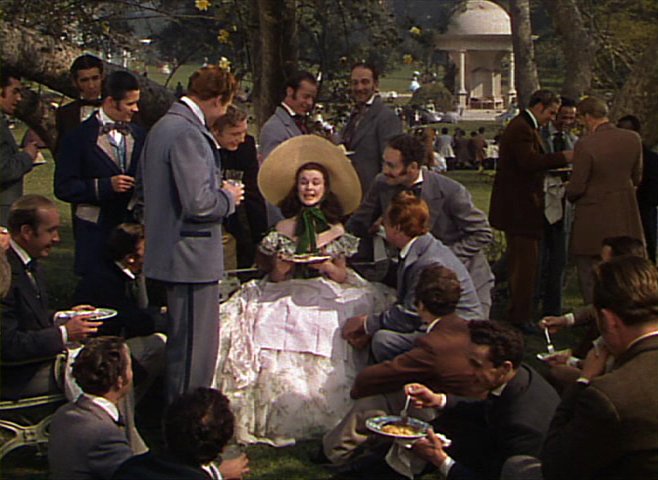
Scarlett had to be the center of attention. The beginning of the film shows that very well, with the classic picture of her in the middle of all the men, basking in their adulation. She said, "Now isn't this better than sitting at a table? A girl hasn't got but two sides to her at the table."

She was often seductive or provocative, using her appearance to draw attention to herself. Think of how she had Mammy trying to get her back into the same waist-sized corset she had before her baby was born, of how she took to the desperate measures of making a dress out of curtains in order to keep appearances up. She considers her relationship with Ashley more intimate than it was, telling him that he "led her on" and "made her believe that he wanted to marry her," all the while Ashley denies this.

Scarlett's emotions shifted rapidly, so therefore seemed to carry little depth. Rhett saw through this immediately, which endears him the viewer. This is not to say that Scarlett didn't feel emotions deeply. I believe she did. But her shallowness emerges when she's happy and smiling one minute then pouting the next. Some might think her to have Bipolar based on this, but that's the only characteristic that fits.

Scarlett was nothing if not dramatic. Her theatricality made the movie what it was. You can just hear her. "Oh, Ashley!" "Oh, Rhett!" "Oh, Melanie!" Wringing her hands, pacing, using words like "varmint" to degrade someone, fiddle-dee-deeing things of import--she often exaggerated. For example, at the beginning with the Templeton brothers are talking of war, she exclaims, "Fiddle-dee-dee. War, war, war; this war talk's spoiling all the fun at every party this spring. I get so bored I could scream." She warns them that she'll go in the house and slam the door of they keep on.


She is highly suggestible, too, meaning others can easily influence her. When Mammy is trying to get Scarlett to eat before the barbeque so that she doesn't "eat like a field hand and gobble like a hog" when she's there and reflect badly on her family. Scarlett says that Ashley told her he likes a girl with an appetite, and all Mammy has to do in plant this seed: What gentlemen says and what they thinks is two different things, and I ain't noticed Mr. Ashley askin' for to marry you. Scarlett then starts stuffing food in her mouth like a starved person.

I've just described in bold every clinical symptom of Histrionic Personality Disorder. To have this diagnosis, you only have to have 5 of 8 symptoms, and have started showing signs of these symptoms by early adulthood in a variety of contexts, which Scarlett does. The one symptom I didn't mention was an vague, impressionistic pattern of speech. I couldn't think of a place where Scarlett lacked detail in her speech, as if trying to impress someone but not really having the knowledge or words to do so.

Histrionic Personality Disorder is in the same cluster as Borderline Personality Disorder (BPD), and as you will read, Scarlet exhibits a few of those traits, but I don't believe she has the required five of nine to qualify. You can read my post on all the traits of BPD here.

Scarlett hurled a vase after being rejected by Ashley Wilkes. Yes, it's dramatic, as mentioned above, but it also borders on unstable. Borderline PD is characterized by intense, erratic, interpersonal relationships, which Scarlett definitely has, not only with Ashley, but Rhett also. These relationships usually fluctuate from idealization to devaluation. Hmm. Definitely fits! This also shows her difficulty controlling her anger, which BPD is also known for.

As most women might select shoes or purses, Scarlett had a tendency to select husbands. She marries Melanie's brother, Charles, to make Ashley jealous. He dies, but Scarlet fakes her mourning. (We all recall the scene where Rhett bids on her, and she accepts, going against societal norms for a grieving widow.) Then Scarlett manipulates her own sister's boyfriend, Frank Kennedy, into marrying her...and all she wanted was his money. This devastates Suellen. For diagnosis purposes, this shows two things: frantic efforts to avoid real or imagined abandonment and impulsivity.

Theodore Millon identified several subtypes of each personality disorder, and Scarlett would best be desribed as a cross between an Infantile and Theatrical Histrionic. Click on the picture for more detail. (Note: these subtypes are not in the Diagnostic and Statistical Manual.)

Q4U: Does Scarlett being Histrionic fit? Does this ruin your perception of one of our favorite Southern Belles? Who should be next for a Movies & Madness assessment?

Wordle: signature

Monday, August 16, 2010

Movies & Madness: The Phantom

Someone suggested a while back that I review movie characters from a therapist perspective, so I picked The Phantom of the Opera because it's a favorite.

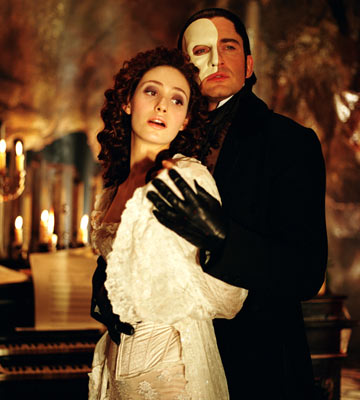
One reason is dichotomy between the dark, sexy Phantom and the heroic, noble Raoul. Besides the fact that Gerard Butler (an all-time fav of mine) plays the Phantom in the Hollywood film version, the therapist side of me really feels for the guy, which is another reason I love the flick. I mean, come on. He doesn't even have a name (although he did in the book). He was "Devil's Child" when being paraded around the the circus and then just "Phantom." His facial scarring left him emotionally scarred, as well. I don't condone his killing or anything like that, but I can see how his anger and angst provide the raw materials to do the things he did. The Phantom has got to be one of the most haunted (no pun intended) characters in the history of filmography/theater.

I'm also just blown away by the lyrics. Charles Hart did most of them, but there was some collaboration on some songs. I'll be looking at two songs in particular.

Both the Phantom and Raoul do their best to woo Christine, and the girl has to decide between the two. Phantom woos her with his song "Music of the Night." I've included a few lines below, or you can click on the YouTube video if you have a few more minutes and want to listen to Gerard belt it out:


Softly, deftly music shall caress you
Hear it, feel it secretly possess you
Open up you mind let your fantasies unwind
In this darkness which you know you cannot fight
The darkness of the music of the night.

Floating, falling, sweet intoxication
Touch me, trust me, savor each sensation
let the dream begin let your darker side give in
to the power of the music that I write
The power of the music of the night

Then Christine gets wooed by Raoul with a song that's almost the polar opposite, "All I Ask of You." Patrick Wilson seriously has one of the best voices ever. I like to close my eyes and imagine Jesus singing this song to me. Try it yourself:


No more talk of darkness,
Forget these wide-eyed fears
I'm here, nothing can harm you
my words will warm and calm you
Let me be your freedom,
let daylight dry your tears.
I'm here with you, beside you,
to guard you and to guide you...

Let me be your shelter
let me be your light
You're safe, No one will find you
your fears are far behind you...

So Christine's got the most basic choice of all mankind before her: good or evil. That's what it boils down to. Bad guy Phantom loves her, all right, but his love is warped, as he doesn't understand love and never had any kind of example. Raoul, though, growing up with a family in tact (he says his parents have always been great supporters of the arts, so he is the patron of the opera house now...and I draw from that the conclusion that Raoul likely emulated his parents in more ways that just that) understands what love and true sacrifice is. He makes a counteroffer Christine just can't refuse.

I really like to think about the Phantom and Raoul as human representations of much larger scale. The devil is out there, wooing people with his night music, while Jesus sings a song of light and love. It's truly beautiful.

[You can stop reading here...otherwise, you're going to get a therapist run-down of her favorite scene and how it relates to the goals of writing.]

The scene of Raoul singing to Christine "All I Ask of You" is my most favorite in the Hollywood movie made in 2004. The reason for this isn't just the love song and great singing. It's because its the first time the viewer actually feels pity for the Phantom's plight. Now, up until then, he wasn't really this awful villain just yet, but seeing Raoul and Christine together gives him the push over the edge of insanity a bit. But it's played so well that the viewer actually still feels sorry for him, understanding how his broken heart could lead him to such terrible actions. We've all been there. We can pity him because we have empathy with him.

And this is exactly what we need to do as writers with our villains, as well! Make the reader really feel for them by giving them an incredibly horrible backstory or some other weak point that made them like who they are today.

At the climax of the film, when the Phantom descends into his cave with Christine and Raoul comes after her, the Phantom makes Christine make a choice, once he has Raoul trapped:

Start a new life with me
Buy his freedom with your love!

Refuse me, and you send your lover to his death!

This is the choice,

This is the point of no return!


He uses the very choice she had made earlier (to love Raoul) to bring her to this huge decision. This is MAJOR!! Our heroines (and heros) have to face this black moment, as well. It's made more psychologically powerful when it plays on the emotions of the one making the life-altering decision. She's seriously in a no-win situation, but when she thinks of the type of life the Phantom has had:

Pitiful creature of darkness,
What kind of life have you known?

God give me courage to show you,

You are not alone...


She is playing on the emotions of the villain! Ah-ha! This is brilliant. Striking him at his Achilles' heel. It's like she creates her own Option C, blindsiding the Phantom (with two major knee-buckling kisses) and getting what she wants in the process (Raoul). Although the kisses horrify Raoul as he stands there and watches, Christine actually does it all for him (and the romantic in me likes to think she did it to show the Phantom compassion despite all the things he had done).

This is just poetic and beautiful and perfect to me. Seriously...one of my favorite movies ever. And hopefully we can all learn a bit from it when we're creating our characters.

Q4U: What other movie characters would you want assessed if I continue doing this?

Wordle: signature