LinkedinTwitterThe DetailsConnectBlog Facebook Meet the TherapistHome For Writers
Showing posts with label Personality Disorders. Show all posts

Monday, May 21, 2012

On the Couch: Damon Salvatore

If you watch The Vampire Diaries--and even if you don't--you've likely heard about the famous, more-than-a-little-gorgeous Salvatore brothers. Since Damon is my personal favorite, he's up first on the couch (go Team Damon!).

FYI: I'll be utilizing the TV character to analyze, not the book character in the series by L.J. Smith.

Damon is the "bad" brother, for sure. He was born in Mystic Falls in 1840, 7 years before his brother Stephan. We've gotten glimpses of his human life from the show, and it's clear that he was impulsive, disrespectful of authority figures (in particular, his father), rebellious and careless. He craved the thrill of adventure and danger, and was often engaged in high risk-taking behavior like drinking, gambling (at boxing matches, etc), and womanizing.

As a vampire, all of those character traits are magnified. At the beginning of the show, he could only be described as sinister. He was ruthless and unsympathetic, had little regard for human life, and had no guilt or remorse with killing any of them. Very selfish, arrogant, proud, and manipulative. (Not a pretty picture on paper, but still in a pretty package. Am I right, or am I right, ladies? Look at that cutie smile!)

Now, as the show has just finished it's third season, Damon has shown more of a compassionate side and an ability to feel, especially where Elena (the show's heroine) is concerned. He still has a sadistic nature about him, and he's willing to go to any extreme to keep Elena safe. But he feels things for others besides his love interest, like his "friend" Alaric Salztman, whom he wanted to let "die in dignity," but who he had "killed" himself at least three times prior. Or glamoring Elena's brother Jeremy to forget the horrors he's experienced (again, for Elena, but he didn't have to do it). He also took a bite from Tyler instead of allowing Caroline to get bit.

But given the above considerations, Damon does fit the diagnosis for Antisocial Personality Disorder (APD). Here's a breakdown (the criteria Damon meets are in red):

A. There is a pervasive pattern of disregard for and violation of the rights of others occurring since age 15 years, as indicated by three (or more) of the following: 
(1) failure to conform to social norms with respect to lawful behaviors as indicated by repeatedly performing acts that are grounds for arrest (What's the death toll by Damon's hands up to now?)
(2) deceitfulness, as indicated by repeated lying, use of aliases, or conning others for personal profit or pleasure (Gosh, where to start? The moonstone, the white oak stakes, glamouring his "girlfriends.")
(3) impulsivity or failure to plan ahead (I think Damon's quite the planner when he wants to be, as evidenced by all the plots each episode to kill Klaus or any original, etc, but he does act on a gut level, killing Rick Saltzman several times because he got mad is a prime example.)
(4) irritability and aggressiveness, as indicated by repeated physical fights or assaults (Fights every episode, I believe, and an unlimited amount of brooding.)
(5) reckless disregard for safety of self or others (Possibly one of the worse/best examples was how he led his anchor girlfriend to her death at the studio. He often puts himself in impossible situations to survive.)
(6) consistent irresponsibility, as indicated by repeated failure to sustain consistent work behavior or honor financial obligations (He clearly did this as a human, carousing instead of being honorable. He doesn't have a job in TVD and he never honors his word unless it's to Elena.)
(7) lack of remorse, as indicated by being indifferent to or rationalizing having hurt, mistreated, or stolen from another (
B. The individual is at least age 18 years. (Damon is over 400 years old, but he was turned in his early twenties, so he's "frozen" there.)
C. There is evidence of Conduct Disorder with onset before age 15 years. (Yep, from his human history, this is likely.)

As you can see, you only need three traits to be considered APD, and Damon rocks out with all 7 criteria. I think it's important to note that Damon does not exhibit these traits all the time, which is why he wouldn't be considered a psychopath. He has taken responsibility for his behavior before, he has experienced remorse about past actions, and he can be very honest and reliable (when it suits him and it's about something or someone he cares a great deal about).

While this diagnosis isn't good news for my favorite character, you Stephan-lovers out there won't be all that thrilled with his diagnosis, either. Stay-tuned for that on Wednesday!

Let's Analyze: To contradict what I've just written, let's come up with some fantastic scenes to prove my point that Damon isn't all that "bad" of a guy. What scenes can you think of where Damon doesn't fit the criteria above?

Thursday, December 8, 2011

Traits of Self-Destructing Characters

I have had a hard week. I had started this blog post yesterday, but fell asleep too exhausted to finish it. I have a client who is the epitome of self-destructing. It's one thing to read about them, but it's quite a different thing to be their therapist.

As a result of my interactions and observations while in session with this client, I'm bringing you--straight from the trenches--a glimpse into the mindset of someone like this. I've noticed some general characteristics that will definitely help make your self-destructing characters more realistic.

1) They will have an obsession, and it will be their Achilles's heel. The character will live and breathe for a particular person, achievement, desire. It usually consumes them, and reality fades as to how unbalanced they are becoming in their quest for this obsession.

2) They will put their welfare below their desire for the obsession, even if it means their death. Whether they are addicted to drugs or a person (think Glenn Close in Fatal Attraction), the means to their end are always justified. They can't see beyond the next tree to see the forest, so consequences are minimized or they are completely blind to them.

3) They likely will have a personality disorder or serious mental disorder. This one is on my list by default. Anyone who exhibits the first two will probably qualify for something like borderline personality disorder, bipolar, schizophrenia....something pretty major.

4) Attempts to reason with this person will fall on deaf ears. As mentioned before, reality takes a back seat. As a therapist, I am obligated to do what I can to help my client see a different, better way.  A more healthy way. I usually receive a blank stare or feel like I'm talking to a wall. But writers should give one to two scenes over to someone trying to talk sense into this character.

5) Their demise probably will not be satisfactory to any involved, as it's more tragic. Don't get me wrong. Sometimes the bad guy has to die, and I know this. But if you've done your homework and included the above, their end will resonate with the reader more in a reflective way, not necessarily a "awesome, he/she is dead" way.

If any of this gives you a clue to what my week has been like, then I'll ask for prayers! Dealing with someone like this exhausts you emotionally and physically. In the end, I go home and go to sleep with their name on my lips in a prayer to God to keep them safe and watch over them, because there is only so much I can do and there is only so much the person will let me do.

Let's analyze: Ever had interactions with someone who was going one-way down a dead-end road? What other characteristics of someone like this might you see fit to add?

I'm still giving away a copy of my Writer's Guide to Creating Rich Back Stories...all you have to do is comment on this post about my tentative foray into vlogging.

And click over to read my therapeutic review of Ashes to Beauty: The Real Cinderella Story. Leave a comment to be entered to win a copy of the book for a special girl on your Christmas list!

Wednesday, November 2, 2011

Character Clinic: Thomas and Personality Disorders 101

Today's character clinic features Thomas, the brainchild of Kathleen and hero (or maybe more appropriately anti-hero) of her philosophical dramatic literary tragedy. (new genre?) He's the Ishmael to his brother's Isaac in his family. Grew up in a Christian home, studied philosophy, but more for the love of the study than out of passionate belief. He became obsessed with Maria, but she wasn't interested in him romantically, and he's not even sure he really loved her, though he strove to do so. She married someone else. In many ways, his pursuit of religious faith parallels his pursuit of Maria. He wants to be a Christian, but he feels he doesn't and can't love God. He's not really sure what his internal goal is--perhaps to escape his rut of despair.

Kathleen wants to know: How do you think readers will respond to Thomas' character? Is he sympathetic, or is he simply tiresome and whiny? He basically does to the reader precisely what he does to Maria--he tries to make himself seem noble by showing you everything wrong with him, even though he does nothing to change or move on. Will readers hate, pity, or relate to him? Or, will they do a combination of these things?

Great questions, Kathleen. I think Thomas suffers from a personality disorder, although I'm not sure he meets the criteria for one in particular (so he'd probably be in the Not Otherwise Specified category). But he exhibits traits of both Schizoid and Schizotypal Personality Disorders.

Here's Schizoid traits:
A. A pervasive pattern of detachment from social relationships and a restricted range of expression of emotions in interpersonal settings, beginning by early adulthood and present in a variety of contexts, as indicated by four (or more) of the following: 
(1) neither desires nor enjoys close relationships, including being part of a family (he seems to desire a relationship with Maria, though he was spurned)
(2) almost always chooses solitary activities (he's a theologian and writer...)
(3) has little, if any, interest in having sexual experiences with another person (might not fit)
(4) takes pleasure in few, if any, activities (ditto)
(5) lacks close friends or confidants other than first-degree relatives (definitely fits)
(6) appears indifferent to the praise or criticism of others (not sure...)
(7) shows emotional coldness, detachment, or flattened affectivity (he can't love the way he wants)

So by my calculations, he fits at least the four criteria needed. But he also exhibits some Schizotypal traits, though perhaps not enough to meet full diagnosis (which would be 5), such as:

(1) odd beliefs or magical thinking that influences behavior and is inconsistent with subcultural norms (e.g., superstitiousness, belief in clairvoyance, telepathy, or "sixth sense"; in children and adolescents, bizarre fantasies or preoccupations) (you mentioned that he was superstitious and read a lot into small things)
(2) odd thinking and speech (e.g., vague, circumstantial, metaphorical, overelaborate, or stereotyped) (into poetry, and writing...does this fit?)

(3) inappropriate or constricted affect
(4) behavior or appearance that is odd, eccentric, or peculiar (maybe?)
(5) lack of close friends or confidants other than first-degree relatives


So, what will this info do for you? It'll let you know that he's a troubled soul. At 33, with no real relationships to speak of, other than this obsession with Maria, it's odd. It's eccentric. And no, probably not many readers will identify with him b/c these personality disorders don't make up much of the population as a whole. (You can read my personality disorder posts for more info or buy my Writer's Guide.)

How the reader will respond to him, though, is all in the writing. I'd be happy to look over your manuscript as part of my therapeutic editing service to help with this regard, but how you write him will tell whether they hate him or pity him. If he's kind of the anti-hero, you want to go the sympathetic route, I think.

As an aside....I think the premise of the book is amazing. I'm really interested in it, Kathleen. It's dark, but then again, it's a tragedy. I appreciated all the detail you gave me in the intake form, and obviously didn't include all the info about Thomas so that readers everywhere will have some surprise when this book gets published. Love the title you've got, love the idea behind it. I wish you the best of luck!

Tuesday, October 18, 2011

Character Clinic: Tamara Maeko

Today's clinic features Tamara (aka Tammy), an 18-year-old in Emma's quasi-historical fantasy soap opera. Tammy just found out a month ago that Alexander the Great is her father. Her mother Mae never showed her love and never gave her her last name. Tammy is a certified (but modest) genius who believes that she must be strong, independent, and forever seeking the truth and perfection. Her father encourages the artistic expression and emotional side of Tammy, but her mother has dispelled it from her in favor of logic and reason. Her goal is to purge herself of personal feelings and emotions that block her from the truth and can cloud her judgement (if not viewed objectively).

Emma wants to know: What would this type of thinking be caused by, aside from the obvious influence of Tamara's mother? Has anyone else recorded ever been through Tamara's type of thought process? How do I resolve it in the story?

Tammy -

As hard as opening up was to me, I think that it's important to note that you did. Deep down, you crave connection (as most people do). Your mother's ability to sever that human need for connection is an indicator that things aren't okay with her. But she's not on my couch...you are.

Since you admit to enjoying art and expressing yourself, there is more internal compunction to emote than you're comfortable with letting out...and that's the crux of the matter. For whatever reason, children do idolize parents, even when those parents treat them abominably. (My work with foster children proved this to me. They would gladly return to grossly negligent and abusive parents in a heartbeat if given the chance.) Your idolization of her success made you feel that you needed to emulate all of her...even her damaged emotional barometer that doesn't read anymore.

Quite honestly, this is a mask you are wearing. It looks somewhat like Schizoid Personality Disorder:

(1) neither desires nor enjoys close relationships, including being part of a family (but this isn't true of you)
(2) almost always chooses solitary activities (not sure what you do for a living or for fun)
(3) has little, if any, interest in having sexual experiences with another person (probably doesn't fit since you indicated you wanted a lover)
(4) takes pleasure in few, if any, activities (you only indicated drawing)
(5) lacks close friends or confidants other than first-degree relatives (definitely fits)
(6) appears indifferent to the praise or criticism of others (you tell me)
(7) shows emotional coldness, detachment, or flattened affectivity (you do this...I just don't think it's really you)


I'm not saying you have this...but it only takes 4 of the criteria above to be diagnosed with it. It's worth Googling to find out a bit more.

So, on to your author's question as to what can happen to make you feel this way...extreme hurt, multiple times over. Shutting off that emotional valve can be done with practice. But I love the tension Emma created with your dad championing your artistic expression. And he was likely a passionate man, too...and he's showing you love you never got from your mom. Perhaps you'll come to an understanding that your mom is the one with issues...and be able to accept that with your dad's help and example.

You wrote:

A sense of self is wrong because it separates me from what exists beyond my own
delusional beliefs about how I experience reality.

This sentence hurt my head to think about, Tammy. Very few readers...except those heavily into dystopian philosophy...are going to stick with you through this thought process. So while you may be putting on the mask, internally, I think you're very normal. Readers are going to want to see that exhibited through the artistic expression....even if it's doodling while at work or making designs on the condensation of your glass...something that shows the creativity trying to bubble up. Then the heart of your story isn't about what you think you are or how you think you need to be, but matching what you are inside with what you allow yourself to be on the outside.

Hope this has been helpful. You know where to find me (and pay me) if you want to go deeper. :)

Tuesday, January 25, 2011

Treatment Tuesday - Sympathetic Antagonists

This week's character on my couch comes from Raquel, a returning customer! :) She's writing a 1840s historical romance and wants some insight into her antagonist. She wants him to formidable, yet sympathetic, the best kind! Jeannie = excited.

Her antagonist is Kent*, a man who grew up with the hero Mike* and thought of him like family. They were outlaws together, but Mike has a change of heart when he is shot and nearly dies. He disappears from Kent's life, but Kent finds him a small town, living a quiet life. But an associate of theirs goes to Mike for help, and Kent realizes Mike's loyalties have drastically changed. Mike even stops Kent from trying to shooting the associate by shooting Kent's gun out of his hand, resulting in a painful injury. Angry and betrayed, Kent wants to "rescue" Mike from his "delusion of tranquility" and small-town monotony. He wants Mike to taste freedom and adventure again--with him, of course--so he comes up with a plan to force Mike into pulling off a dangerous heist.

* Names have been changed to protect the fictional.

Raquel wants to know: How far would Kent go to do this? Would he be driven enough to have Mike return to him to go so far as to destroy the life Micah has built? At what point does anger replace the feeling of loss enabling Kent to go so far as to physically harm Mike or those Mike loves? Would a man who basically raised himself have the emotional understanding of brotherhood or would Mike be more of an extension of himself? Would he give up?

Readers out there....these are the type questions I like getting. SO specific. I can't wait to dig in.

My first question for you to consider would be: how far do you want to take Kent? Basically, the answer to any of your questions could be yes, but you'd have to add some additional facets to Kent's portrayal to make him realistic enough to carry this off.

For example, my best friend from high school and I rarely talk. As a normal thinking individual, I can rationalize that this is because we went to different colleges. She's in Kentucky, I'm in California. She got married and started a family before I did. As an individual with a psychological disturbance, I absolutely could believe that she did this in purpose, that she abandoned me, that she didn't love me as much as I loved her.

The above describes a fairly borderline individual. But I could also take it up a notch to a more antisocial personality, which would be in fitting with an outlaw-type, but maybe a bit overboard for the purposes of your story.

A borderline individual who perceives a cut or emotional distance from someone they love would react with intense anger and instability. I could see Kent going to this small town and seeing Mike for the first time and absolutely being in denial about it even being him. I mean, how could Mike have left him? He wouldn't comprehend it. But once he saw that it was Mike, via some quirk or defining physical characteristic, he'd literally go postal. (Think Glenn Close in Fatal Attraction.)

Borderlines don't have to be in a romantic relationship to undergo this perceived feeling of abandonment. It can be bro-mantic. They wold go to great lengths to avoid that abandonment (and in Kent's case, Mike's abandonment was real, not imagined). He'd be frantic to bring Mike back, in essence, to make sure Mike still cared about him the way Kent does Mike.

But if Mike made a solid choice of his quiet life and the heroine over Kent, Kent would definitely fall in and out of devaluing his relationship with Mike and Mike himself. Of course, he'd be feeling empty and alone, which would affect how he views himself. He might have a very low self-image (i.e., I'm nothing, which Mike saw, and he left me) or unstable identity, (i.e., If only I could have amounted to something successful, Mike wouldn't have left, therefore I need to conjure up this huge, amazing jewel heist to prove my self-worth). See where I'm going?

So if you're reading this and Borderline Kent fits, here's a few suggestions to add to his character to be more in keeping with this kind of diagnosis.

1) He'd need a vice - preferably something that is self-damaging and brought about by impulsivity, such as binge drinking, reckless dueling, etc.

2) He'd need to have difficulty controlling his anger - like once set off, it's fireworks or fight to the death. Likely he'd be a big fighter, and his anger would be very inappropriate and intense, probably rarely befitting the situation.

3) He might benefit (read: come off more real to the reader) from a self-mutilating behavior, like picking at his skin or possibly burning himself with cigars (I'm trying to think 1840 period here). I don't think I'd go with suicidal behavior, but this third is just an option if you want to make Kent a bit darker.

I want to touch on a quick version of Antisocial Kent so you can see which might better suit your needs. Antisocial Kent obviously doesn't conform to social norms. He's an outlaw. He's deceitful, cons people out of money/uses aliases/lies, has lots of impulsivity and doesn't really plan ahead. He has a reckless disregard for safety of himself or others, thus shooting people is not a problem. He doesn't have remorse about it, either. He probably doesn't honor financial obligations and can be irresponsible. He's aggressive and irritable, constantly getting in physical fights.

I know what you're thinking: those aren't all that dissimilar. You'd be right, too, because Borderline and Antisocial are in the same Cluster of personality disorders. But an Antisocial Kent would be harder for readers to have sympathy for than a Borderline Kent. However, the root of the sympathy for your antagonist will be found in Mike's perceived abandonment, given that Mike was Kent's only "family."

I found some informative articles on the childhood symptomology of both antisocials and borderlines. There are similarities, again, but maybe something will strike out at you as more feasible for your poor Kent. See, I'm already feeling sorry for him!

I LOVE this idea for your antagonist. Awesome. Good luck!

Wordle: signature

Tuesday, October 19, 2010

Treatment Tuesday - Fan Fiction Forever

This week's assessment is for Nancy. She's writing about a 53-year-old secondary character who essentially has lived in her mind since she was 12. She obsesses about and writes fan fiction for her long-defunct favorite TV show. She identified strongly with a male character on the show who got made fun of and bullied a lot. Every thought seems to about about the show itself or her writings for the show. She knows this is idolatry, and she learns several memory verses to use against this, but always comes right back to it. The protagonist is the best friend who wants to help her before Satan wins another soul.

Nancy wants to know: Is there a name for this type of condition? Is there any hope for the character except to lock her away? What do you suggest or recommend?

Nancy, your character has JPN Disorder, also known as Just Plain Nuts Disorder. No, just kidding! This one stumped me for a while, because there were a few different directions to go. For now, I'm going with the working diagnosis of Schizoid Personality Disorder. It makes the most sense given the information. With that in mind, I have a few suggestions for you to make this character realistic.

Since she's 53 and obsessed with writing for a discontinued TV series, I would assume that her social life has really suffered. Most Schizoids have difficulty with interpersonal relationships, and this begins in their early teens and follows them through adulthood. There discomfort is apparent in multiple arenas, such as work or church. They usually have restricted emotional expression, as well.

Perhaps your character finds her expression--her release--in the writing of her fan fiction. The strong connection she felt with the male lead of the show is a bit odd, since young children seldom cross the gender barrier to find such a strong connection. (Meaning, it might be more powerful to have the lead be a female to which your secondary character gravitated toward.)

A person with Schizoid PD would have to have four of seven traits, which you can read more about in my post here.

You mentioned that she identified with the TV character so strongly because he was teased and bullied, which is very much in line with the type of childhood someone with this disorder would have. You'd want her to be unmarried, perhaps her obsession with the fan fiction writing being a social barrier she never could overcome in order to lead a "normal" life. Schizoids aren't known for close relationships, even their own family, and they always choose solitary activities. What could be more solitary than writing fan fiction all the time? It's likely the only thing she derives pleasure from.

Take the emotional flattening seriously. This will be a woman who doesn't care what others think of her, even your female protagonist who is her friend. Schizoids can have best friends, but I doubt that friendship would look much like the one between you and your best friend. They are a bit "off," and it's noticeable when others encounter her.

She wouldn't need to be locked up. These are loners, but can do well in jobs where they are socially isolated. They can be productive members of society, as long as that society fits into their concept of what society should be. So to answer your question of what hope there is for such a character, that depends largely on where you want her to end up? Happily married? Never writing fan fiction? Neither of those will happen easily for a Schizoid.

I'd want to ask her what started the writing in the first place. What was going on in her life when the show was cut off? I toyed with some sort of post-trauma reaction to her show being discontinued, but that would only make sense if you revealed some huge personal need to watch the show, like it being an escape from some sort of terrible life situation, etc.

I'd also want to ask you as her writer where you're going with the obsession being idolatry. That can be a fine line to walk/write, depending on how it's done. People with obsessive-compulsive disorder don't make the choice to do what they do. They can't stop it no more than they could cut off their own arm. Is Satan "winning" while this lady writes fan fiction, or could Christ possibly be glorified through the writing in some way? Was she a Christian to begin with, because if she's memorizing scripture, it sounds like she might be. I caution you to proceed delicately with how you characterize her mental disability as idolatry, because there are plenty of Christians with mental disorders who might take offense.

Anyway, fascinating character. I really thought about this for some time. Good luck with the writing....any additional questions, feel free to drop me a comment below.

There's still time to enter to win Donna Anastasi's Spin the Plate! Click here!

Wordle: signature

Thursday, December 17, 2009

T3 - Obsessive-Compulsive Personality Disorder

For our last installment in the Personality Disorder series, I've picked one of my favorites. OCPD shares many features of OCD (Obsessive-Compulsive Disorder), but it's deeper, heavier. For example, if neurosis was water and a person was a sponge, a person with OCPD would be completely saturated while a person with OCD would just be wet.

People with OCPD are preoccupied with three things: 1) orderliness, 2) perfectionism, and 3) mental/interpersonal control. They obsess over these things at the expense of flexibility and efficiency. In other words, they get so tied down to washing the deck that they never set sail. In layman's terms, this person is "anal," or "Type A."

There are 8 diagnostic criteria for this disorder, and a person only has to have 4 of them to qualify. So let's get started.

1) They attempt to maintain a sense of control through painstaking attention to rules, trivial details, procedures, lists, schedules or form to the extent that the point of the major activity is lost. They can be repetitive and repeatedly check for mistakes, completely oblivious to how they are holding everyone up in the ATM line behind them. They often don't allocate their time well, and the self-imposed high standards of performance cause significant distress in these people.

2) They may become so involved in making every detail of a project perfect that they often don't finish the project. An OCPD novelist would just never make it. They'd always want to go back and re-write scenes over and over, to the point that they never finish a book. While they are obsessing over one area in their life like this, the other areas most definitely suffer.

3) They display excessive devotion to work and productivity, to the exclusion of friends and leisure activities. And this isn't because they can't pay their rent and need the money. They may put off vacations for years, and when they do take one, they might be extremely uncomfortable unless they took something along to work on. Often, household chores are concentrated on, like excessive cleaning and squeaky clean floors. If they do spend time with friends, likely it's in group activities (i.e. sports). Hobbies and recreational activities are approached just as seriously as work. The emphasis is on performance. They also turn play into a structured (and sometimes unhealthy) activity...like forcing an infant to put the graduated rings on the post in the right order.

4) They may be excessively conscientious, scrupulous and inflexible about matters of morality, ethics or values. Many insist on complete and literal rule compliance, with absolutely no "rule bending" for any reason. They may rigidly defer to any authority figure. This is the "no exceptions" person.

5) They may be unable to discard worn-out or worthless objects, even when they have no sentimental value. This is your pack rat. They don't want to throw anything away because it might be wasteful, or worse, they think they might need it later.

6) They are reluctant to delegate tasks or to work with others. Their belief is that no one can do it as right as they can. They often give very detailed instructions on how things should be done if they are forced to work with people (i.e., like there's only one way to wash dishes or fold towels). They will be surprised or irritated if someone were to challenge them or suggest an alternative way. They might even reject offers of help when they are behind, preferring to do it themselves to make sure it's done right.

7) They may be miserly and stingy, maintaining a standard of living well below what they can afford, because they want to control their spending to provide for future catastrophes. While this might not sound bad--everyone should save up money, right?--these people take it to the extreme.

8) They may be rigid and stubborn. They might plan ahead in meticulous detail and be unwilling to consider any changes. They may not go along with anyone else's ideas because things have to be done their way. They might even be able to realize that compromise might be in their best interest (as far as getting along with others), but they may simply refuse "out of principal."

For fun, I'll give you an example of an OCPD in action, to show you how extreme this disorder can be. Say a guy with OCPD picks up a date at her house even though he thinks he should be at the office finishing that proposal. When they get to the car, she opens her door and gets in, and he's irritated because clearly, the man is supposed to open the door for the female. It's an unspoken rule. Once inside the car, maybe he notices that she smells faintly of cigarettes. His first thought is that she's underaged and he might should call the cops. Then he wonders at the tar coating her lungs and whether the smell will infiltrate is newly-cleaned upholstery.

Once inside the restaurant, they are seated and given a few seconds to look over the menu. He notices a speck of dried food on his and begins to pick at it. After a few minutes, the waitress comes back for their orders, but he's forgotten to actually look at the menu while he's been picking at the food. He noticed several more water spots on his silverware by then, too, and took his napkin to buff them off. He orders his food, and when it comes out, it's not as he asked. The salad dressing isn't on the side, the bread clearly is sourdough, not French, and his steak is medium rare, not medium. The waitress only comes back once to ask if they needed refills, and at the time, he didn't. But when he does, he never sees her. He flecks off the chives on his bake potato that he'd asked to be left off, and he lines them up along the perimeter of his plate.

Instead of getting angry at the poor service, he mulls over how much of a tip to leave. He misses just about everything his date said while he figures this amount up in his mind. Then he goes through his list of credit cards, determining which he needs to utilize. Back in the car, he persists in going 55 miles an hour even though they are running a tad late and will likely miss the beginning of the movie if he doesn't step on it a tad. At the theater, he insists on tearing his own ticket stub, because clearly the attendant on duty will rip it too fast and cause it to tear unevenly. He disdainfully picks the only row that doesn't have leftover trash in it, irritated at how people can't follow instructions to throw trash in properly marked receptacles. During the movie, a person's phone goes off and he nearly gets up to report it to the theater officials.

Do you get an idea of the neurosis this individual has? I mean, WAY over the top.

This disorder is diagnosed about twice as often in males as it is in females and it's only found in about 1% of the general population. However, around 3-10% of inpatient individuals have this personality disorder. It's important to realize that some OCPD traits--in moderation--might be adaptive, especially in situations where high performance is rewarded. The traits have to be inflexible, maladaptive, persisting and causing significant functional impairment for them to constitute OCPD. In my above example, the guy would have to be aware of how he puts off his date and everyone else, and not really sure what to do to stop it. I'm trying to say that they don't enjoy their lives this way.

Q4U: Now for truth-telling time. Anyone out there have even one or two of these symptoms? I know I do (like the ticket stub tearing thing...I didn't just make that up). :) Want to share your Type A neurosis?


Wordle: signature

Thursday, December 10, 2009

T3 - Schizotypal Personality Disorder

For our second to last installment in the Personality Disorder Parade, we're going to look at Schizotypal Personality Disorder. (It's pronounced skitso-TYPE-al for those who were wondering.)

Obviously, it shares a similar base word with the word schizophrenia. The Greek origin of "schizo" is "to split," and a person with Schizotypal PD experiences some of the same altered perceptions as someone with schizophrenia, just not usually for as long a duration.

The dominant feature of Schizotypal is a pattern of social and interpersonal deficits marked by acute discomfort with, and reduced capacity for, close relationships. They also have cognitive or perceptual disturbances and eccentricities of behavior. There are nine symptoms associated with this personality disorder, and a person has to have five or more of them to be diagnosed with it. So let's get started!

1) They often have ideas of reference, meaning that they'll interpret some casual event of happening as having particular meaning for specifically for them. (This is different from delusions of reference in which they hold the belief with delusional conviction.)

2) They may be superstitious of overly preoccupied with paranormal phenomena (and no cracks about me liking vampires, folks). Usually these preoccupations are outside the norms of their culture, like thinking they have special powers to read thoughts or some sort of sixth sense to see events before they happen. More commonly, the might believe in witches and aliens, focused on magic control and ritual. (They might think that because their spouse cooked spaghetti that night it was adirect result of them having thought only an hour or so ago that they would like spaghetti.)

3) They may have perceptual alterations, like hearing their name being murmured or sensing another person's presence. This can be a transient psychotic episode, but usually it only lasts a few minutes to a few hours, insufficient in duration to have full-blown Brief Psychotic Disorder or something else.

4) Their speech patterns might be unusual with how they phrase words or construct their sentences. It might be "loose"speech, where the thoughts just don't seem to go together, and it can be vague or chasing rabbits, but they don't actually come across as incoherent (where they string words together in no sense whatsoever--called word salad). These are the people that you sorta look at your friend after you hear them say something and go, "Huh?"

5) They are often suspicious and may have paranoid ideation, which means that think people are out to get them, or get the best of them, or undermining them. These are very cautious, distrustful people.

6) They often appear inappropriate and stiff because they usually can't use the full range of emotional interpersonal cues that are required for successful relationships.

7) They are often considered to be odd or eccentric because of unusual mannerisms and weird, unkempt manner of dressing. They don't follow the mold, and definitely march to their own drummer. They may pay very little attention to the usual social conventions of chatting over the water cooler at work, or happy hour banter. They usually don't look put together quite right.

8) They experience interpersonal relatedness as problematic and are uncomfortable relating to other people. They usually have no friends or confidants other than first-degree relatives.

9) They are often anxious in social situations, in particular those involving unfamiliar people. They honestly prefer to keep to themselves, because they don't have to worry about fitting in. this anxiety never really goes away, even after spending several hours in a situation, because their anxiety revolves around a suspiciousness of other peoples' motives.

You've got to consider a person's cultural background, in particular about religious beliefs and rituals. For example, a person into voodoo or speaking in tongues or the "evil eye" phenomenon, or sixth sense, shamanism, mind reading and magical beliefs...all to the uninformed outsider might look "crazy" or "odd," but for the person practicing them, not be eccentric at all.

People who develop this PD, commonly thought to be about 3% of the population, are usually solitary in childhood, with poor peer relationships, social anxiety and underachievement in school. They usually have bizarre fantasies and peculiar thoughts, which often serve to isolate them. They usually attract teasing.

People with this PD can go on to develop other disorders, namely schizophrenia or Delusional Disorder or some other similar type problems, but only a small percentage have this happen. Usually, the course of the disorder is pretty stable. Antipsychotics can help, as can talk therapy, but this is a long-term, chronic illness.

Q4U: Not to end on a bummer note, so let's have a discussion about how this type of person could really liven up a novel or movie. Do you have any examples from movies or books of someone who might fit this description? Think side-kicks and the like. I'll go first. In Failure to Launch, Zooey Deschanel played Kit, Sarah Jessica Parker's eccentric roommate. She dressed funny, usually brought the comic relief in any scene she was in, was obsessed with the bird outside the window, thinking it was there only to annoy just her. She might not have Schizotypal full-blown, but you get the idea. Who else?

Wordle: signature

Tuesday, December 8, 2009

Treatment Tuesday - Multi-Disordered Assessment

This week’s assessment is for Angie over at Gumbo Writer. I’m excited to do her assessment for two reasons:

1) I’m always glad to look at characters and pick them a part. This is an occupational hazard of being a therapist.
2) Angie’s character really has some issues…most of which I’ve been covering in my Personality Disorder Parade! So this will be a great tie-in for several of them.

Angie’s character has the multiple disorders/problems listed below:

--Paranoid PD, which may just be fallout from a history of wrecked relationships
--Obsessive-Compulsive Disorder, consistent manifestations but not full-blown, seems to be aggravated by stress or situational bouts
--Histrionic PD, long-term and obvious, always seeks Knight in Shining Armor as mate
--Narcisstic PD, heavy on entitlement and exploitative/manipulative aspects
--Depression and some eating issues; has lost/gained 100+ pounds several
pounds)
--Past issues with alcohol
--Pathological Liar Syndrome (Angie’s new addition to the Diagnostic and Statistical Manual-V when it comes out in 2012) :)

Angie wants to know: What would her life look like? And if she abuses prescription drugs, can you predict the future that will be hers?

We need to do triage on this person, stat! No, seriously, if this client were to appear in my office, most likely she would be seeking help for the OCD or depression and binge eating/dieting cycle she’s on. The physical manifestations of both of these problems would draw attention from a therapist and be the most obvious. (Of course, because she’s a pathological liar, I’d have to collaborate with other people in her life to make sure she’s telling me the truth!)

OCD is an egodystonic disorder, meaning that the person does not want the thoughts and compulsions. On the contrary, they cause them much distress. So they know when they are obsessing. They know when they perform a compulsive act to help rid their mind of the obsession, and they hate it. If her OCD isn’t full blown, but situationally-bound to times when she’s under stress, perhaps this isn’t such a big deal to her.

The binge eating/dieting phase is something I’m really interested to know more about. What triggers her to lose weight? And then what triggers her to gain it back? I have a theory—just that, a theory—for you to consider while you write this interesting character. Read on.

Since you’ve indicated that she’s got some traits of some personality disorders, I’ll start there. Of the three that you’ve listed, Narcissistic and Histrionic are the hardest to treat. (For the sake of simplicity, let’s say her paranoia doesn’t reach the level needed for a full diagnosis of that disorder. Your reasoning behind why she might be a tad paranoid is totally feasible.)

But personality disorders can often be comorbid, and by that I mean that they often are found together in people. And if your character has both, then I think maybe expounding on narcissism a bit would help, as I believe the key to her weight gain and loss, even her past history with alcohol and dabbling in prescription drugs could come down to this point in my theory.

There are supposedly two types of narcissists, the cerebral narcissist and the somatic narcissist, and each has a different way of getting their ego-strokes. The cerebral narcissist gets their strokes from their insight and intelligence. They are like a computer, and want the accolades and recognition for it in the same way a drug junkie craves meth. It's their addiction. The more people think their ideas are superior, their intellect non-paralleled, the better they feel. Most could care less about their body.

The somatic narcissist, however, uses his or her body and physical attributes to get their strokes. They want people to notice their health, constitution, shape, sexual prowess, possessions, and physical beauty. Even recognition for bodily “extensions” is desired, common examples being flashy cars, expensive clothes, penthouse suites, flying first class, platinum charge cards, the latest and greatest electronic gizmo or gadget, celebrity "friends" and name-dropping. These are all "extensions" of themselves that they feel should garner attraction.

A person is dominantly one type, but during times of stress, the other type can come to the forefront. If your character is mainly a cerebral narcissist, then when she experiences stress, her recessive somatic narcissism comes out from hiding. She then goes on a binge diet and exercises a lot, losing a ton of weight and exacerbating her histrionic symptoms. Let me explain.

There are some overlaps with somatic narcissism and histrionic symptoms simply due to the nature of the two disorders. You can see my post here on Histrionic Personality Disorder, but two of the main symptoms are dressing/behaving suggestively and provocatively and using their physical appearance to draw attention to themselves. One way in which to do this is to take extreme care of the body. Working out, eating healthy, being overly concerned of the slightest malady (like a hypochondriac)…these are all ways to draw attention to a person’s physical self. Throw on some revealing clothes, and she’s a somatic narcissist as well. Make sense? So your character’s weight fluctuation could be attributed to this.

The thing to figure out is which narcissist type the character predominantly is. If she’s somatically inclined, then when she experiences stress or if she suffers a major narcissistic injury (someone tells her she’s ugly or something—which a somatic narcissist would rather die than hear), her cerebral narcissist might come out of hiding….thus you get more OCD symptoms during those times. This seems a likely explanation, but only you as her author will know for sure. :)

As it would with anything, alcohol can potentially exacerbate any and all of the above. Drugs and alcohol impair judgment, which could make for some interesting "trips" in her head when she's having an OCD obsession. But if she's in her somatic narcissist stage, I doubt she'd want much alcohol, as the prevailing idea is that alcohol can make you fat. I'm not sure how big a role her past issues with alcohol will be, but once an alcoholic, always an alcoholic. THIS IS TRUTH. According to the Alcoholics Anonymous curriculum, they label themselves as "recovering alcoholics." So she'll still likely have urges to drink even if she withstands them and remains sober. You might want to include this, or you might not.

You'll have to be creative in getting the pathological liar syndrome across on the page. (Which, by the way, for those who may not know, isn't a real disorder. It's actually probably more of a symptom of her narcissism. Narcissists often embellish things to make themselves appear more exciting than they really are.) Someone will have to either call her on the lie in dialogue, or you'll have to have the points of view of other people taking about how she's lying. So that's tricky...and it could potentially get old for the reader, I suppose. But one or two big lies would be really interesting, I think. You could weave the story world around those lies...kind of like how the viewer of A Beautiful Mind gets the shock of their lives half-way through when they realize the main character's story world is completely a lie.

Anyway, this assessment has been fun. Lots to work with in this character, and hopefully you can work with some of the stuff I've presented. As always, questions are welcome in the comments section, either from Angie or others.

This service is for fictional characters only, so any resemblance to real life examples is entirely coincidental. Any other fictional character assessment questions can be directed to charactertherapist@hotmail.com.

Stop by Thursday for a look at the interesting Schizotypal Personality Disorder. Funny name, not so funny disorder.

Q4U: Any thoughts about the cerebral v. somatic narcissists? Have you known people who got their ego strokes from their intellect or from their physical attributes?

Wordle: signature

Thursday, December 3, 2009

T3 - Dependent Personality Disorder

The Parade's almost over! We've only got Schizotypal, Obsessive-Compulsive, and today's featured personality disorder to go. This entry will be short and to the point, since I'm going to have my baby with me finally!! She arrives tomorrow, so I'm knocking this out tonight. :)

There are eight characteristics of Dependent Personality Disorder, and a person has to have five of them to be diagnosable. It's mainly characterized by an overwhelming and excessive need by the person to be taken care of that leads to submission and clinging behaviors and fears of separation. This can be broken down as follows:

1) Has great difficulty making everyday decisions (like what to wear or where to eat) without an excessive amount of advice and reassurance from others. If they are criticized or shown disapproval, they will take this as further proof of their worthlessness and lose faith in themselves even more.

2) Tend to be passive and let other people (usually a single person take the initiative and assume responsibility for most major areas of their lives. This could be dependence on a spouse or parent...and this person actually decides everything from where to live to what school to attend to what job to get to who to marry, even. This need goes beyond the age-appropriate dependence of a young child on his or her parent or of an elderly or handicapped person. Usually, their social relations are limited to the few people they are dependent on.

3) Often have difficulty expressing disagreement with other people, especially those on whom they are dependent. This is because they have a fear of losing support of approval. They'll go along with something they feel/know is wrong rather than risk losing the help of those they look to for guidance. They don't want to alienate those they receive nurturance from.

4) Have difficulty initiating projects or going things independently. They lack self-confidence and believe that they need help to begin and carry through tasks. They present as inept and needing constant assistance. They are convinced that others can do things better than them, so they wait for others to start things. They can function adequately if given lots of reassurance that someone else is supervising and approving. They may fear becoming more competent, because this could lead to abandonment. Often, they are characterized by self-doubt, calling themselves stupid or belittling their abilities and assets.

5) May go to excessive lengths to obtain nurturance and support from others to the point of volunteering for unpleasant tasks if such behavior will bring them the care they need. They will submit to unreasonable demands and end up in unbalanced or distorted relationships. They may make extraordinary self-sacrifices, even tolerating abuse of various kinds.

6) Feel uncomfortable or helpless when alone, because of their exaggerated fears of being unable to care for themselves. They want to tag along with important others just to avoid being alone, even if they have no interest in where they are going or what's going on.

7) When a close relationship ends, they may urgently seek another relationship to provide the support and care they need. They have a belief that they are unable to function in the absence of a close relationship, so this is a high motivator for them to quickly and indiscriminately bond with others.

8) Often preoccupied with fears of being left to care for themselves. Even where there are no grounds to justify these fears, they'll have them...completely excessive and unrealistic.

A clinician has to take into consideration the cultural background of the client when looking at this disorder. There are some cultures where passivity, politeness and deferential treatment are considered normal. That said, Dependent Personality Disorder is among the most frequently reported PDs in mental health clinics. Seems to be more common in women, but a clinician would also have to take a look at gender roles from the client's background and culture.

So, an interesting personality disorder to be sure. You can imagine how easy it would be for a person like this to end up in an abusive relationship. And they attract them so easily. I tried to find some recent studies between spouses in abusive relationships (and even spouses of alcoholics) to see if the woman who usually stays with the abuser is more likely to be Dependent personality Disorder, but couldn't. If anyone knows any links about this, please share.

Q4U: Any of you out there writing about someone dependent like this? What possibilities could be in store for them (realistically) for a character arc? I, for one, would stay away from it...just because the possibility of a person like this reaching a place of wholeness and having healthy relationships by the end of the book would be slim (unless the book spanned a long length of time, maybe). Thoughts?

Wordle: signature

Thursday, November 26, 2009

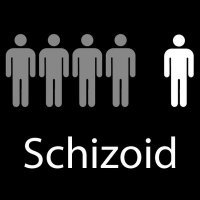
T3 - Schizoid Personality Disorder

Schizoid Personality Disorder is pretty uncommon even in clinical settings, but I'm convinced this disorder would make for an interesting villain, or perhaps a flawed hero, but that one might be harder to pull off. Just read and think about it.

There are seven diagnostic criteria for Schizoid, and the person would have to have 4 or more to qualify for this diagnosis. So without further ado, we'll just jump right in.

1) Lack a desire for intimacy and don't really derive much satisfaction from being part of a family or other social group. They basically seem indifferent to opportunities to develop close relationships, which, as my post yesterday confirms, isn't main stream remotely. Most of us are made to be relational. They date infrequently and often never marry.

2) Prefer to be alone rather than with other people. These are the quintessential "loners" that are socially isolated. The people who go to movies by themselves, eat by themselves and essentially need (or want) very little interaction with others. They chose solitary hobbies and activities to pursue that just don't include interaction, like computer games. Working a job that requires regular human interaction might be very difficult for them.

3) Have very little interest in having sexual experiences with another person. Hmm...not much else to say about this one.

4) Take pleasure in few, if any, activities. Things that make other people happy, like the sensory experience of walking on the beach or the interpersonal experience of enjoying a candlelight dinner with someone, or the bodily experience of intercourse, just don't make these people feel pleasure.

5) Have no close friends or confidants, except perhaps a first-degree relative. The reason being, of course, that it's difficult to be friends with someone who actually prefers NOT to hang around you. That doesn't exactly inspire close bonds.

6) Seem indifferent to the praise or criticism from others. These people just aren't bothered by what others may think about them, certainly lose no sleep over it. They seem oblivious to the normal day-to-day social cues, and often don't respond appropriately...coming across as socially inept, superficial or self-absorbed (even though that's really not the case). Quite honestly, they just lack social skills.

7) Show emotional coldness, blandness or detachment. A person with this disorder rarely reciprocates gestures or facial expressions like smiles or nods. They claim to hardly ever experience the emotions of anger or joy. Even in the face of direct provocation they won't get angry. They just seem very passive when they encounter what a normal person would consider adverse circumstances and they often can't response appropriately to important life events.

A clinician has to be careful before labeling anyone with any type of disorder. For example, a person who just moved from a very rural area to a highly congested city might react with an "emotional freezing" (kind of like shock) that could exhibit some of these characteristics. The clinician has to take into account the cultural experiences of the person.

In childhood, people who go on to develop this disorder often presented as under-acheivers in school, had poor peer relationships and were often solitary. Quite often they were teased by other children or adolescents. (This is actually a fairly common experience for people with early manifestations of personality disorders. This personality disorder is found most often in males and may cause more impairment for a man than a woman.

It may be more prevalent in relatives of individuals with schizophrenia or schizotypal personality disorder (which we'll cover next week....totally different disorders but share some common features). There is some indication that Schizoid Personality can be a precursor to Schizophrenia, especially since stress can cause Schizoids to have brief psychotic episodes.

That's it for Schizoid. Interesting to think about, huh?

Q4U: Ever known someone who might have fit this bill? What possibilities could it have for a villain? Or hero? Remember: You only have to have FOUR of the above characteristics...so you could pick and choose....
Wordle: signature

Thursday, November 19, 2009

T3 - Avoidant Personality Disorder

Week 6 in the Personality Disorder Parade has us studying Avoidant Personality Disorder. (There are only four more PDs to go!) People with Avoidant PD are characterized by social inhibition, feelings of inadequacy, and hypersensitivity to negative evaluation.

There are 7 diagnostic criteria for Avoidant PD, of which a person only has to have 4 to have a diagnosis. Without much ado, here they are:

1) Avoid work or school activities that involve significant interpersonal contact because of fears of criticism, disapproval or rejection. These people might even decline a new job promotion just because the additional/new responsibilities could put them under the microscope for criticism. They are anxious about reacting to criticism with blushing or crying.

2) Avoid making new friends unless they are certain they will be liked and accepted without criticism. For a person to be deemed friend-worthy, they have to pass stringent tests to prove they uncritically accept the person with Avoidant PD. These individuals won't join in group activities without repeated and generous offers of support and nurturance. Interpersonal intimacy is only established after the other person is put through the ringer to prove their acceptance. These individuals don't have a large social support network to help them through crises.

3) Shows restraint within intimate relationships for fear of being exposed, ridiculed, or shamed. So even once they decide to enter into a relationship with someone, these individuals still withhold intimate feelings or have trouble talking about themselves with a partner.

4) Preoccupied with being criticized or rejected in social situations. They will feel extremely hurt if someone is only mildly critical. These people are the proverbial wallflowers, but they like it that way. The less attention on them, the better, because the less likelihood of them being degraded ot rejected. So these individuals tend to be shy, quiet, and inhibited. They don't speak out much for fear others would say they're wrong. They react strongly to veiled or even suggestive mockery or sarcasm, taking it extremely personally. Sadly, these individuals long to be active participants in social life, but fear placing their welfare in the hands of others.

5) Inhibited in new interpersonal situations because they feel inadequate. Situations involving strangers are particularly difficult.

6) Views self as socially inept, personally unappealing, or inferior to others. Individuals with Avoidant PD have extremely low self-esteem. This starts at an early age. In childhood, these individuals would be shy and isolated, with a fear of strangers and new situations. While part of that is common in all children, in those who grow up to have Avoidant PD, the shyness actually increases in the adolescent years where social relationships are of the utmost importance.

7) Reluctant to take personal risks or to engage in any new activities because they may prove embarrassing. They live a restricted lifestyle because they need certainty and security. They may exaggerate the potential dangers of ordinary situations

Only about .5-1% of the general population have this personality disorder.

Wordle: signature

Thursday, November 12, 2009

T3 - Borderline Personality Disorder

I would be remiss not to discuss Borderline Personality Disorder (BPD), even though I discussed it briefly here months ago for someone's character assessment.

Borderline falls into Cluster B personality disorders and keeps company with Histrionic, Antisocial, and Narcissistic PDs, all of which are marked by drama, emotion, and erratic behavior.

Borderlines, as individuals with this disorder can be called by those in the industry, have historically been considered to be on the border between psychosis and neurosis. Psychosis is a loss of contact with reality. (Literally, from the Greek words "psyche" for mind and "-osis" for abnormal condition--an abnormal condition of the mind.) These people experience an alter reality where hallucinations and delusions and bizarre behavior are common-place. Neurosis has become sort of a pop-psychology term to describe a way of existing that's distressful, but not outside societal norms. (For example, someone with a phobia or with obsessive-compulsive disorder or anxiety would be considered neurotic, but not actively psychotic.)

If that gives you any indication how life is for a Borderline, then you should understand this is no walk in the park. The essential feature of BPD is a pervasive pattern of instability in personal relationships, self-image, and affects, and marked impulsivity that begins in early adulthood and is present in a variety of contexts. There are 9 diagnostic criteria, of which a person has to have 5 or more of the following:

1) Makes frantic efforts to avoid real of imagined abandonment. Borderlines are sensitive to environmental circumstances, and nothing escapes their attention. Even if the separation is time-limited (just a week) or unavoidable (workshop for work calls you to travel away or you're late meeting them because there was a traffic accident), they will experience intense fear of abandonment and inappropriate anger.

2) Has a pattern of unstable and intense relationships. They put friends/lovers on pedestals and idealize them, wanting to spend as much time together as possible and giving too much out too much intimate information in relation to how long they have known them. However, they can quickly switch to devaluing them, feeling the other person isn't there for them enough or doesn't care or give enough.

3) Identity disturbance characterized by markedly and persistently unstable self-image or sense of self. Goals, values, aspirations, career plans--anything and everything is up for change. They might put come off as needy one day and then seeking revenge the next with a strong personality. People who know them really feel that they don't know them.

4) Display impulsivity in at least two areas that are potentially self-damaging. There are a number of areas that can meet this requirement, such as; gambling, spending money irresponsibly, binge eating, abusing substances, practicing unsafe sex, driving recklessly.

5) Recurrent suicidal behavior, gestures, or threats; self-mutilating behaviors. This is often the reason for Borderlines to seek help in the first place and is considered a hallmark trait. The completed suicide rate is high amongst this population (usually 8-10%). Self-mutilation, which includes cutting or burning, are very common. (Cutters usually favor the inside of the forearm or the tops of the thighs, but wounds can exist anywhere.) These acts are usually caused by a threat of separation/rejection or expectations from their partner that the Borderline assume more responsibility in the relationship. Cutting and burning (can be with flame or even pencil erasers rubbed extremely fast over the skin) may happen when the person is dissociative (not fully themselves) and often brings about a relief for the individual because the pain is preferable to the emotion. (I've had a few clients say that they feel so numb, and that cutting allows them to feel something, which is reassuring. Others say cutting themselves is a way for atoning for their being an evil/bad person.)

6) Affective instability due to a marked reactivity of mood. Borderlines have one basic mood: dysphoria. When a person feels dysphoric, they feel a state of unease and generalized dissatisfaction of life. But a Borderline's dysphoria can be disrupted by periods of intense anger, panic or despair that can last a few hours...rarely more than a few days.

7) Chronic feelings of emptiness. They may be easily bored and so therefore constantly seeking something to do.

8) Express inappropriate, intense anger or have difficulty controlling their anger. This could manifest as extreme sarcasm, verbal outbursts, or physical fights. The anger results from when the Borderline feels than someone is neglectful, witholding, uncaring, or abandoning. After expressing themselves, they often feel guilt and shame while furthering their opinion that they are evil.

9) Brief periods of paranoid ideation or dissociative symptoms may occur during times of extreme stress (but generally not enough to warrant another diagnosis). By brief, I mean minutes to hours. Usually, this is also as a result to real or imagined abandonment. They may feel that they are briefly outside their body, a condition called depersonalization.

The thing to remember about Borderlines is that they can lie and manipulate extremely well. Unlike Antisocials, who use power to get what they want, Borderlines appear to use their weaknesses to manipulate. Dr. C. George Boeree commented on his website, "They pull you towards them, then push you away, then pull you back. They pit one friend against another. They dramatize situations to their own ends. They move, chameleon-like, from one "personality" to another." This description reminded me of a book I had to read in school. The title, I Hate You--don't leave me, is indicative of the nature of a Borderline.

Borderlines are hard to treat. Very hard. Therapists are not immune from the idealization/devaluation that Borderlines do, and this makes for talk therapy difficulties. When I slipped from the pedestal for one Borderline client, regaining ground was hard. She thought I was uncaring, but in reality, it was only because I cared that I told her what I had noticed about the patterns in her behavior, trying to help her be self-aware. They also have a typical pattern of regressing just as therapy is going well, to avoid the perceived abandonment of terminating therapy. So you can see the inherent difficulties in just being friends with someone like this, much less treating them.

As for what type of childhood these individuals had, some common backgrounds from Borderlines across the country are physical and sexual abuse, neglect, hostile conflict and early parental loss or separation. Medications and therapy (and patience) are the best modes of treatment. Borderlines can be found in about 2% of the general population, 10% in outpatient mental health clinic populations and about 20% in psychiatric inpatients. The young adult years are the hardest, but Borderlines in their 30s and 40s generally gain greater stability in their relationships and have less likelihood of suicide.

It's a long post, I know, but there's a lot going on with this disorder. Hopefully you'll find what you need if you're seeking info on BPD.

Q4U: Discuss any experience you've had with a Borderline. Did they seem to straddle the fence between sanity and insanity?

Wordle: signature

Thursday, November 5, 2009

T3 - Paranoid Personality Disorder

We've made it to Week Four of the Personality Disorder Parade. We've already covered Antisocial PD (sociopaths), Narcissistic PD, and Histrionic PD, so be sure to take a look at those if you missed them. This week, we'll look at Paranoid Personality Disorder. As before, the criteria for the disorder are in bold black.

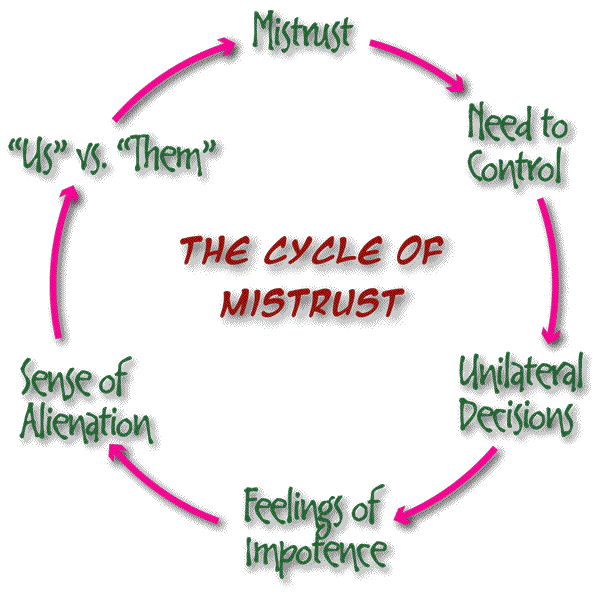
Distrust and suspiciousness so define individuals with this disorder that they interpret the motives of others as malevolent. They automatically assume that other people will exploit, harm or deceive them, even if they have zero evidence to support their assumptions. They might feel that a next door neighbor is plotting against them, or that a coworker might just attack them suddenly for no reason at any time.

Even the people they have befriended aren't free from this. People with Paranoid PD are preoccupied with doubts about their friends' and associates' loyalty or trustworthiness. Many times, they simply perceive a deviation from trust from an innocuous act and this underlies their self-schema that no one can be trusted. When a friend actually passes muster and shows loyalty, the person with the disorder can't believe it.

It's hard for these individuals to share information about themselves with anyone, even close friends. They have a fear that anything they confide will be used against them. Any type of interrogation (like a job interview or applying for a loan) would probably be viewed as prying, which might limit their ability to function in life. (FYI: By definition, a personality disorder has to lead to distress of impairment.) They might even refuse to answer innocent questions, claiming it's no one's business but theirs.

People with this disorder often read into innocent remarks or events, and perceive that they are being demeaned or threatened in some way. For example, if the window clerk at McDonald's made an honest mistake and shortchanged them, they would consider it deliberate. A casual joke can be perceived as a full-on character attack. Even compliments given to them will often be misinterpreted. For example, if the person just bought a new-to-them car and a friend commented on how they liked it, the individual might misconstrue the compliment as calling them selfish underhandedly. An offer to help them might be misinterpreted as a criticism that they aren't going well enough on their own.

These individuals have huge chips on their shoulders too. They persistently bear grudges and are often unwilling to forgive the insults, injuries, or slights that they think they have received. Their reaction is often out of proportion to the perceived slight. A minor slight will arouse major anger that lasts for a long time. They are quick to counterattack and react with anger to perceived insults.

They may be pathologically jealous, suspecting their spouse or significant other as being unfaithful without adequate justification. They want to maintain complete control in their romantic relationships to avoid betrayal, so they may pepper their significant other with questions about their whereabouts or intentions. They may gather circumstantial "evidence" of an illicit affair (i.e., their spouse went to the grocery store and didn't leave a note--or did leave a note and they still don't believe the spouse).

Theodore Millon identified five variations of Paranoid PD in 2004.
1) Fanatic Paranoid - includes narcissistic features
2) Malignant Paranoid - includes sadistic features
3) Objurate Paranoid - includes compulsive features
4) Querulous Paranoid - includes passive-aggressive features
5) Insular Paranoid - includes avoidant features

As with most personality disorders, these individuals are generally difficult to get a long with. Close relationships are a challenge to both parties. Their quickness to retaliate against perceived threats might make them more involved in litigation and legal disputes as they seek reparation. In response to stress, these individuals can have brief psychotic episodes (minutes to hours) where they either hallucinate, have delusions, have grossly disorganized speech patterns or behavior.

So. How does this happen? Once again--sorry for those people who need nailed-down answers--no one really knows. There seems to be both genetic and environmental factors than could contribute to the onset. If a child grew up with caregivers in-and-out, or perhaps around a lot of drug activity where they witnessed manipulation, coercion, and other negative events, then that could contribute to hypersensitivity to mistrust as an adult. Children prone to being solitary, having poor peer relationships, social anxiety, underachievement in school, hypersensitivity, peculiar thoughts/language are susceptible to developing this disorder. These children will be the odd ducks, attracting teasing.

As for treatment, it's difficult (as it is with most personality disorders). Because of the inherent mistrust these individuals have, any one session could be seen as incredibly prying. They might wonder what the information was being used for and be incredibly resistant to opening up. But if the individual wanted help, then a combination of therapy and medications could definitely help.

So hopefully this will give you writers out there some ideas for your stories in progress!

Q4U: How would you handle being in a relationship with someone who was constantly perceiving everything you said and did in a way other than what you intended?

Wordle: signature