LinkedinTwitterThe DetailsConnectBlog Facebook Meet the TherapistHome For Writers
Showing posts with label therapeutic writing. Show all posts

Wednesday, December 14, 2011

A Lesson for Writers from Jonah and the Whale

You might be thinking why on earth is she writing about Jonah and the Whale, but it's a great example of how we lose sight of God's provision. The whale gets a lot of face time, but Jonah had a run-in with two animals in the story...both seeming polar opposites of each other, and therein lies the heart of my lesson.

Animal #1 is the whale GREAT FISH. No duh, right? If Jonah is the "hero" of our story, then the Fish is certainly the secondary character. It swallowed Jonah whole, and clearly represented God's usage of the supernatural to rescue his creation in times of trouble. Jonah has his ah-ha moment when he says "Salvation comes from the Lord" while in the belly of the fish. He recognized the providence given to him by God in sustaining his life through being swallowed by a fish. 

Animal #2 is the WORM. What? A worm? What worm? Yep. Read it. At the end of the book, Jonah is sitting and waiting to see what would happen to the city of Nineveh. He's done his duty, called for repentance from the people of Nineveh, and now he's really waiting for God to turn them in to crispy critters. God provided a plant that grew up over Jonah and sheltered his head. "But at dawn the next day God provided a worm, which chewed the plant so that it withered" (Jonah 4:7). In our story, the Worm is the villain.

Does anyone else see the irony here? Jonah is saved by something larger than life--a freakishly huge fish--and yet he is undone by a something as insignificant as a tiny worm. Granted, a worm with teeth that chewed through his vine and made him uncomfortable with the heat of the sun beating down on him.

Don't we do this? Have an amazing God-ordained experience that sustains us and gives us motivation to keep writing, and in the blink of an eye, we're undone--made angry, made sarcastic, made bitter--by something so small on the scale of life. God chastises Jonah, asking him what right does he have to be angry and throw his little tantrum because the plant died (due to the villainous worm). 

Writers have whale moments, such as getting an agent, winning a contest, snagging a contract, getting a great review/endorsement, being in the coveted top 10 slot on Amazon. Then in the span of minutes, we can come crashing down in a storm of jealousy or bitterness due to a worm moment. A friend got a better review or is higher in their Amazon ranking, or we got a bad set of edits or critiques, or some contest judge thought our story was awful.

The lesson is to take these experiences more in stride. They are the little worms with great big teeth in our life, sent to destroy our happiness. But they have a lot in common with the great fish. Both animals were provided by God, and both were used to get Jonah's attention.


Let's analyze: What do you do when you face a situation where a worm has eaten your "vine," causing it to die?

Wednesday, August 24, 2011

Therapeutic Writing

About three weeks ago, I was approached by a representative from All Things Healing: an online community for healing mind, body, spirit, planet. As a result, my first article on Therapeutic Writing is up on their site! Please click here and let me know what you think!

(It might be a bit familiar to some of my earlier subscribers, but new to most all the rest of you. Leave a comment on the site and show some support!) And while you're there, check out the rest of the site....very interesting.

Wednesday, June 29, 2011

Autobiographical First Novels

Blog Tour Buddies: Today I'm over at Ralene Burke's blog, so please stop by!


I've been thinking about something lately...self-imposed writer's block. A young lady wrote in to me the other day, which got me thinking about this. Her character sketch fairly screamed of autobiography, and I pointed this out in a private email to her.

She 'fessed up and said that yes, the character was basically her, as were the situations she was putting the poor girl through. After hearing the old adage, "you write what you know" enough, I got to thinking that perhaps all authors need to write this autobiographical masterpiece (of sorts) in order to get past the writer's block it can create.

I've heard it said that most authors' first book has a main character very much like the author. I know mine did. In fact, I might as well have called her Jeannie. (As it was, I used my middle name. And, consequently, all the characters in the book--every one--went by the middle names of the real people associated with me.) Rookie mistake.

But this was the book that screamed in my head for me to write it. I was helpless against it's persuasion. I also know that this book will never see the light of day to anyone--and I do mean anyone (even my crit partners, Katie and Sarah). Seriously. Heinous stuff.

But once it was typed out...and hidden away in a corner of my hard drive reserved for cobwebs and dust bunnies, my creative mind exploded with other things to write about. I wasn't fixated on my own profession or my own hobbies or pet peeves that I felt like my characters had to have. Writing the autobiographical novel freed me to really find myself.

Q4U: What about you? Was your first book--even if it was fantasy or historical or what-have-you--set up to present a character very much like you front and center? Why do you suppose that is? Surely it's more than the "Write what you know" proverb. I'd love to hear your thoughts....and NO, not so I can analyze them. :0)

Wednesday, November 10, 2010

Writing with "Pure Joy"

Consider it pure joy, my brothers, whenever you face trials of many kinds, because you know that the testing of your faith develops perseverance.
James 1:2-3

What a great verse to cling to. I know that I've clung to this when facing hardships of many kinds, but even though I clung to it, that didn't mean I really understood it.

Pure joy?

Am I the only one who thought James might have been smoking something when he penned those words?

I have always focused on the latter part of the verse. "Trials of many kinds." Especially from the unpublished side of the fence, I know the writing journey is one of the hardest trials I will ever face. The disappointment doesn't go away when you're published, either. Your agent might not like Book #3 or Book #2 might have bombed out with bad reviews.

Even so, we want to persevere through it all with a faith tested and refined like gold.

The part of the verse I never understood - couldn't grasp because it's so counter-intuitive - was to consider my trials with joy. And not just any joy...pure joy.

In my younger days, I mistakenly thought that only one emotion could accompany a trial based on this verse. But rarely is anything that cut and dry. Our emotions are tangled and convoluted. We cry when we're happy and laugh when we're mad.

Just because James didn't mention the other emotions doesn't mean they can't be present. It's okay to be sad, embarrassed, and frustrated. I think the lesson from this verse should be not to let those other, negative emotions overwhelm the joy.

Joy in the circumstance of trial is cerebral - we'll find it in our minds, not our hearts. Jeremiah tells us that the heart is deceitful above all things, so it is not wise to put confidence in our feelings. We should instead rely on the knowledge that all things work to the good of those who love the Lord. (Yes, that includes having your feelings hurt by an agent or a bad review.)

Essentially, James is talking about a cognitive exercise. Every time we are tempted to focus on the negative emotion, we have to train our brains to think like an optimist.

If you were sitting in my office, lamenting a recent turn of events for the worse in your writing journey, here are two questions I would ask you:
  1. What could possibly be positive about this event? Is there a bright side? (Ok, maybe a lesser-dark side?) It might be easier to look down the road for the good that could come from the trial, because our earthly perspective is limited. When we're going through the trial, it's interminably long and defeating, but from God's heavenly perspective, the trial is fleeting -"light and momentary." 2 Corinthians 4:17-18 reads, "For our light and momentary troubles are achieving for us an eternal glory that far outweighs them all. So we fix our eyes not on what is seen (the trial) but on what is unseen (the eternal glory). For what is seen is temporary, but what is unseen is eternal." I've added the parentheses to show you the importance of looking up instead of looking out
  2. If your trial were happening to someone else, what words of encouragement would you give them? Taking a step back from our emotional reactivity is hard to do. In fact, we might not be able to fully detach ourselves. We're invested in our problem; it affects many aspects of our lives. But looking at it with more objectivity can help us through it. In order to do this, we'll need to call on our Christian friends for support to help us see through our biases.
James 1:2-3 indicates just one emotion we should feel; it's not an exhaustive list. Negative emotions are permissible, they just shouldn't eclipse the heavenly joy God wants us to experience. While joy in suffering might not be something we feel with our heart, we can make the mental choice to feel it with God's strength.


Click here to read the original article I wrote for SAGE Girl's Ministry. I adapted it for writers.

Wordle: signature

Thursday, October 22, 2009

Therapeutic Writing

Every novel is a part of you.

No, I don’t mean in some philosophical sense that they each hold a place in your heart. I mean literally. Pieces of you—quirks, pet peeves, life experiences—are in your novels.

An unforgettable cab driver you had while on vacation pops up in a city scene. A teacher you had in junior high reappears in your YA. Your own affinity for caramel popcorn becomes a charming addiction for a main character. Your character gets worked up over the same injustice that lights your fire.

Some say this is simply writing what you know. And yes, of course they’re right. But it goes deeper than that. Writing is a way to make sense of the world you live in, the world you know.

In this way, writing is therapeutic.

In therapy, counselors often assign writing as homework to underscore an important from the session. Journaling can get a client to think deeper. You’re unlikely to censor what you write in a diary. Unlike a person, a journal won’t make you feel guilty for what you expressed, try to get you to change your mind or talk back to you. (If the latter happens, email me and I’ll see if I can pencil you in.)

Writing is an unadulterated form of communication to self. You write from the heart, for the heart.

And isn’t that what a book should be?

Donald Maass, in his book Writing the Breakout Novel, wrote, "...Novels change us because their authors are willing to draw upon their deepest selves without flinching. They hold nothing back, making their novels the deepest possible expression of their own experience and beliefs" (p. 39).

When you hold nothing back from your novel, there is no barrier between what is you and what is the book. The book is an extension of you—a part¬ of you. And yes, here I do mean philosophically speaking.

I’m convinced the reasons mentioned above are why it’s so hard to take criticism from others about our “babies.” Just as our child carries our eye color or height, our books bear our likeness, our stamp, our genetics. Even the toughest-skinned parent would feel a twinge (and likely much more!) at some well-meaning, but critical, remark about their offspring.

So are you wondering now how can you write for all you’re worth—without flinching, as Maass wrote—during the editing and revision process?

The answer is YOU CAN’T. Just as severing off your baby’s finger would be painful beyond belief, so would cutting that scene or chapter or backstory dump. Switching points of view might be like swapping your toddler for another on the street because you have such an attachment to the one you gave birth to!

Of course, the analogy can only go so far. A book is NOT a flesh-and-blood child. In learning the craft, we realize a “finger,” “hand,” “torso,” or—gasp—the whole of our electronic baby is completely unusable, unpublishable, and in general, plain rubbish.

If this happens to be the case, archive these sections. Not with the hope of resurrection, but for the sake of posterity. Besides being hard to delete, the writing itself—if written from an honest, vulnerable part of your self—is still valuable therapeutically.

So hold a funeral service for those writing endeavors that didn’t make the grade. Bury them inside a graveyard file on your computer.

Then rename the file Therapeutic Writing.

Wordle: signature

Tuesday, March 17, 2009

Writing to Heal, Part Three

As promised, more on the idea of conflict and writing to heal. I like to think that whenever we encounter conflict, whether it's a person who cut us off on the way home today or it's a long-standing grudge that we've carried for years, writing through the conflict can be a way to make sense of it.

There's something healing about putting your own responses into the character's response (or what we wished we had done). We see in black and white the proof of what we did (or wish we had done) and we can either be proud of it or ashamed. If proud, great. You stared conflict straight in the eye and didn't lose your integrity. If ashamed, then you can further analyze why that was the case.

Writing should evoke emotion, as I wrote before. So if that emotion, evoked by words, can kill another bird with the same stone, i.e., make you think about something you said or did or didn't, then it's all the more powerful in the life of the word-writer.

Monday, March 16, 2009

Writing to Heal, Part Two


I was thinking about this topic again this morning over breakfast. For writing to be healing doesn't mean that the world will suddenly look like you are viewing it from rose-colored glasses. Healing writing can evoke various emotions, some of which aren't on the "happy" continuum. Sadness, anger, regret, guilt, annoyance, confusion - only to name a few - can and do have their place in writing.

Personally, I like to work in little vignettes that have happened to me over the course of my life into my books. I'm grinning even now as I remember one of my favorites. Of course, not all of them are favorites, but it just goes to show how life is a writer's fodder. There will never be a drought of life (although you may certainly suffer from writer's block from time to time) from which you won't be able to garner material for writing. It's everywhere.

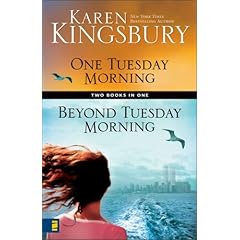
One of my favorite examples of a well-known author who did this is Karen Kingsbury. She wrote a series about the 9-11 attacks, and in her preface said it had been her own way to assimilate and try to make sense of what happened on that awful day. The story idea just came to her as she watched the news coverage. It was healing. And anyone reading her books (if you can get through one of her books without crying, my hat's off to you) also is taken on her journey of healing. As her characters cried out against what happened, we cry out. As they grieved the loss of loved ones and the feeling of security, we grieved. Healing writing at its finest.

So think about what issues you might have in your life currently, or in your past, that you might be able to heal - or at least allow to scab over - by writing. Usually our "issues" revolve around conflict, and as any student of the writing craft knows, conflict creates great plot. More on this in the next post.

Sunday, March 15, 2009

Writing to Heal, Part One

On the side, I've been cataloging the reasons why a writer would write. There could be any number of responses: compelled to, for the money, for the accolades, to see your name on the spine on a book, for the sense of accomplishment.

But I'm adding to that list: writing to heal, or therapeutic writing. This is something that therapists use frequently when in session with a client. Keeping a journal is usually a homework exercise. Letter writing is also a common exercise, but either way, it's healing. You can journal your innermost thoughts on a piece of paper (or word processor) that doesn't talk back, try to get you to change your mind, or make you feel guilty for what you expressed. You can use bad grammar (well, unless you really want to be published), be repetitive, chase rabbits and have no apparent point...and that's okay!

In the interest of being transparent, I wrote my first novel for very therapeutic reasons. When I was fresh out of college, I did an internship for a year where I worked with college students. Being young and immature, I messed up. A lot. And the regret I felt really stayed with me. So I wrote this book, and the protagonist was a girl who looked strikingly like me and had lots of my character traits, but I wrote her doing things right. I wrote her doing things the way I wish I had done.

In essence, I rewrote my past. Well, to be more specific, I rewrote a portion of my past that caused me and a lot of others pain. In a way, I was asking for forgiveness through my writing. Forgiveness from God, forgiveness from the ones I hurt and forgiveness from myself. By the time I finished that book...I felt more complete. Whole. Forgiven. And that was worth the toil and labor for that book.

Stay tuned for more thoughts on writing to heal.