LinkedinTwitterThe DetailsConnectBlog Facebook Meet the TherapistHome For Writers
Showing posts with label Anxiety Disorders. Show all posts

Friday, April 11, 2014

Dear Jeannie: Dating Choices and Altered Reality

Dear Jeannie,
Annie has been home-schooled by her quirky parents, who have given her a lot of freedom and support over the years. She has an intense, embarrassing crush on a boy she barely knows--a poet who helps her sometimes with her English homework. But he says he has a serious girlfriend. Meanwhile, there is a wild-eyed jock who keeps showing up at her church and hitting on her. Even after his initial shock that Annie is missing a leg, this hottie keeps asking for her number and a date. She can't get him to leave her alone. Annie's much more interested in the poet, but she can't figure out a way to break him and his girlfriend up. Or if she should even try. How can she murder and bury this unrequited attraction before it pushes her into destructive behavior? Or is that likely for a sheltered, reasonably-balanced girl? Does the jock have a chance of wearing down her resistance?

Sandwiched in Sanditon 


Dear Sandwiched,

Home schooling has its advantages academically, as studies show, but socially, there can definitely be disadvantages. You didn't mention why she was home-schooled (perhaps her parents didn't want to subject her to potentially cruel peers?), but it makes total sense that she'd fall for this poet, especially if their interactions have been limited to online. But I'd also think that she'd be two-parts fascinated, one-part scared by the jock. He's attractive, an up-close-and-personal type who has seen her maimed status and still wants to date her. That would be a huge draw for her, I'd think. Her "defective" status wasn't a deterrent, but the fearful part might come in about why he's not deterred. (Very much a catch 22, but that's how I'd see it.) The poet guy is more cerebral--in her mind. Crushes like that can be hard to rid yourself of, unless faced with physical evidence to counter the powerful mental connection (i.e., the picture your online buddy sent you looks nothing like them). I just don't think someone who has been fairly sheltered would really have "destructive behavior" when she has the other, way-viable option of the jock. But that's my two cents. Thanks for writing in!


Dear Jeannie,

Gen is a young woman in modern times, who is very close to her brother. However, she has trouble telling reality from her imagination, and has terrible waking 'nightmares'. Her brain will latch on to small details and turn it into a life threatening situation. Is this kind of thing plausible, or something I'm completely making up? Also, how would it affect her in day to day life, is it likely to hit often, or only occasionally. How will her close friendship with her older brother affect her? 


Trying 


Dear Trying,

Altered reality is a real thing. I've had folks in my office who see and hear the same thing that I do, but state that they saw/heard something completely different. Their perspective is skewed, because their brain chemistry is altered by mental illness. The question to ask is not whether this is plausible, but what kind of background are you giving Gen to have this affliction? I'd venture that something traumatic would have to happen for her to have these waking "daymares." That's a symptom of PTSD for sure. People with PTSD try to avoid anything that might trigger a reaction like this. So it probably wouldn't be be a very common thing, as she's probably grown accustomed to what sets her brain off. I'm not sure I'm understanding your last question correctly (you want to know how it would affect her symptoms?), but her friendship with her brother would likely be one of her calming factors, as he probably could deescalate her quicker than others. If you're interested in additional posts that discuss the nature of PTSD, check out this link. The first two posts are the most informative, I believe.


Got Questions?

I might have some answers! Leave your question anonymously in the comment section below, using monikers like Sleepless in Seattle. I'll post my responses in future Dear Jeannie columns. Since the queue is getting longer, I'll post a mid-week Dear Jeannie column next week!

Monday, October 14, 2013

Your Character's Greatest Fear...or Anxiety?

Before you can answer this question, perhaps a brief tutorial on the difference between anxiety and fear is needed.

What writer circles call our character's "greatest fear," is, in actuality, our character's greatest worry/anxiety.

Definition of Fear and Anxiety

Fear: negative emotional state triggered by the presence of a stimulus that has the potential to cause harm.

Anxiety: negative emotional state in which the threat is not present but anticipated.

Both have the same response in a person, such as stress hormones flooding the body, increased heart rate, increased blood pressure to deliver power to muscles, sweat increases to cool those same muscles, non-essential systems are shut down, and your focus is on the threat to the exclusion to everything else.

The REAL Difference

But the difference is in what triggers this response.

Fear is triggered by an actual, immediate threat or danger. You could be hiking and run into a mountain lion. You might see a brown recluse while cleaning. An armed robber breaks into your home. These are actual, immediate threats, not implied. So in the psychology field, we say that fear has an object.

Anxiety is triggered by your thoughts.You can be sitting in your home and begin to worry about something, ruminate over it, and have a response in your body similar to the response your body would have if faced with an actual threat. Humans can project ourselves into the future unlike any other animal, and anxiety greatly increases with this ability, because the future is unknown. In the field, we say that anxiety is objectless.

What Writers Should Keep In Mind

Our characters might very well encounter legitimate fears, such as intruders, heights, spiders, and anything else on the phobia list. But the majority of the book will likely deal with their anxiety about one of these encounters happening in the future. (Click to tweet!) See the distinction?

So what does your character have anxiety about happening in the future?

Writers should keep in mind that often times, characters don't use the word "anxiety" when they talk to you. That word is fairly front-loaded with a lot of psychological stigma and vulnerability.

Characters, like folks in my office, might be more inclined to use the following language to describe their anxiety:

"I'm totally stressed out about..."
"I'm scared that..."
"I'm afraid that..."
"I couldn't sleep last night, thinking about..."
"I've been worrying about..."

The answer to any of these prompts might give you insight into a character's deep-seated anxiety...anxiety that would become their greatest fear (read: danger/threat) if realized.

Emily Dickinson on Fear/Anxiety

I wanted to leave you with the hauntingly beautiful words of Emily Dickinson, who some say suffered from severe anxiety. Her words here would lend credence to this theory. Pay close attention to lines 7-8, because they exactly speak to the difference between anxiety (line 7) and fear (line 8).

Part One: Life
XCVIII

WHILE I was fearing it, it came,
  But came with less of fear,
Because that fearing it so long
  Had almost made it dear.
There is a fitting a dismay,        5
  A fitting a despair.
’T is harder knowing it is due,
  Than knowing it is here.
The trying on the utmost,
  The morning it is new,        10
Is terribler than wearing it
  A whole existence through.

Let's Analyze

Have you ever thought about the difference between fear and anxiety as I've outlined? Or do you disagree with me and think I'm feeding you a load of you-know-what? Is anxiety and fear the same to you? Why or why not? All opinions welcome.

Friday, August 23, 2013

Dear Jeannie: Paranormal PTSD

Dear Jeannie,

My character is named Tex and is the equivalent of a preteen at the time the story takes place. He was raised by an older boy named Johnny who did his best to keep Tex out of harm's way, but ultimately failed when he was forced to leave on short notice when Tex was about 5 or 6. Little Tex had a rough time living on the frontier: malnutrition, inability to find steady work, people taking advantage of his naivety, having to get streetsmart or die, etc. He learned that he possessed the ability to experience emotionally impacting events that occurred in certain places. He found this out the hard way by experiencing the Battle of the Alamo first hand several years after it ended. As a result, Tex now avoids memorials and old battlefields like the plague, fearing something similar may happen. Tex doesn't see Johnny again for 16 years, by which point he promises to aide Johnny in his side of the American Civil War. What kind of emotional baggage might Tex be carrying with him? 
 
Sincerely, 
Stressing in the States

Dear Stressing,

It's pretty clear that Tex is likely suffering from PTSD. One of the key symptoms of PTSD is avoidance of stimuli (people, places, things) that remind you of the trauma. Since he is scared to visit old battlefields and memorials where people died, this would fit. He might also have flashbacks, nightmares or day terrors...you can see my Anxiety Disorders label for more info.

What might be more painful for him is the idea that Johnny doesn't seem to remember him (whether Johnny does or not). I'm sure as a young boy he was wholly reliant on Johnny, and probably worshipped him with hero status. You didn't make it clear whether little Tex knew why Johnny had to leave suddenly, but either way, that event would have devastated him. Seeing him years later, seemingly having moved on, would make him very wary, if not downright pissed. I hope that you have given Tex a very good motivation to want to help him, otherwise that plot point might seem implausible. 

Best of luck to you, and thanks for writing in. 


Got questions of your own? Leave them in the comment section, using monikers like Sleepless in Seattle, and I will post my answers in next weeks column.  The queue is empty, folks.

Friday, June 28, 2013

Dear Jeannie: Depersonalization Disorder and Survivor's Guilt

Dear Jeannie,
 

In my sci-fi book, my character endured sensory and sleep deprivation torture for about 5 weeks before being rescued. He hallucinated a malicious version of himself which taunted him. This character had previously died under similar circumstances before being reincarnated. Due to the similar feelings of isolation, helplessness, distortion of senses and reality, as well as the feeling of dying in both situations, do you think it would be realistic for him to develop Depersonalization Disorder as a result of the second event? Also, what other emotional baggage might he develop as a result of this event?

Lively in London


Dear Lively,

Dissociative disorders are a heck of a lot of fun to write, aren't they? Depersonalization disorder might fit the bill for your guy, but let's make sure.

People with this disorder experience episodes during which they feel detached from, outside of, or lacking control of themselves. They know it's only a feeling, not reality.  However, therapists have to rule out certain disorders before considering Depersonalization. One such disorder which you might want to look at is Acute Stress Disorder. Within ASD, the person can have experiences of being outside of their body, numb, and detached. So be sure to check out that link, and if he fits ASD, that would rule out Depersonalization Disorder.

To throw some more research your way, your character's second experience sounds more like Brief Psychotic Disorder to me. Due to his physical and psychological torture, he hallucinated this mean version of himself. Not knowing the full extent of his first experience, just that it is similar to his second, I feel pretty strongly that one of the anxiety disorders (ASD, PTSD) might be a better fit.

What do you think? Feel free to write responses in comment section below.


Dear Jeannie,

A man is responsible for the death of his family in a vehicular accident and because of depression and subsequent job loss, became indigent. What are some ways survivor's guilt would express itself and what is the shortest time frame it would be expected he would recover without intensive professional help?

Wrecked Two Ways in Texas 


Dear Wrecked,

You've already mentioned one of the ways survivor's guilt rears its ugly head: depression, which subsequently led to missing work and eventually losing his job. But in a previous post I did on this subject, I explained that various other reactions would be feasible. Here's an excerpt:
Survivor's guilt used to be it's own diagnosis in the Diagnostic and Statistical Manual until 1994 when it was subsumed under Post Traumatic Stress Disorder. It carried with it many of the same criteria as PTSD does now, including depression, anxiety, sleep disturbances, withdrawal, nightmares, episodes of uncontrollable crying/laughing, and a loss of interest in things that one brought pleasure. (Very similar to PTSD.)
As for recovery time, that is such an individual variable I couldn't hazard a guess. Given his active guilt in that he was driving the car, I would think it could last a fairly long time. Was he really responsible? Driving drunk? Where there any outside influences on what happened for him to lose control of the car? Some individuals never quite get over this, but some might take years. Therapy is the treatment of choice for this condition, so he could receive help in reframing his belief as being the cause of the accident (if indeed he wasn't) so that he can start seeing himself as a victim.

Any other thoughts or questions, shoot them to me below in a comment.


Got Questions?

Post them anonymously below, using monikers like Sleepless in Seattle.
I'll get to them in future Dear Jeannie columns.

Monday, May 27, 2013

Just Keep Swimming, Just Keep Swimming...

Over 2 years ago, I wrote a post about Finding Nemo and all the mental illness implications within the movie.

Courtesy of Pixar
Little did I know that this post would become the runner up to the most popular post on my blog. Since 2/23/11, the post has received over 11,200 hits.

That's a lot of people checking out Finding Nemo.

So perhaps folks might be interested in knowing that Pixar is coming out with a sequel called...yep. You guessed it: Finding Dory.

There is a lot of speculation about how Pixar will handle having a main character who suffers from significant mental and cognitive disabilities. One can only assume that she gets lost somehow, courtesy of her disorder, and Marlin and Nemo will likely be looking for her. While she was a only a supporting character fish in Finding Nemo, she will take center stage. 

Dory isn't just quirky. That's important to put on the table. She not only suffers from short-term memory loss, she also has a lot of anxiety, confusion, and disorientation when she's left on her own. There is arguably some dependent personality disorder traits exhibited as well, but this is muddied by her mental handicap which prevents her from living independently. 

Michael Arbeiter of Hollywood.com likened Dory and Marlin's relationship to that of the relationships between Tom Cruise and Dustin Hoffman in Rain Man. This got me thinking of all the similarities. Tom Cruise utilized his mentally compromised brother to forward his goal of getting their father's inheritance. He took advantage of him, and Marlin does the same with Dory's ability to read English and talk whale. Tom Cruise was frustrated by his brother's handicaps (such as not being touched, not being able to fly, having to watch certain shows at certain times, wear certain types of underwear, etc). Marlin wants to pull his hair scales out with Dory's mental handicap, and eventually leaves her alone toward the end of the movie, which really does a number on Dory.

I just want to see Pixar show a heroine challenged by mental illness but not beat down by it. People (and fish) can rise above their limitations. Pixar has shown that they can go deep with certain movies, such as Toy Story 3 and Wall-E. I sincerely hope that they go there with Finding Dory.

Let's Analyze

Have you heard that Pixar will be releaseing Finding Dory in 2015? What do you hope they do with the film?

And I'm still offering a giveaway of Julie Lessman's newest, Love at Any Cost! Just click here to enter the giveaway!

And HAPPY MEMORIAL DAY! I'm so proud so many of my family members have served or are currently serving. Thank you to Allan, Marion, Dave, Cheryl, Jason, Gene, Mark, Wes, and George. Your service is and always will be greatly appreciated.

Wednesday, May 8, 2013

Character Clinic: PTSD in Action

I've got Nathan, Earl of Tavishton, on my couch today. He's had quite the upbringing, with an inconstant tart for a mother and a father perhaps with more foolishness than sense, who gave up his life in a duel for her dubious honor. Nathan witnessed his father's gun backfire, which severed the elder Earl's hand, and watched from the top of a carriage as his father's opponent murdered him. Nathan is no rake internally, though he tries hard not to look like he's not trying to hard. (You Regency folk will get that, I'm sure.) He tries to look like a wastrel to punish his mother for his father's death.

Nathan's author, Robin, wants to know: Is having a fear or guns so bad that it makes Nathan freeze normal? How difficult should he find forgiving his mother? Is there something that must occur for that forgiveness? Would the guilt of not stopping his father be strong enough motivation to make Nathan go to such an extreme length as to steal from his best friend to keep what little connection with his father he has?

This is a perfect example of a character who has a ton going on and would really benefit from a full analysis. However, I'll do my best with this mini-assessment to make it worthwhile, I hope.

First and foremost, a reaction of freezing in place when faced with a gun or "flintlocks" as they were is totally reasonable. That would be a trauma reaction to an inanimate object he had previously witnesses carnage as a result of its use. In particular, watching his father's hand explode would be highly traumatizing, and no doubt would result in a complete revulsion of a gun.

What would this look like? Not wanting to touch one, carry one, be around them, have them in his house. He would likely show hypervigilance and paranoia when other people carry them or shoot them in close proximity to him. He might have nightmares of the event, or even reenactments of the trauma during the day (i.e., visualizing it happen when around open fields with carriages). You can safely say he'd never set foot in a duel field ever again. Very realistic...and likely not something he would get over for a long time, if ever.

As for forgiving his mother...it would be tricky, but if you could write it well, I saw a great character arc for him to not only forgive his mother, but also his father for his "stupidity" for putting his life on the line. What if Nathan had someone for whom he would protect her honor...no matter what? If Nathan could somehow be put in the shoes of his father...who clearly loved his flawed mother, and was willing to die for her. Having him learn the lesson that no one is perfect, and that yet people are still worthy of sacrifice. I think he could do it.

It was rather unclear from the intake form that Nathan really suffers from guilt of not stopping his father (from the duel, I presume). However, if he does indeed feel guilt at sitting atop the carriage and not stopping the duel, I would think it would have the opposite effect on him wanting to act like a wastrel. Punishing his mother by acting like a dandy would hardly honor his father's name. Don't have time to go deeper here, but I hope you get what I mean.

Thanks for writing in...I realize you wrote in many, many months ago when I was slammed with mini-assessments. Thanks for your patience, Robin!

Let's Analyze

If you felt guilty for the death of someone, how would you try to honor their memory? By being the best person you could be and assuming their "title" (i.e., mantle, position, etc), or by punishing the person you truly felt responsible for the death?

Sunday, March 3, 2013

Weekend Funnies: OCD Cat...You Gotta See This!

OCD Cat

"Don't step on the cracks!"

Tuesday, September 20, 2011

Character Clinic: Tanner Sheppard

Today's character on the couch is Tanner Sheppard, the brainchild of author L. Blankenship. Tanner resides in a science fiction book as an ex-pirate (think spaceships instead of ships). He's killed, betrayed, and slaved people. He was sentenced to fifteen years of inpatient therapy under new PTSD treatment modalities (re-recording the memories and taking the stress out of them so they aren't "panic on tap"), but his friend Maggie broke him out after a year.

Louise wants to know: I’ve done a little reading and I got some helpful feedback from an abuse survivor, but when it comes down to it I have zero experience with the kind of sustained, violent (maybe sexual) abuse Tanner went through… I want to represent it honestly, make his progress an honest fight and not a miraculous recovery. So I’m looking for thoughts on what he’s like when he’s still new to wrestling with the idea of being worth something, of being different. And what sort of steps he may be able to take on his own.

Tanner -

Depending on your age when you had the brunt of the traumatic beatings, whether just physical or sexual, that could have some impact on how you present with traumatic symptoms in therapy and in the present day. The tender psyche of a young child going through those types of things can split into multiple personas as a way to protect the main identity. Later, something can trigger these personas to show up (such as the murder of your dad). This is just FYI.

But as to having a particular formula to follow for abuse victims--that'd be impossible. Based on my experience with clients who suffer from sustained violence or trauma, it's a constant battle, one they never "arrive" from. They can be doing really well and then one memory triggers them into their panicked state and damage control is needed to get them back on track.

For Tanner to even contemplate that he's worth something, he'll have to have someone show him through actions that he is. Whether this is Maggie or one of his sisters or some other mentor-type person...they will have to be patient and consistent with him to help him help himself. If they believe it in, then he will have a less-hard time believing in himself (notice I didn't say easier time). It's an uphill battle.

I'm not familiar with the re-recordings of PTSD memories...unless you mean working with trauma survivors using EMDR (eye movement desensitization and reprocessing). This theory is controversial, but some swear by it. I've never used it myself, as it requires specialized training in just that theory. It has similarities with exposure therapy (essentially repeatedly exposing a client to what they fear until they become less sensitized to it) and cognitive-behavioral therapy. The idea is that by reprocessing an upsetting emotion/event while bilaterally stimulating the brain (tapping meridians on both sides of the body on the chest, head, face, etc) moves the upsetting emotion that has been stored in the right side of the brain into the left side, where they are processed differently...in theory, taking the disturbing feeling away from the memory, which doesn't go away, but remains, just processed differently. (Hopefully this makes sense...here's a video that demonstrates it.)

Hope that this helps some. I'll gladly welcome additional questions in the comments section. if you want to take him deeper, click here.

For a chance to win Julie Lessman's newest release, A Heart Revealed, click here!

Wednesday, August 17, 2011

Character Clinic: Joe Cooper

Lorna's character Joe is on the couch today. He's a high school senior quarterback whose biggest dream is to play for the NFL--preferably the San Francisco 49ers. He has a girlfriend Rebecca who he loves dearly. One night, he was texting Rebecca and not paying attention to the road. He hit and killed a jogger. To make matters worse, he ran from the scene and didn't tell anyone. The jogger just happens to be the uncle of Cheryl, the head cheerleader at his school who has always had a crush on him. She's vowed to find out who is responsible for killing her uncle. Yikes!

Lorna wants to know: What is Joe thinking or feeling as he goes through his life after the accident? Will he have trouble in school or make mistakes playing football? Anything important I need to know?

Joe -

You've killed someone. Unless you are an unfeeling, uncaring person (which your intake form would suggest otherwise), then you are definitely going to be affected--seriously--by this traumatic event. The guilt, at times, might be unbearable.

The nightmares you mentioned are evidence of post-traumatic stress, as would any flashbacks while you're awake, avoiding the scene of the crime, perhaps even avoiding your car (opting to ride your bike to school, etc). People with PTSD generally try to avoid any and all reminders of the event, which might mean suddenly Cheryl makes you uncomfortable (besides the fact that she's after you and doesn't know it) because she reminds you of her uncle. Or it might play out in your life by the fact that you don't want to text your girlfriend anymore. Texting reminds you of that split second when you heard your car crunch into something on the road.

It's different for everyone, but *normal* people would probably act different enough after an event like this that even the casual observer would know something was "up" with them, whether they could figure out what it is or not. You'd likely be more withdrawn. Your grades might suffer. Your game might suffer. Life might suddenly crowd you out.

You'll probably be mentally hounded by questions, like, "Could I have done something to save him?" "Should I turn myself in?" "Should I have died too?" "Is my life worth living after having done this?" This will be excellent inner tension for him.

I feel that I must say that any reader is going to want him to come clean by the end of the book, or not only will the book be unsatisfying, it will also be espousing a moral premise that is inherently false. So I hope you've got a great arc planned for him to see this through. Best of luck!

Tuesday, July 12, 2011

Character Clinic: Cecilia Phelps

Today's Character Clinic is for Cynthia. She's writing a paranormal romantic comedy featuring Cecilia Phelps, a 27-year-old who is scared to venture outside her house. Her mother died of a bee sting allergy while working in her garden. Cecilia found her when she was 9 years old. As an adult, Cecilia has an online job and all her friends are online.

Cynthia wants to know: Can a person be afraid to go outside and still want to go outside? What kinds of feelings/physical reactions might she experience? Is this believable?

Cecilia - 

Your author asks some great questions that I think many readers will benefit from. After reading your intake form, it's clear that you are potentially suffering from one of several things:

1) Agoraphobia w/o History of Panic Disorder 
2) Panic Disorder with Agoraphobia 

I link the first two together for a reason. Since you didn't mention what happens when you are faced with the outside, your diagnosis would depend on whether you has panic attacks (diagnosis #2) or not (diagnosis #1). 

Agoraphobia is anxiety about being in places or situations from which escape might be difficult/embarrassing or in which help may not be available in the event of having an unexpected or situational predisposed Panic Attack or panic-like symptoms. In your case, if your scared that you'll die outside and no one will find you (as in the case of you mother), then agoraphobia would fit in that you would never know if someone would come around and find you lying on the ground, passed out from anaphylactic shock.

3) Specific Phobia 

This option to me is the most intriguing one to play around with character-development wise. If you basically can boil your fear of death down even further to perhaps a fear of death by bee sting, then you would have a specific phobia of bees--Apiphobia.  

Specific Phobia is limited to a single situation--like heights or confined spaces or water. But bees would count. You'd only have this is you avoided the outside in order to avoid bees. This makes the most sense, given that you say you want to go outside, but you can't because you're afraid. 

Are you really afraid of outside or are you afraid of what you'll encounter outside (bees)

As to your backstory about why you might be afraid of bees, your author already did an excellent job setting that up. For a young girl of 9 to find your mother like that, her face blackened, lying in her garden, that would be very traumatic. It is beyond feasible that you'd develop a specific phobia of the exact insect that killed her.

I hope you've enjoyed your time on the couch today, Cecilia. If you want to delve a little deeper, like how the symptoms might have arrived or to discuss how the panic attacks might look for you, buy a detailed assessment and take another spin on the couch.

Tuesday, June 7, 2011

Character Clinic: Day 2

Blog Tour Buddies: Stop by Diane Estrella's blog to say hello and enter for a chance to win my Writer's Guide to Personality Types!

Today, I've got Sierra's character, Marni* on the couch for Day 2 of my Character Clinic. Marni is funny, eccentric and sees symmetry and purpose in coincidences. Unable to accept the complexity and randomness of life, she builds ups a strange mythology to explain everyday occurrences and to guide her day to day actions. But her perfect world starts to fall apart when one man helps her see beauty in the chaos and uncertainty of life. 

Sierra wants to know: What would cause someone like Marni to be unable to handle uncertainty in her life? Why would she feel the need to have an explanation for every little thing, even if it means living with a strange set of superstitions? Why would she feel compelled to develop those superstitions in the first place?
 
Here's the opening criteria of the disorder that first popped into my head after reading your description. Why don't you read it through and they let me know if you think it fits? (FYI - I've tweaked it by only showing you the criteria that I think she would fit, based on your sketch.) 

A pervasive pattern of preoccupation with orderliness, perfectionism, and mental and interpersonal control, at the expense of flexibility, openness, and efficiency, beginning by early adulthood and present in a variety of contexts. 

What say you? Yay? Nay? This is the opening lines of the DSM-IV-TR for Obsessive-Compulsive Personality Disorder. However, I'm pretty sure she wouldn't fit the overall criteria needed to have the diagnosis. But her obsession with mental control over her environment made me go to this disorder.

Since she wouldn't fit the entire diagnosis (you can go here for the full criteria), we have to look at the constellation of disorders within which OCPD falls: Anxiety Disorders. Basically, Marni sounds like a control freak. She's probably terrified of letting go of her mythology, because she's found solace in it--it relieves the anxiety she feels about a chaotic, out-of-control world. This mythology has become a protective shield from the world as well as a blueprint she holds the world up to to make sense of it.

Deep down, she's insecure. The need to control--to order her life (even if it is more mentally than outwardly physical control)--is fueled in anxiety. What I can't help you with is why this is the case. You'll have to consider her upbringing, her family of origin. What kind of parents did she have? Were they constantly riding her about things? Demanding explanations? What happened to make her feel that everything has to have a reason, a story as to why it came to be?  

One thing to consider as you write Marni is the impact this adherence to her mythology will have on her socially. Surely there will be times and occasions when her world views will come into direct opposition with regular life. What will she do? Withdraw? Cower? Be in denial? Gloss over it? Ignore it?

People with OCPD are difficult to get along with. They want things to be there way. When she encounters this man intent of helping her see the beauty of chaos, I'm thinking she won't like it to much. I'm assuming this man is the romantic interest, which means you'll have instant tension, which is good. But people along this continuum of anxiety disorders really like things the way they like them....and it'll take more than a few conversations to convince Marni that she's wrong or that her mythology isn't needed or warranted. 

Another question to ask....to really dig deep into her psyche....is what is she afraid of? What importance does her set of beliefs hold for her? If it weren't there, I mean, worst-case scenario---what would she be frightened would happen? It's obvious to me that she developed the superstitions to offset her anxiety and ultimately her fear, so what's the reverse? To be ruled by that anxiety and fear, which, of course, only you as her author know what is.

Sounds like a fascinating character. I'd like to have spent some time with her in my office. Likely, there's much more lurking under the surface than what you've given me....but alas! Not enough time in the day, what with my real clients and all. :)


Good luck with her!

Tuesday, October 12, 2010

Treatment Tuesday - Acute Stress Disorder

This week's assessment comes from Sierra. She's writing a psychological thriller short story in the present day about Adriane,* a woman who stabs her husband with a kitchen knife after 6 years of being emotionally abused and constantly compared and found lacking to her husband's first wife. She was steady and reliable, smart and successful prior to this. She is seeing Dr. Black* who is consulting for the defense and conducting their sessions in prison. Adriane still doesn't remember what happened.

Sierra wants to know: Would it be normal for Adriane to remember as she goes through the process of therapy, and if so, what kind of reaction would an inherently good person have after finding out that they did something terrible to someone they loved? What kind of process does someone go through when they make a "mistake" with such horrible consequences?
This sounds like a fascinating plot, Sierra. You are right in assuming that Adriane dissociated to some degree while killing her husband if she does not remember it. We just have to figure out what diagnosis best fits the circumstances.

When a person dissociates, they separate their thoughts, emotions, or experiences from one another. 
This can be on purpose or involuntary. Adriane's was likely involuntary. The presence of amnesia is indicative of many different disorders, such as Dissociative Amnesia or Acute Stress Disorder, the two I want to look at more closely.

With Dissociative Amnesia, the person usually can't recall important personal information, and the information is too extensive to be explained by ordinary forgetfulness. This can happen once or several times. If the amnesia occurs during the course of another disorder, though, that disorder takes precedence. This leads me to Acute Stress Disorder after ruling out the below.

Since you had no indication that Adriane was two or more personalities, she doesn't fit Dissociative identity Disorder. Since you indicated no traveling away from her home or work or assuming a partial or complete different personality, she doesn't fit Dissociative Fugue. There is some indication that she could suffer from Posttraumatic Stress Disorder, but in your sketch, you didn't include any of the traditional symptoms like flashbacks or dreams or avoidance of things that remind her of the trauma.
 
So we are left with the likelihood that Adriane has Acute Stress Disorder. Adriane experienced an event in which she caused the death of her husband, which is definitely traumatic. Shen then would have to exhibit 3 of the 5 characteristics, one of which is the amnesia:

(1) a subjective sense of numbing, detachment, or absence of emotional responsiveness
(2) a reduction in awareness of his or her surroundings (e.g., "being in a daze")
(3) derealization (i.e., feeling a loss of reality or sense of unreality)
(4) depersonalization (i.e., feeling like she's not alive, floating above her body, not a person)
(5) dissociative amnesia (i.e., inability to recall an important aspect of the trauma) 


The last three traits are essentially all aspects of dissociation...a separation from her own body and mind.  Even though she doesn't remember the event at present, she could still experience recurring images or dreams associated with what happened, even if they don't make sense. You'd also want to give her some hyperarousal symptoms, such as inability/difficulty sleeping or concentrating, constantly trying to detect threats to herself (hypervigilance), or exaggerated startle response.

The only thing to consider with this diagnosis is that the symptoms last for a minimum of 2 days and no longer than 4 weeks. If this fits your thrilled time line, then great. If it doesn't, then you can consider a lasting diagnosis of PTSD, more than likely.

Yes, she could eventually remember. But she could also have blocked this memory from resurfacing. Some of my colleagues adhere to hypnosis for this type of memory recovery, but I've never done anything with hypnosis because you have to be trained in the process.

Sierra also wants to know: How would a therapist conduct this sort of thing? What constitutes mental competence to stand trial? How would the therapist go about discussing this with her?

I Googled what constitutes mental competence to stand trial (since I'm not lawyer), and it was pretty much what I thought: the person has to have the capacity to assist their lawyer to defend them and to understand the nature of the proceedings in which they are involved.

You're Dr. Black is going to have a clinical interview with Adriane in which he will assess her with psychological tests or personality tests, like the MMPI-2. He'll take a social and psychiatric history and may use a state competency exam, depending on which state you're in (I found out Georgia has one). Most importantly, Dr. Black will perform a Mental Status Exam and assess current level of functioning of Adriane.


So what's in a Mental Status Exam? I could go into a detailed approach, but why reinvent the wheel? I found a great website with a full explanation of each are of an MSE, so here it it. Essentially, Dr. Black will just ask pertinent questions to cover each of the areas, probably done in a very getting-to-know-you kind of way as part of building rapport with Adriane. However, this would be done at the beginning of the process. You mentioned "sessions" with Dr. Black while Adriane is in prison, which makes me think ongoing counseling. I'm not sure about the legal ins and outs of this type of set-up, and you also want to think about your time line of the diagnosis.

So as it stands, mental competency for Adriane to stand trial would be the results of the following equation:
Functional
Assessment
= Defendant's Current
Mental Status
x Specific Demands
of Case

I've enjoyed this little foray into legal proceedings and learned quite a bit myself, so thanks for that, Sierra. Hope this helps....thanks for writing in!

Still time to enter to win Donna Anastasi's Spin the Plate
Click here!

Wordle: signature

Tuesday, May 25, 2010

Treatment Tuesday - Trichotillomania

I got a question a while back from Carie, who wanted to know of a lesser-known disorder she could give a child in her WIP. While the disorder I'm suggesting doesn't have to be just for children, it's definitely one that will give a different spin to a story.

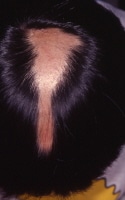
Trichotillomania (which is SO very fun to say, by the way---trick-o-till-o-mania) is an anxiety disorder where the main symptom a person has is pulling at one's own hair persistently. The most common area where children or adults pull hair is of course the scalp, but pulling of hair can happen anywhere there is hair. Eyelashes and eyebrows are really common, as well.

Usually a child will pull their hair or eyelashes when they feel anxious about something just prior to the act. They'll feel tension when trying to stop pulling, as well. After they pull, they'll feel some relief. (So the argument could be made it's a disorder similar to Obsessive-Compulsive Disorder, in that they feel compelled to do it.)

Alopecia can occur, which is loss of hair. It can be extremely noticeable, or small and undetectable....so you can have an adorable looking kid for your WIP without some bald pattern on their head and still have them with a problem.

In preschool age children, this disorder is often considered a childhood habit. My own little girl will often tug at her eyelashes while she's falling asleep, almost like it's comforting to her somehow. She'll pull at them gently, though, not with the intent of pulling them out. Likely, she'll grow out of it. If an adolescent child develops this, then it's more likely that they will have some more severe pathology later, like OCD, so I'd think about what age you want the child to be who might have this disorder and where you'll want to go with it.

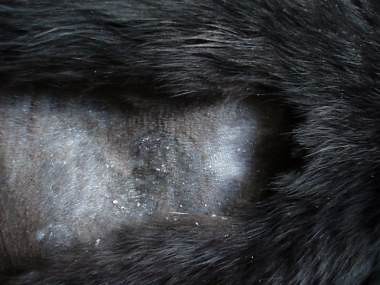
A very interesting side note: My cat, Cracker, actually had a version of kitty trichotillomania when we moved him from New Orleans to California. He picked and licked and bit at the underside of his torso and inner legs until he had very little hair (which was extremely noticeable, as he was an all-black cat). The vet called it psychogenic alopecia. Our cat was traumatized by the move, apparently! Like I said, very interesting!

So there you are, Carie. A little-known (or at least little-written about) disorder for the kiddo in your WIP! Any questions are welcome in the comments section, as always.

Wordle: signature

Tuesday, April 27, 2010

Treatment Tuesday: OCD v. OCPD

This week's assessment is from Karissa. She wrote in wanting to know the difference between obsessive-compulsive personality disorder and obsessive-compulsive disorder (OCD).

How happy I am to oblige! I did a post not too long ago about Obsessive-Compulsive Personality Disorder (OCPD) here, so I won't go into that again. But the analogy I used on that post was that if neurosis was water and a person was a sponge, a person with OCPD would be completely saturated while a person with OCD would just be wet.

People with OCD are trapped in a pattern of endless thoughts and behaviors that really don't make a lot of sense and can't be stopped. The obsessive thought drives the compulsive action in a vicious cycle.

Obsessions have 4 criteria that all have to be present:

1) Thoughts, impulses, or images that are experienced as intrusive and inappropriate. They usually case marked anxiety or distress.

2) The thoughts are not simply excessive worries about real-life problems (like checking the doorknob and windows locks in a run-down neighborhood where break-ins are common).

3) The person attempts to ignore/suppress these thoughts or neutralize them with some other thought or action (the compulsion part of the equation).

4) The person recognizes that the obsessive thoughts are a product of their own mind.

Compulsions have 2 criteria:

1) Repetitive behaviors (like hand washing, ordering, checking) or mental acts (like praying, counting, repeating words silently) that the person feelings driven to perform in response to an obsession (see above) or to be in accordance with some rigid set of rules they have in their life.

2) The behaviors or mental acts are aimed at preventing or reducing distress (like preventing some dreadful event---like a break-in), but they aren't connected in a realistic way or are clearly excessive.

So a person with OCD has to fit the above picture, but they also have to realize at some point that the obsessions and compulsions are excessive or unreasonable and they do the following:

1) cause marked distress

2) be time consuming (like more than 1 hour a day)

3) significantly interfere with the person's normal routine (occupation or academic fuctioning, as well as social activities or relationships

People with OCD don't want to be OCD. They don't relish it. Their mind is a mind that just won't quit. They have no peace, no calm. That's what it's an anxiety disorder.

So while people with OCPD might share similar characteristics with OCD sufferers, the biggest difference might be that people with the personality disorder aren't in as much mental anguish. Some might even enjoy being the way they are...perfectionistic, conscientious, detailed, devoted, overly productive.

Hopefully this clears it up. I'm glad Karissa asked, because I meant to clarify this more after that personality disorder post and forgot! So thanks for the reminder.

Q4U: Any OCD or OCPD people in your books? How do you/could you find a balance between showing the obsessions and the compulsions within the written page?

Wordle: signature

Tuesday, April 20, 2010

Treatment Tuesday - Claustrophobia

This week's assessment is from Lindy*. She wrote in a few scenario questions which happen to go really well with Maslow's Heirarchy of Needs that we've been looking at for Thursday Therapeutic Thoughts.

* Name has been changed to protect the not-so-fictional.

Lindy wants to know: If a character has a phobia of small places like closets and elevators, and is being held by a killer in a shed, how would she react? Would she be more concerned about the killer murdering her or will the phobia overpower her?

I'm going to answer this question strictly from Maslow's theory and we'll see how the character could be written out.

Linday has given her character claustrophobia--a fear of small places. This isn't a clinical term for an actual diagnosis, which may or may not be important for you to know. This character would likely fall under the diagnosis of agoraphobia, with or without panic disorder, or perhaps generalized anxiety disorder if they don't meet all the qualifications for agoraphobia.

People who suffer from claustrophobia are usually afraid of two things: 1) being restricted and 2) being suffocated. I'll break these down according to which of Maslow's Needs. What's at stake when a person is restricted, either by movement of arms or limbs or being unable to stand or move at will? It's the fear of not being safe, not being able to get your person--your body--out of danger. Being restricted plays out on Maslow's pyramid as a Safety Need. A person with this disorder would move mountains not to be put in such a dangerous situation to them as being shoved in a shed.

Being suffocated is a different story. What's at stake? Not being able to breath, i.e., not being able to stay alive. This is a Basic Need, arguably the most basic need of all. Everything else pales to not being able to breathe. This is why most people with agoraphobia are diagnosed hand-in-hand with panic disorder.

A character in this situation will likely have a panic disorder at the idea that they won't be able to breathe. It's a catch 22, of course, because as they have the panic attack, their airway does close off, making it more difficult to drag in a breath, consequently making them feel as if they are starving of oxygen. I can only imagine how truly awful it is to think you can't get a breath. Think of people with asthma. *sigh* Huge Basic Need problem. (FYI, Brandilyn Collins does a terrific job of describing full blown panic attacks in her book Exposure. Excellent read.)

Bottom line will be that you've got to think through how bad a phobia you want to give her. I don't care to be stuck in an elevator going up 50 flights. I can do it without sweating and I don't consider myself claustrophobic. But if I had a preference, I would have Scotty beam me up instead.

But you've also added the little tidbit of a killer about to murder her. While she's in that shed, the threat of the killer is really a Safety Need threat. He's not actively trying to kill her. If, say, he were trying to gag her, that's the need of oxygen, which is a Basic Need. If he's trying to chase at her with a knife, then it's the need to avoid pain/survive, a Basic Need.

So the character is in the shed with two Safety Needs not being met and likely one Basic Need not being met, that of lack of oxygen because she's probably hyperventilating in the confined space, thinking she's going to suffocate. In this scenario, with a true claustrophobic, I guarantee that her will to draw in a breath will outweigh some future threat of danger from the killer-slash-kidnapper.

Of course, Maslow's theory is a theory. But I happen to think it makes an awful lot of sense.

Hope this helps Lindy!

Q4U: Any claustrophobics in your novels? Do they have panic disorder to accompany their fear?

Wordle: signature

Tuesday, October 27, 2009

Treatment Tuesday - Enuresis, Phobias, and PTSD

This week’s assessment comes courtesy of Lynn. She’s writing a historical based on the Kindertransport (evacuation of Jewish children prior to WWII; read more about it here). Her MC is 8-year-old Halina* who goes to live with a Quaker family in London. Her 13-year-old brother is left behind due to no room on the train. Halina maintains contact with her parents until they are sent to Auchwitz. Halina eventually moves to the United States. In 1950, when Halina is 20, she marries and two years later gives birth to a daughter.

* Names have been changed to protect the fictional.

Lynn wants to know how someone would help Halina through her multiple issues, which she listed for me:

1) Survivor guilt – she’s not sure what happened to her brother; friends and family were exterminated
2) Insecurity – how could her parents leave her? Did they not love her? Issues with bedwetting
3) Ostracism – hard time fitting in with British children (different language, culture, religion)
4) Phobias – train stations/suitcases
5) Re-evacuation adjustment to the England countryside when war is declared
6) Flashbacks to the burning of the Berlin synagogue during the bombing of London and burning of St. Paul’s Cathedral
7) Repressing memories as a grown woman; not wanting to share it with family
8) PTSD – depending on when this term was named

Can I just say that Lynn has got her ducks in a row? KUDOS! This was such a fantastic rundown of everything you want Halina to experience and work through. You’ve obviously thought this out and it shows. You practically have your own assessment, which is fantastic!

I think I can help by shedding some additional light on some of the “heavy hitters” you put poor Halina through (meanie!). :)

You have her wetting the bed (called enuresis), which is a realistic response for an 8-year-old who has been forced to leave her parents and brother and essentially moved into foster care. Most likely, she’d have secondary enuresis, which is when a child is dry for at least 6 months and then starts to wet the bed, indicating a more emotional reason, but it could be physical or a change in sleep patterns. If Halina never was consistently dry at night, then she has primary enuresis, and her brain just needs to learn to wake her up when her bladder signals it is full.

Enuresis is typically something children grow out of, but there are practical things her British family could do to try to help her.

• Reduce amount of liquid drunk a few hours before bed
• Reward child for dry nights
• Have them change their own sheets when wet
• Bladder training during the day where Halina would be asked to “hold” her urine when she needs to go so that she stretches the bladder to hold more urine (also called retention control, although probably not back then!)

If I did my math right, Halina would be 8 in 1938. This just happens to be the year that bedwetting alarms came out. Now, I have no idea how expensive they were, but the idea is that the alarm goes off as the child is voiding, and this wakes them up and they can either go to the bathroom or hold the urine until later (negative reinforcement). It’s very effective, but the alarms have a high drop-out rate. Back then there was no medicine for this problem as there is now, so these are your options.

Her specific phobia of train stations and suitcases is appropriate and can be easily done in fiction. Obviously, these things remind her of being taken away from her family, and who she left behind. In particular, I’d think the train station would just be an awful place for her to revisit, since your sketch seemed to indicate her brother was at the train station with her, but unable to accompany her because of a lack of room. So that would be extremely traumatic for an 8-year-old to witness and then being left alone on the train. Halina would stop at nothing to avoid train stations and suitcases. Phobias were known to the mental health field in the 30s, but I couldn’t find out much about treatment. You can see my post here regarding phobia treatment (the part you want is about half-way down). Back then, they might have just given in to her anxiety and made it where she never had to visit those places much. There are perfectly “normal” adults who die with phobias still in tact.

Survivor guilt, which first was diagnosed around the 60s, was removed from the Diagnostic and Statistical Manual of Mental Disorders IV in 1994 and redefined as a significant symptom of Post-Traumatic Stress Disorder. So you won’t be able to mention that until quite some time after she’s married, if you decide to. Her flashbacks would be incorporated into this diagnosis, as would the repressing memories (which is an avoidant response common in PTSD…people don’t want to think about things that give them anxiety).

As to how her husband might could help her through these issues, I’d make him an extremely strong male lead. Halina will need some security after such a traumatic past. You mentioned her husband would be a Holocaust survivor. This could be really good, if you write it in such a way that they bond through a sort of mutual experience (even though Halina escaped the Holocaust, she was terribly affected by it). If you make husband’s issues too strong, then it’ll lose feasibility (in my opinion). Halina has so much on her plate to deal with that I’d think it unlikely for her to fall for someone in worse shape than she’s in. Does that make sense? Might just be a personal thought, but it seems she just needs a strong man.

People with survivor syndrome have to learn that they are suffers, too. They take on an unnecessary amount of guilt, almost like the tragedy was their fault. Maybe Halina’s husband could be this huge Jewish nationalist who really sees this fact as it is: the Jews were victims. Halina could learn to accept that she wasn’t in any way responsible and this will enable her to move on with her life and grieve the losses she has suffered. When you’re stuck with survivor guilt, the grieving process gets stuck, too. Her husband would need to be persistent, really drawing out her memories and encouraging her to talk about things rather than stuff them inside, which enabling her to come to terms with what really happened. He’ll have to get past her repression some how. A person can convince herself something didn’t happen if they are good enough as repression and denial. Her husband (maybe when he’s a fiancé?) might have to really put some faces to the horrific event by showing her pictures of the camps or some awful scar he has a result…to really bring home that it did happen. Halina has to face it and grieve it.

Okay. This has been a really meaty assessment, but that’s mainly because you gave me SO much to work with, which is great. I wish I could have done a little more research about treatment for some of these things back in the 30s, but maybe you can do some Googling on your own.

Thanks for writing in…really enjoyed this assessment.

This service is for fictional characters only, so any resemblance to real life examples is entirely coincidental. Any other fictional character assessment questions can be directed to charactertherapist@hotmail.com.

Wordle: signature

Tuesday, October 6, 2009

Treatment Tuesday - Effects of Trauma

This week’s assessment comes from Jordan. In her WIP, her heroine, Marni*, a former law enforcement officer, is abducted the night before her wedding. After much tribulation, the fiancé gets her back two hours before the wedding.

Jordan wants to know if it would be psychologically feasible for a character who had just been through an abduction to want to continue with the wedding, the idea being that she’s not going to let anything “ruin the day or keep her from getting married.”

She also wants to know what ill psychological side effects Marni might suffer.

* Names have been changed to protect the fictional.

I emailed Jordan to find out if there was any other traumatic history with abduction in Marni’s backstory. Jordan said she’d never been abducted or worked an abduction as a beat cop or FBI counter intelligence. I also wanted to know Marni’s history with the abductors and how long she was abducted (to rule out Stockholm Syndrome). Jordan emailed that Marni knew both of them, as they were all members of the same parish for about 3 years, and that she was only abducted for under 18 hours, and slept during some of that time.

I want to answer the second question first, as perhaps that might be the most helpful for other readers, and then get down to the more specific question regarding the feasibility of Marni’s reaction second.

Being abducted or kidnapped is definitely a traumatic event. Many things factor into the traumatic nature: it was unexpected, the person wasn’t prepared for it, the person felt powerless/helpless, someone else was intentionally cruel…all these things add to trauma. (Even more so if it happens in childhood or if it happens repeatedly, FYI.)

Some people are just more susceptible to psychological and emotional trauma. Who fits this bill?

1) A person already under a heavy stress load (planning a wedding could qualify…)
2) A person who has already suffered a loss or series of losses
3) A person who has already been traumatized before (especially in childhood and especially if it’s a trauma in the same manner, type or event)

So already Marni’s case is looking pretty good. Because Jordan indicated Marni had no prior trauma, then Marni has a better chance of rebounding from the abduction scenario than someone who had some previous red flags.

Now, that said, there are absolutely normal reactions to these abnormal, traumatic events that anyone could have. If I were you, Jordan, I’d pick one or two of the following symptoms to maybe focus on. If your intent is to have her go through with the wedding (which I’ll go ahead and say I see as psychologically feasible…if done right), you don’t want to give her too much baggage up front to process in 2 hours.

Physical symptoms to trauma include: insomnia/nightmares; high startle response, increased heartbeat, fatigue, agitations/edginess, muscle tension/aches/pains, difficulty concentrating, sweating…and several others. I’d pick ONE.

Emotional symptoms run the gamut, but here’s some likely possibilities: denial, guilt, shame, self-blame, shock, disbelief, anger, mood swings, irritability; feeling hopeless, confused, afraid, anxious, disconnected, numb, sad; withdrawing from others. I’d pick ONE or possibly TWO.

Usually these symptoms fade with time, lasting anywhere from a day or two to several months. Of course, with post-traumatic stress disorder, anything that reminds the victim of the trauma can make symptoms reappear.

Now for a little lesson about what trauma actually does to a person. Trauma disrupts the body’s natural equilibrium, freezing you in a state of hyperarousal and fear. In essence, your nervous system gets stuck in overdrive. Successful trauma treatment must address this imbalance and reestablish your physical sense of safety.

One way to address the imbalance is to discharge the pent-up energy in a physical way. If you can find a way to bring about one of the following: trembling, shaking, sweating, crying, laughing, or goose bumps, then it’s more likely Marni’s reaction can be contained. It might be cool (no pun intended) to have her in a meat locker, trembling all over. The physical reaction of her body can process that pent-up energy so when she comes out of the trembling, her nervous system returns to its state of equilibrium. You could have Marni state how “normal” she feels…and even be shocked at this.

Of course, you’ll want Marni to process through her trauma-related thoughts or feelings. This could be done en route to the church or something. And if you’re going to have her get counseling at some point before the end of the story, it could also be done there. But myself, I’d have her process with the groom-to-be at least a little before the wedding.

The key is if Jordan's personality is strong from the beginning of the book. She doesn't have to be an "alpha female" exactly, but if she's a fighter, independent, determined and tenacious, then I think you can definitely pull off this chick wanting to go through with the wedding of her dreams. She can just brush herself off, reapply her lipstick, and walk the aisle if her character personality affirms this. So make sure there's nothing in her backstory that might preclude this type reaction...and go for it. :)

This service is for fictional characters only, so any resemblance to real life examples is entirely coincidental. Any other fictional character assessment questions can be directed to charactertherapist@hotmail.com.

Wordle: signature

Thursday, July 23, 2009

Therapeutic Thought - The Downlow on Phobias


My crit partner Katie asked me to do a Thursday Thought on phobias. Because I love her (and because phobias really are just cool), I took her up on her suggestion. Thanks girl.

According to the Diagnostic and Statistical Manual 4-TR (a therapist's psychological Bible of all mental disorders), phobias fall into three categories: agoraphobia, social phobia, and specific phobia. The reason for this classification is simple. Most people who have a phobia usually have agoraphobia or social phobia. The rest make up the smaller percentage of people who fear something specific, like spiders or heights or seeing blood.

In all cases of phobias, the fear is marked and persistent. Exposure to the feared situation or object invariable provokes an immediate anxiety response (could be a panic attack or in children, just crying, tantruming, freezing and clinging could indicate their anxiety). An adult with a phobia realizes that the fear is excessive or unreasonable, but that doesn't stop the anxiety response.

In a nutshell, agoraphobia is an intense fear a person has of being in a situation where immediate escape is not possible or in which help would not be available if the person should become overwhelmed by anxiety or experience a panic attack or panic-like symptoms. This disorder often goes hand-in-hand with panic disorder (as well as many other fears).

Social phobia is a fear of social or performance situations in which embarrassment may occur. The fear can be generalized in that the fear is
related to most social situations, or it can be relegated to select circumstances (public speaking).


Specific phobia is a fear cued by the presence or anticipation of a specific object or situation. Exposure provokes an immediate anxiety response (could trigger an panic attack). There are five types of specifiers that most specific fears fall into: Animal Type (scared of dogs, spiders); Natural Environment Type (scared of heights, storms, water); Blood-Injection-Injury Type (scared of needles, seeing blood, breaking bones), Situational Type (scared of airplanes, elevators, enclosed places) and Other Type (fear of contracting an illness, fear of clowns, etc).

There is a great listing of all the specific phobias on PhobiaList.com. Fredd Culbertson developed this list by compiling every phobia he's ever run across in reading, etc. Since the fact is if you name something, someone can be afraid of it, I just couldn't make myself list them all here.

So here is a brief overview of phobias that hopefully will help while you're developing your characters. Just think of all the possibilities and quirks this could give you!

Wordle: signature

Tuesday, May 5, 2009

Treatment Tuesday - Posttraumatic Stress Disorder

First off, I'm a guest blogger over at Seekerville today, so stop in and say hello!

Today’s assessment comes courtesy of Heidi. Her heroine got pregnant when she was 17 and had the baby, but her parents forced her to give the baby up for adoption. She is married, but not to the baby’s father, and has lived over twenty years since the incident mentioned above, which has molded her into the person she is today. She blames her parents for the adoption and doesn’t consider herself at fault (premarital sex and all).

Heidi wants to know the following:

1) If someone has PTSD and they are triggered, would they have “panic attacks” or something that would send them to the hospital for a few days? My character has depression more than PTSD, but I need her to end up in the hospital for a night or two to be monitored—what can she have?
2) What would happen if someone with PTSD tried to regulate their medicine, either by not taking it or taking less or none from time to time?

Great questions to get us started, and I like that you already have a working diagnosis! That can and should serve as the framework for the character.

PTSD—or posttraumatic stress disorder—is an anxiety disorder with a fairly high prevalence (about 8% of adults). It is characterized by reexperiencing an extremely traumatic event accompanied by increased arousal (exaggerated startle response, irritability/angry outbursts, hypervigilance, etc). Yes, if she is triggered, a panic attack would be something she could experience. You’d want to incorporate many of the following symptoms into your portrayal of a panic attack to make it very realistic:

1) Pounding heart, increased heart rate
2) Sweating
3) Shaking or trembling
4) Sensations of shortness of breath/being smothered/choking
5) Chest pain/discomfort
6) Nausea/abdominal distress
7) Faint, lightheaded, dizzy, unsteady
8) Fear of losing control or going crazy or dying
9) Parathesias (numbness or tingling sensations)
10) Chills and hot flushes
11) Derealization (feelings of unreality) and depersonalization (feelings of being detached from oneself)

While any and all of these symptoms would be uncomfortable, scary, and upsetting, likely most people would not end up in a hospital because of a panic attack. (There will always be exceptions, however.) My suggestion is to have her pass out from hyperventilation and she could hit her head on something and then that would require monitoring at a hospital.

People with PTSD also avoid anything associated with their trauma. So Heidi’s character would likely avoid talking about adoption, wouldn’t want to be in a hospital (where I assume she was forced to give the baby up) or an adoption agency. So I’d add a few of these telling type scenes to really up the tension factor when she does have to go to hospital. The reader will know this is a big deal.

But since Heidi mentioned her heroine is also depressed, I would be remiss in pointing out an option that would definitely land her in a hospital for evaluation: suicidal ideation. In California, if a person is deemed by a health care professional to be a risk to themselves or others, they can be checked into a mental hospital for observation for 24-72 hours. You might not want to go this dark route, though.

As for your second question about medications, I’m afraid I can’t help you. I’m a therapist, not a psychiatrist (who can prescribe and advise patients on medication). I would refer a patient who was self-regulating her medications back to the doctor who prescribed the medication. Maybe a medical doctor could help you with the physiological reactions you could incorporate into your book. Sorry I can’t be of more help there, but hopefully I’ve given you some other things to chew on.

This service is for fictional characters only, so any resemblance to real life examples is entirely coincidental. Any other fictional character assessment questions can be directed to charactertherapist@hotmail.com.

Wordle: signature