Laura* has a fraternal twin named Misty* who, as of right now, Justina has falling somewhere on the autism spectrum. The twins are around 25 years old. Misty is a piano prodigy and the local orchestra wants her to tour Europe with them, so they take Laura, Misty and Misty’s nurse along with them.
* Names have been changed to protect the fictional.
Besides questions about plot feasibility, Justina wanted to know if she should write Misty closer to being a savant or having Asperger’s Syndrome instead of Autism. She also wanted to know the following:
How much can Misty be expected to talk? What conversations (if any) will she have? Who will she primarily have them with?
Justina, you’re in luck. Not only is your plot feasible from a psychological standpoint, it’s a really good one! (I mean, I’m really curious where you’re going with Misty in this book!)
First, let’s break down what we’re dealing with for those who might not know the difference. A person with autism will exhibit deficits in communication and social interaction, as well as display repetitive and stereotyped patterns of behaviors, activities and interests. Please see the website here to read up on this further.
A person exhibiting savantism has a rare condition where they might have one or more areas of expertise, ability or brilliance that are in contrast with their overall limitations (either from autism or from some other devel
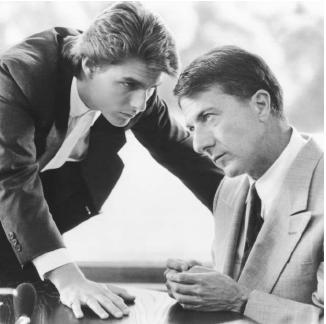 opmental disability). The most used illustration of this condition is Dustin Hoffman’s portrayal of Raymond Babbit in Rain Man (a character inspired by real-life example Kim Peek).
Now, as to tailor this assessment more toward Justina’s questions, autism and savantism are not mutually exclusive. That is, a person can be one and be the other. In fact, there is what is called an autistic savant, although this disorder is not found in the Diagnostic and Statistical Manual. According to researcher Darold Treffert, about 50% of all people with savantism (or savant syndrome, as it’s sometimes called) have autism.
As far as the skill you selected for Misty to excel at, musicianship is right up there as a major savant profile! In fact, check out these Wikipedia articles on blind autistic savants Leslie Lemke, Tony DeBlois and Derek Paravicini (click on their names to access articles). Fascinating what these individuals could do!
As to your main question about Misty’s communication skills…that’s a bit trickier. Every person with autism I’ve ever worked with could say a few words, although they were usually very difficult to understand. So I think it might be unreasonable for you having Misty and Laura sitting down verbally chatting over lunch, for example.
That said, some people with autism (notice how I write that…it’s not “autistic people,” as this is considered disrespectful) can communicate very effectively about anything. All you’d need to do is some research on augmentative communication devices to write Misty as one of these individuals. Don’t fret! It’s not as hard as it sounds.
Probably one of the most popular communication aides out there is PECS (Picture Exchange Communication System). In PECS, icons and pictures are used to show what they want to do and in what order. Speaking from experience, this system is highly effecti
 ve. Usually the pictures are arranged in some sort of binder that the person can take with them. Velcro strips are helpful to have in the binder, as the person can select pictures and stick it to the Velcro, indicating what they want to do and having more independent choice about their wants and desires. Pictures can include real-life shots of toilets, cars, bathtubs, clothes, food, etc, or an iconic image similar to what you might find in the clip art section of a computer. The official PECS website is a wealth of information about the system, but there are other types of augmentative communication, as well. This is just the one I’m most familiar with.
As to who Misty will more likely talk to, that depends on where Misty is on the spectrum. People with autism can talk to other people (who aren’t their immediate caregivers) just fine. Sometimes, though, this is such a struggle. Sorry to be vague, but the answer to this question isn’t cut and dried. My educated guess is that she would talk more freely (or at least indicate what she wants using PECS more freely) with someone she knows very well and would be more reserved with a stranger. That seems to be how most of the individuals I knew did things. But eventually they opened up just like any other person would as they got to know me.
Since communication is such a big area for someone with autism, make sure to read the qualifications for autism at the above website. Focus on the second trait, which details the impairments evident in communication. Someone with Asperger’s would likely be much more able to communicate with others, but both disorders come at the price of lowered social interaction and interest in others. Plus, I think a book detailing life with PECS or something like that would be really interesting (at least to me). Getting into Misty’s head as she moves pictures around…maybe the frustration she would feel if she isn’t understood exactly, that kind of thing. Could be very powerful.
So…hopefully this helped out some with your questions! Feel free to comment in the comment section and ask anything else that comes to mind. That goes for everyone!
Q4U: Have you ever known someone with savantism? What was their “specialty?”
This service is for fictional characters only, so any resemblance to real life examples is entirely coincidental. Any other fictional character assessment questions can be directed to charactertherapist@hotmail.com.