LinkedinTwitterThe DetailsConnectBlog Facebook Meet the TherapistHome For Writers
Showing posts sorted by relevance for query personality types. Sort by date Show all posts

Thursday, January 7, 2010

T3 - Personality "Types" Overview

Since we're done with personality disorders, I thought it would be nice to do a series on personality "types," something everyone can relate to. So consider this week the overview, complete with two versions of tests...fully approved by The Character Therapist as being helpful...to start us off.

When I was in college, I took this personality quiz to see if I was a lion, otter, beaver or golder retriever. (Gary Smalley and John Trent, two Christian counselors I hold an amazing amount of respect for, developed this system to pair personalities with images of an animal instead of some clinical term.) It was my first real exposure to a "pop" psychology personality test.

Now, there are many versions of this test out there. I've personally taken the DISC (stands for Dominant, Influential, Steady and Conscientious, which is just another way of describing the animal test). There's also the 4 temperaments or humours (like sanguine and choleric) and Types "A/B/C/D."

More validated tests include the Myers-Briggs and Minnesota Multiphasic Personality Inventory (or MMPI, as some of you might recognize). Therapeutically, it's helpful to know where a person falls in these types of tests because it can affect how a therapist approaches them or how their outcome will be.

How is this helpful for writers? Personally, I think everyone should take the following tests below to see where you fall on the personality spectrum. Since we have a tendency to write what we know, most likely our heroes and heroines are the same type as we are, or at least our secondary type.

But what about the villain who's the exact opposite? Or the side-kick friend? Or--*gasp!*--a hero/heroine who doesn't think or act like we do who we don't quite know what to do with? It's important to know what type they are so that you make their reactions believable and realistic. You can't have a Lion respond like Beaver on a regular basis. All personalities can do things out of character for them (and should...as this makes for multi-dimensional characters, according to Donald Maass), but by and large, our personality type dictates how we respond to certain situations.

So are you ready to take this easy little test for yourself...and then for your characters? If so, click here. You give yourself one point for every word or phrase that applies to you and then you double it to receive your score for each animal personality type. Highest score indicates your type. There is additional information there about strengths, weaknesses and Biblical counterparts, which is cool.

Another version of this test can be found here on Quibblo. This particular version is essentially the Personality Plus test developed by Florence Littauer (which is copyrighted, so I'm not exactly sure how the test creator got away with it...but there you have it: the evils of the Internet for your advantage). Go with your GUT reaction. When in doubt, select the word that most often applied to you when you were a child. (The first 20 questions are strengths, the last 20 are weaknesses...so beware that about halfway through, you're not going to want to select any answer...but be fair to yourself. And don't be put off by the picture paired with your personality type. The pictures were selected by the test creator and in no way reflect the content of the test.)

The next 4 Thursday Therapeutic Thoughts (T3) will focus on one of the personality types below:

Lion/Choleric
Sanguine/Otter
Melancholy/Beaver
Plegmatic/Golden Retriever

Once you take the test and figure out where you fall, sit back and wait for me to touch on your personality type. We'll go over strengths and weaknesses regarding emotions, work, friends, spirituality, and more. We're talking a potential WEALTH of info about your characters, so hopefully you'll join me over the next month on Thursdays.

Q4U: Leave a comment with what type you are, from one or both of the tests. It could be fun to see where everyone lines up. :)

Wordle: signature

Thursday, February 11, 2010

T3 - Multiple Personality...Types

I wanted to do a follow-up post on personality type combinations. I found a better online version of Florence Littauer's Personality Plus (wouldn't you know I found it after this series), and you can take it here. Even if you did take the test earlier, TAKE THIS ONE. It'll make the rest of what I'm about to type make sense.

Even given the 10 percent margin of error inherent in these types of tests (the word you picked to describe yourself is based on your perception of yourself, not fact), your score should indicate that one type is your dominant type. Usually, you'll have another type that comes in second, called your secondary type.

You can have a strong dominance of one type over the secondary, or almost equal scores in two types. Either way, there are some "natural" combinations that occur at birth that I've listed below.

Otter/Lion
Lion/Beaver
Golden Retriever/Otter
Beaver/Golden Retriever

The reason for this type of pairing is that the strengths of one are usually the weaknesses in another. A normal, "healthy" pattern is characterized by balancing scores of strengths and weaknesses in any single type (i.e., you're not going to have every strength of an Otter without a healthy dose of Otter weaknesses, as well).

The following two combinations are what Florence Littauer calls "unnatural combinations."

Otter/Beaver
Lion/Golden Retriever

These are sometimes seen quite frequently, but Littauer claims they aren't inborn in a person, and after a bit of research, I believe she's right, as well. She believes the combinations to be evidence of one of two things: 1) a "misunderstanding" about what some of the words might actually mean that were selected as representative of the person or 2) a "personality mask," because the traits in the above combinations are diametrically opposed to one another.

Before I get into what a mask is, I want those of you who might have one of these combinations to go back and take the test again, this time using one or all of the methods below:

1) Use a dictionary to make sure you know what the words mean
2) Select words that represent who you truly are, not who you want to be (for example, if you have learned a behavior--say, spontaneity or being scheduled--that doesn't come naturally for you, don't check that description). Another way of thinking about this is to select which word describes you as a child, not an adult.
3) Go back over the word groupings--if you had a difficult time choosing just one, check both. If nothing sounds appropriate, skip that question.

If after taking this test, you still have one of the "unnatural" combinations, then it might be the result of a personality mask. Masks are indicative of outside forces working on our lives that try to tell us what we should be, or how we change to conform to what we think someone else wants us to be. A mask could also be developed in childhood as the result of trying to survive a difficult or dysfunctional family living situation.

Some situations that might cause masking:

1) A domineering parent or a controlling spouse
2) An alcoholic parent
3) Being rejected by one/both parent(s) in childhood or by a spouse in adulthood
4) Emotional/physical/sexual abuse
5) Single parent home
6) Legalistic religious home
7) Birth order (firstborns in particular are subjected to zealous parents)

(I can give particulars on any of the above if anyone of you would like examples. Just email me or ask in the comments.)

Now, there are occasions when a person scores the same in three categories or four. When this happens, the best thing to do is to have someone who knows you very well to objectively look at the test for you. You might find that you're not exactly who you think you are, or that you've covered up your natural inclinations so much that you don't know who you are. (When my husband took the test "for" me, I tested high Beaver. When I took it myself, I was high Lion. Just interesting how his perception of me was a bit different than my perception of me.)

I hope that you've enjoyed this series as much as I have. Personality types are a great way to understand yourself, your loved ones, and your CHARACTERS.

Q4U: What have you learned--if anything--from this series? Anything take you by surprise?

The drawing is still going on for both copies of Mary DeMuth's memoir, Thin Places. Scroll to yesterday's post to leave a comment to be entered!

Wordle: signature

Tuesday, August 17, 2010

Treatment Tuesday - Motivating Beavers

This weeks assessment is from RJ, who is writing a science fiction book set in present day. In this story world, an Inventor (Otter/Lion hero) made a world-changing breakthrough that involves using Personality Science to organize the Web. To launch this invention, he needs access to a program that is managed by a group of Programmers (Extreme Beavers) who want the hero to follow strict procedure (the Beaver way of life). The hero, however, is being pressured to launch his invention sooner than later or forever lose control of it. Inventor needs to find a way to motivate the Beaver Programmers to "lighten up" and "move faster," two things they are loathe to do.

The Hero then decides to overcome their reluctance by creating a series of Personas, avatar-like spokespeople who communicate with the Programmers through digital media. The Hero creates these Personas to be persuasive, in effect deceiving the Programmers to do what he needs them to do. 

RJ wants to know:

1. What would motivate Beavers to speed up/ignore the rules and what Personality Types would best deliver this message to Beavers?
2. What secondary personality for a Beaver would help bring the Programmers around collectively? Which secondary personality for a Beaver would make them most oppositional?
2. If the deception is discovered after the fact what would motivate/prevent the Beavers from acting vindictively and shutting it down?  


One of my favorite areas to delve into is personality types. I think it's great that your Inventor's combination is primarily Otter with some Lion mixed in. That makes him diametrically opposed to the Beavers by nature.

So how to motivate them to go against their grain? Behavior therapy tells us that just about anybody can do just about anything under the right set of circumstances. People can be trained to do things a certain way if they are given the right motivators or demotivators. Beavers are motivated by acknowledgment and approval. They want to be seen as the best at what they do, so the Hero could try at first to appeal to this vanity side of the Beaver. Even offering some sort of promotion or recognition could be highly motivating, and perhaps one of the Personas could be a faux representative from some non-existent company who might want to hire the Beaver Programmer in charge...something like that.

As for the best personality type to present this motivation to the Beaver, I'd say either the Lion of the Golden Retriever, because the Beaver occurs naturally with both of these types (meaning there are many Beaver/Lions and Beaver/Golden Retrievers out there).  To go a bit further, I'd say the Beaver would take it better from a Lion in a work-related position (such as the Lion is the direct supervisor of the Beaver and could prohibit raises, etc.) and from a Golden Retriever more in a personal-related position (such as a friend saying, "If you do this for me, it would make X and Y difference in my life. Pretty please?") The only personality a Beaver would not appreciate it coming from is without a doubt the Otter.

Your second question about which secondary type would help bring them about to seeing the Hero's way of doing things is easier. The Golden Retriever subtype would theoretically be less oppositional than the Lion. Lions can be stubborn and argumentative, sometimes even arguing for the sake of arguing. Golden Retrievers want everyone to get along, so I could see a Beaver/Golden Retriever trying to make things better by facilitating a compromise or something like that.

Finally, if the Beaver Programmer was to discover the deceptive use of digital tools in creating a Persona meant to persuade them to go against their own grain, they'd be totally ticked. Revenge would definitely be a factor. Now to purely speculate, I imagine that the Beaver wouldn't seek revenge if they could be convinced that what happened had to happen for some greater good--preferably to help them further their own work. For example, of the Hero's invention will simplify the Beavers lives or revolutionize how they do their work, then I would think they'd be more likely to let things lie. (I'm guessing this based on human behavioral trends. We don't tend to bite the hand that feeds us.)

Hopefully I've covered everything, but if I missed something, please drop me your questions in the comment section (that goes for anyone!). Good luck, RJ! Sounds like a fascinating and creative read.


Wordle: signature

Thursday, January 14, 2010

T3 - Golden Retriever/Phlegmatic Personality Type

Before we get started, I want to reiterate that most people have one dominate personality type and one (possibly two) secondary type(s). Even if you are an off-the-chart Lion or Otter, Golden Retriever might be one of your secondary types, so read on to see what you might can learn about that part of yourself. Please remember, these are generalities, not set in stone. :)

THE GOOD

Golden Retrievers, also called Phlegmatic, are the "sweethearts" of the personality types. Calm, dependable, loyal, good-natured, easy to get along with...just like the dog breed. These individuals are patient, well-balanced, consistent, quiet but witty, sympathetic, and kind. When it comes to emotions, they typically keep everything hidden. They are very low-key, and love to putter around their house.

One who is phlegmatic is typically a very competent and steady worker. They get along well with coworkers, are good administrators, mediators, and conflict-avoiders (which can also be a problem, though!). They are good with routines, work well under pressure and deadlines, and usually find the "easy" way to do something. If working within a team, these are the people who will ensure follow-through and offer tons of support. As a leader, they will delegate daily decisions to others, support by listening and will always strive for harmony. They aren't going to consciously try to hurt anyone or ever stir up a controversy at work (or anywhere). To recover from stress, they typically just want to sleep, but they also will go for mindless "down time" to recover.

Their friends typically will call them pleasant, enjoyable to be around, inoffensive, good listeners, compassionate and concerned. A Golden Retriever usually likes to watch people and utilize their dry sense of humor. Typically, they have many friends because their are so reliable and committed to keeping the peace.

Spiritually, these people are the deep wells. They know how to be still and listen to God, so their relationship reflects a deeper understanding of matters of faith. They have depth and insight because of their great inner discipline to apply themselves to what they do. When a Golden Retriever surrenders to Christ, they do so only drawing a minimum of attention to themselves. Their commitment is solid and sincere and they give tremendously loyal and faithful years of service to God. These are the ones who love to serve the body of believers because they love the body of believers.

THE NOT-SO-GOOD

For all our personality types, when you have too much of a good thing, it can be a bad thing. When you take just about any characteristic to the Nth degree, you can have some pitfalls, so lets examine some of them.

Emotionally, the Golden Retriever/Phlegmatic is a bit selfish and unenthusiastic. They may be overly fearful or worried and usually are indecisive. They might fall more to the shy and reticent group, and usually are far too passive and compromising. The reason for this? They are so worried about keeping the peace. They will avoid conflict at whatever the cost--personal or professional. They find it difficult to express their emotions and can be too soft on other people.

At work, this individual is likely not too goal-oriented. They probably did okay in school, but just never did more than was required. Typically, they lack self-motivation and resent being pushed in any direction, even in one they know is good for them and were thinking about taking anyway. They can sometimes be lazy, careless, hard to get moving, and sideline watchers instead of doers. They don't like change and can be very stubborn. According to Smalley and Trent, to Christian counselors, the motto of the Golden Retriever is, "Let's keep things the way they are."

Couldn't resist the adorable pic of the kitty cat looking all lazy and unmotivated! I know it's not a Golden Retriever, but it just fit so well!

With their friends, the Phlegmatic can sometimes dampen the enthusiasm of others because they are so hard to get excited about anything. They are indifferent to plans and resist change. They also can be judgmental, sarcastic, and teasing.

Spiritually, these servant-oriented people will sometimes make martyrs of themselves due to all their service. "Woe-is-me-look-at-all-I've-done" type of attitude isn't uncommon. They can be a tad on the self-righteous side, as well. Their spirituality can be so deep that from their view, the spirituality of everyone else pales in comparison.

EXTRAS FOR WRITERS

Golden Retrievers work well in limited situations with a steady work pattern. As long as they receive steady affirmation and don't have a lot of changes, they'll thrive. If it fits your story better, though, throw a kink in their well-ordered day as the inciting incident for your book.

A Phlegmatic really needs time to prepare for changes--emotional, physical, geographical--so writers should give it to them if they want a well-adjusted character and don't give it to them if you really want to throw them for a loop.

Wordle: signature

Friday, March 13, 2009

Writer's Resources


Writer's Guide to Personality Types


Use the four classic personality types to your advantage when thinking about character development. Inherent in each type is conflict, inner goals, and motivations to make your characters more realistic. Take it straight from the document to your manuscript.

Also useful for youth leaders, committee chairs, and other ministry leaders to understand the people you are working with, as well as for your group to understand each other.

20 pages of material to add to your writer's toolbox for just $6.00!!


Writer's Guide to Personality Disorders


Now you can have all the information you need about personality disorders at your fingertips. Give your reader a reason to empathize with your villain or relate to your protagonist. Pick and choose a couple traits for each to give a weird quirk or neurosis.

10 disorders broken down over 34 pages. Yours for $9 bucks!


FREE Download!

Therapeutic Writing: Why You Shouldn't Delete Your Work


Additional Resources:

Max Lucado on Writing


Wordle: signature

Tuesday, December 29, 2009

Treatment Tuesday - Personalities of Doctors

This month’s column is courtesy of writer Susan. She wrote in seeking help for her character Chandra*, an aspiring doctor in a futuristic fiction novel who, at the age of 19, has already been in college on full scholarship for two years. She was raised to be ultra liberal and to believe that Christians are hate mongers. (The story takes place in 2025, where lots of anti-Christian laws have been passed.) She’s “nice,” but a bit of a snob when relating to those below her perceived social status. By the end, she’ll have to decide whether to embrace her liberal heritage or turn from it forever, thanks to her interactions with one Christian who doesn’t quite fit the mold she’s come to expect.

Susan wants to know what kind of personality traits a woman (or man) might need to become a good doctor. Susan recognized the obvious ones, like dedication, persistence, and a desire to help people.

* Names have been changed to protect the fictional.

Susan has already done a little free association for the word doctor. Were I to ask anyone to say what first comes to mind when they hear the word doctor, they’d likely also mention intelligent, hard worker, successful, and rich.

You should see a bit of a pattern. This is your typical Type A personality. (There are always exceptions, but by and large, doctors are conscientious, detail-oriented people. Most are going to be well-groomed, although a frumpy, disheveled doctor wouldn’t be unheard of.) So Chandra will probably carry with her some of the usual traits of Type As, some of which you could work in as her character “flaw.” She might be impatient or have a hard time relaxing because she’s a workaholic.

With Chandra being 19 and already in college for two years, there are some other traits you ought to think about incorporating into your manuscript. Just because she’s smart, doesn’t mean she’s not naïve. She started college before most of her friends her age were finished with high school. In many ways, this puts her at a disadvantage, the biggest of which would be social.

Now I realize that she thinks pretty highly of herself, but she still might be awkward or gawky being around older students. This could give her reason to prefer being isolated in some back room of the library with her pre-med books. Or she might want to bend over backwards to be accepted, so much so that she’d agree to do homework or papers for other people…just to be popular and feel a part of a crowd. She could be easily led on by a guy because she’s inexperienced in romance. There could be all sorts of pitfalls she could fall into.

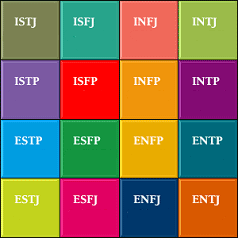
Looking at Myers-Briggs types typically associated with doctors, I found that INFJs, ISFJs and ESFJs are the most common. Obviously, they all have in common the FJ (not to say TPs, FPs, TJs couldn’t be doctors, though it might be harder for them.) This is interesting, because Feelers (F) are pretty subjective and use an emotionally-based approach to solve things. But when you figure in the sympathetic nature of the Feeler—as opposed to the objective, logical, calculating Thinking (T) person—it makes sense. Doctors want to help people; they are compassionate. The J for Judging is where we get the typical traits associated with Type A. Checking off to-do lists, being organized, planning their lives and schedules. You can see how this would mesh well with a doctor.

So while I was surfing the Internet, I found a cool website about the Myers-Briggs personality types under stress you can access here. I'd read up on how all the types might likely respond to stress, but keep in mind the ones ending in FJ in particular. College is definitely a stressful time for students, and Chandra’s intellect won’t protect her from it, but might, in fact, exacerbate it.

Now a word about her big change of heart. You mentioned in our emails back and forth to one another that Chandra would have many interactions with this Christian man who she doesn’t quite know what to make of. In order for her to accept a new philosophy of life that includes Christ, these interactions will really have to be bone jarring.

Her upbringing with a father that heads up a hate group almost makes her like someone from a cult background. Cults have a psychological power about them that truly does include brainwashing and other methods of mind control that are used for a reason: they absolutely work.

But our God can work miracles, so it’s not a stretch for people to break free from that sort of bondage. The key will be to make these interactions with this Christian powerfully disturbing for your protagonist. She needs to ruminate and ponder about them. Question why he doesn’t fit with her perception or with what she’s been told. Maybe even question the higher-ups involved in the hate group, seriously-rocking-her-world type stuff.

Perhaps each interaction could go against the grain of some inherent lie she was led to believe about Christians. Just peel them back like the layers of an onion, one-by-one until she’s left with the barest, rawest truth: Christians—at least the one Christian—aren’t at all like she thought. This will be a true discovery for her, one that will surprise her even as she comes to grip with the new reality. You could use her personality type to your advantage. Have her crisis of belief—whether she’s going to embrace Christianity or not—hinge on whether she has to actually act to save this Christian man’s life. Her doctor’s instincts would be engaged, but her heart and emotions would also be engaged. If she saves him, she goes against what she’s been taught. If she lets him die, she risks never learning the truth of the life he lives. And it’s a great juxtaposition against her career values to never cause another harm (or let them be harmed if she could prevent it). It could be a wonderful climactic ending (in my opinion, of course!).

But just to clarify, all my assessments are just my own opinions, based on my years of study and practice. Hopefully this has been somewhat helpful, giving you a look into traits of doctors that can work for you or against you. :)

As always, questions or additional comments welcome below.


This service is for fictional characters only, so any resemblance to real life examples is entirely coincidental. Any other fictional character assessment questions can be directed to charactertherapist@hotmail.com.


Q4U: Do you do the Myers-Briggs type indicator for any of your characters? If so, have you found out anything useful about your character you didn’t previously know?

Wordle: signature

Tuesday, February 9, 2010

Treatment Tuesday - Opposites Attract...BEWARE!

This week's assessment comes from someone who wishes to remain anonymous. It's great timing that I can feature it this week, as it's right in line with the personality type series I'm doing! (Access the personality type overview here.)

Anonymous wrote in with a simple question: What personality types generally attract each other?

What a fitting question with Valentine's Day just around the corner. *sigh* If only there was a simple answer. Since people are so varied in what attracts them, it would stand to reason that there isn't a formula to spout for what type attracts what type.

We base who we find attractive on several factors: looks, age, race, religion, educational level, geographic location, social class, familial obligations, and financial status. With these components, the old adage "like is attracted to like," comes into play. We generally want to be with someone around the same age, who adheres to the same faith or lack thereof, who comes from our ethnic and cultural background because they are more likely to be like us, and who lives in the same area, as that is infinitely preferable.

But all those things can attract on an outward level. Once a person finds out that someone makes over $100,000 a year, or that they are a Christian, or that they hold a PhD in physics, or that they have the right social connections, then they decide to move forward with getting to know the person. At that point, personality becomes a factor, and this is when the old adage, "opposites attract," comes more into play. Indeed, people who are the exact same on more complex personality tests (like Myers-Briggs) are highly unlikely to marry each other.

In general, we are attracted to people who have strengths where we have weaknesses. For example, a Beaver, who is so meticulous and detailed, might fall for a Lion, someone who sees the big picture. Or a outgoing Otter might be attracted to an loyal, introverted Golden Retriever. It's exciting to reconcile differences...encountering someone just like ourselves would be boring.

Once two people pair off, then what commonly happens is a "honeymoon" period. Your mate can do no wrong during this time (or at least you can't see the flaws as readily). But inherent in the very idea of opposites attracting is opposition. Eventually, the opposition becomes greater and greater and you'll find yourself trying to change them to conform to your personality. This is called the Pygmalion Project.

Depending on which resource you read, Pygmalion was a Cyprian artist who, upon not finding a woman to be his equal, began to create a sculpture. He worked long and hard to make the statue perfect, and when he was done, he fell in love with it. According to legend, Aphrodite took pity on him and brought the statue to life. Pygmalion and Galatea were married and had a child.

Of course, the analogy today is that people try to change their mates/spouses to be who they want them to be. Even good marriages have this as an irritant, but it's also a huge factor is break-ups and divorces. It's something we've all tried (if not with a mate, than with a child). This really does great damage to the relationship. It tells the other person that they aren't enough just as they are. Of course, our mates also try to conform on their own, in a way to please us. But this is when we look at our relationship in a few months or years and wonder where the zzzzzzing went.

What's the solution? Recognize our impulse to change the other person, and hold our tongues in favor of remembering what attracted us to them in the first place. The more conformation our mate makes in our direction, the less exciting things will be.

So how's that for a roundabout answer to your question, Anonymous? Hope that this gives you--and all my readers--something to chew on.

Q4U: How many of you married/hooked up with someone who is your opposite? Did you try to change them?

Come back tomorrow for a special Wednesday book review and giveaway of Mary DeMuth's memoir, Thin Places!

This service is for fictional characters only, so any resemblance to real life examples is entirely coincidental. Any other fictional character assessment questions can be directed to charactertherapist (at) hotmail (dot) com.

Wordle: signature

Monday, October 24, 2011

Why The World Doesn't "Get" Writers

My final statistical comparison following my Plotting and Personality Survey is below. It will totally explain why the general population scratches their heads at us writers.

I compared the United States statistics for Myers-Briggs Type Indicators with those from the writer population (who took my survey). Check it out:

MBTI General Population

MBTI Writer Population
 

The interesting comparison is found in the top quadrant (IN) of introverted intuitives, in particular the INFJ, INTJ, and INFP types. In the writing population, these types are considerably higher than in the general population. Most writers are INFJs, which is the smallest percentage of types for the general population! That's actually a HUGE discovery...and you read it on The Character Therapist first, folks.

The ESTJ and ESFJ types are among the most prevalent in the general population, but among writers, we are in the minority. The introverted counterparts of ISTJ and ISFJ are basically the same between writers and the general populace.

So now you know why writers are a curious bunch. We don't fit the personality stereotypes at all...in fact, in many respects, writers exhibit the exact opposite of what the world would expect (at least according to type).

Q4U: Does it all make sense now? Why writer's conferences are a merging of souls for writers who just don't quite "fit" with other normal non-writer folk?

Tuesday, February 22, 2011

Treatment Tuesday: Personality vs. Parenting

This week's assessment is for Michelle. She wrote in about her character Shannon,* who was raised with a Golden Retriever, over-indulgent mom and a Beaver, micromanaging dad. Shannon craved her dad's approval so much that she put a Beaver mask over her Otter/Golden Retriever personality and is still wearing that mask today. Shannon's husband, Rod*, had a power patrol Lion father and an avoidant mom. Since they were wealthy, his parents hired others to deal with Rod.

* Names have been changed to protect the fictional. 

Michelle wants to know: How will Shannon parent her daughter Allison, who knows just what to do to get her mom to do what she wants and Josh, who stays buried in his iPod and video games? How would her beaver mask impact her parenting? When Rod looses his job and the family has to move in with Shannon's parents (who tend cattle and cotton), how will this affect them based on their personalities?

I'm totally flattered that Michelle has obviously been scouring my old posts! As you can see, she referenced almost every parenting style post and personality types post I wrote above. Thanks for that feel-good, Michelle.


I want to start this assessment out with Rod, even though you couched your questions as being about Shannon. But Rod's my concern because of his power patrol father who he looks up to so much. I'm not sure how much interaction Rod really had with his parents, since they hired people to look after him (I assume nannies and the like), but you indicated Rod was a Lion like his father, which will probably give him the tendency to be a power patrol. And that's what he knew, after all.

So if his tendency is toward power patrol, that could cause some problems between him and Shannon, who is at heart a Golden Retriever and might have a bent toward over-indulging, like her mom. It all would depend on how well Shannon wears the mask of a Beaver. If she's still seeking approval from dad, or trying to heal the rift that developed after her barrel racing accident, then she might try to be more like him, micromanaging everything her children do like he did to her in hopes of connecting with him. This will be confounded by her moving back into her childhood home.

There's something almost magical about grownups boomeranging back to their parents' home. Fully functioning adults can become sniveling little brats as they adopt the method of interacting with their parents they had growing up. If Shannon's mother was such an over-indulger, she might revert to not making her bed or washing her own clothes because mom is there to do it--not only for Shannon, but for Shannon's family.

The controlling part of Rod will not like this. To say that living as extended guests in his wife's parents' home will be difficult for Rod is the understatement of the year. He's going to kick against this with all his might, as he's used to being in control and managing his own family (and career). Accepting anything like charity or handouts will not be easy, if not impossible. Rod would be desperate enough to take a job that he doesn't like to remove themselves quicker from this scenario.

The generosity of Shannon's nurturing mother will not be appreciated by Rod...he'll likely see it as an affront to his ability to provide those things for his own family. This will move Shannon into a difficult mediating position. She'll find herself split between defending her parents and their way of life and way of interacting with others and trying to ease Rod's disappointment and anger over the living situation by commiserating with him about her parents.

But I digress. Back to the parenting. Shannon's figured out how to be a Beaver by observing her dad. She knows how to approach Allison to get what she wants done. It's the underdog Golden Retriever/over-indulger inside of her that may let Allison think Shannon's a pushover--when in reality, Shannon is indulging Allison, possible against her better judgment, but doing it all the same. Rod isn't going to have that close of a relationship with Allison, likely, because she knows he's not the person to go to if she wants something. Allison will favor her mother.

As for Josh, it's pretty typical for boys to go through their video game phase where they hardly say ten words a day to human beings because they are playing their marathon rounds of Zelda (can I just date myself here?). Shannon will lean toward either micromanaging the amount of time she lets him spend on the video games and turning a blind eye when he doesn't get off right at the one-hour mark. Rod will not be this way. When he says "thirty minutes and lights out!" he means just that.

I'm not sure I'm really helping that much with this assessment simply because you've got this great backstory for Shannon and have given her a personality mask of being a Beaver when she's really an Otter. As you can read from my post here, Otters and Beavers don't mix. They are fairly diametrically opposed. Rod probably fell for the Beaver part of Shannon...but a Lion can get along with an Otter just fine....so when Shannon's true personality shines through, it shouldn't put an end to their relationship. However, if she swings more toward the Golden Retriever style of over-indulging, this will be a problem for his power patrol Lion (as I mentioned before).

Shannon's got a unique problem, because when projecting an image to the world that's not who you really are...it's exhausting. Your body has to use energy to keep up pretenses that it could use otherwise to repair the body. So FYI, when Shannon gets tired or sick...her true colors will shine through because she'll have less energy to keep the mask in place.

That's all I have Michelle. I hope it helps put you on the right direction. I welcome any additional comments below. Thanks for writing in!

Wordle: signature