LinkedinTwitterThe DetailsConnectBlog Facebook Meet the TherapistHome For Writers

Tuesday, September 14, 2010

Treatment Tuesday - Postpartum Psychosis

This week's ultra awesome character assessment (meaning, the character was awesome, not necessarily the assessment) is courtesy of Steena. Her character works at a car dealership as a receptionish. She's a tad overweight, cheerful, friendly, always optimistic, and bubbly. She doesn't have close friends, but many acquaintances. Everyone believes she lives for her two children, a boy and a girl, age 4 and 3.

What they don't know is that her children are dead. Their bodies reside in a beautiful wood chest in a padlocked room in her house. But in her mind, her children, who died within days of being born at home, are the age they would be in the present day. She drives a minivan with 2 car seats. She's got toys all over her house and yard, 2 bedrooms, and kiddie clothes galore. Her neighbors often compliment her on how quiet her children are - they never see or hear them. She's got large shrubs that shield her backyard from people looking in.

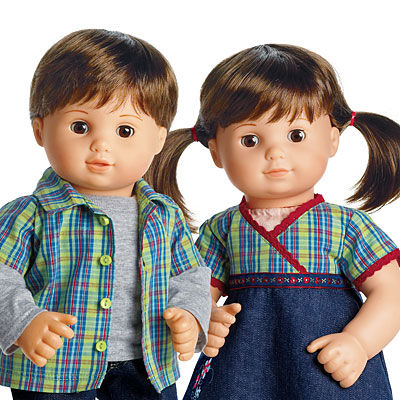
Steena wants to know: Would it be right that she is dealing with postpartum psychosis? She carries pictures of 2 beautiful children on her, takes sick days for them, talks about them all the time...and at home she carries around 2 beautiful dolls. Can you help me with her?

[rubs palms in delight] Looking forward to this one, Steena!

What you've described sounds like the extremely rare Postpartum Psychosis...but according to the Diagnostic and Statistical Manual (4th edition, text revision), the actual technical name for that is Psychotic Disorder Not Otherwise Specified. She doesn't meet the more usual criteria for Brief Psychotic Disorder, postpartum onset, because of the time line her symptoms for 4 years. Nor does she fit with the Major Depression, postpartum onset, because of her cheery disposition and demeanor.

This disorder is very rare, usually considered to occur in about 1 of 1,000 births. The general mode of treatment would be antipsychotic medication administered until the symptoms subside, and then regular counseling. usually psychosis is accompanied by severely disorganized behavior, thought, and speech. Your gal doesn't have this (I assume), so one more reason to put her in the Not Otherwise Specified category.

My first question is why have one child 4 and the other 3? I assume you have the same medical problem that caused their death for each? Did she pretend the boy was alive during that first year? Or did she all of a sudden believe they were both alive after she lost the 2nd one? For reasons I go into further detail below, I'd consider twins. 

I'd want to know if she actually sees the dolls as her children and talks to them at home as if they were alive. The skeletal remains were surely placed there and venerated by her, so my first question to you is whether she actually knows they are dead. If she actually sees the dolls as her real children, believes they are sitting in the empty seats in her minivan, and converses with them and hears their responses, then she's having full-on hallucinations. She wouldn't fit for Schizophrenia, though, because she would need other symptoms to go along with the hallucinations, and she doesn't have them. She is described as a high-functioning person.

You mentioned you were thinking of having her married or a single mother. I think it would make for a more interesting backstory if you had her married. When couples experience the death of a child, either through a stillborn or SIDS or some other health problem, it causes a tremendous strain on the marriage. The mother's body has all these hormones present to enable her to connect with a baby who is not present. The grief can be overwhelming.

It was be more than feasible that the husband could have left her due to her ongoing psychosis regarding the lost child....but that would only really work for the first child, I guess. This is why I would consider twins and her losing them both at the same time. But regardless of how you figure it out, adding that layer of a failed marriage would make her psychosis that much more believable. Her way of handling his deflection could be to hang on to these children with a fierceness.

One of the best Law & Order: Criminal Intent episodes I ever watched that you are definitely going to want to check out was from Season 4. "In the Dark" features a woman who believes her child is still alive, but the child actually is still inside her womb as a "stone baby," also called a lithopedion. Such an interesting phenomena, and of course very sad, but pretty much what you are describing as far as belief your character's belief that the child is alive and well. Check it out at this link.

This character sounds fascinating. If I had a blog award for one the coolest character I've done, you'd get it. Hmm...that sounds like a good idea! Maybe I'll work on that. Thanks for writing in!

This service is for fictional characters only, so any resemblance to real life examples is entirely coincidental. Any other fictional character assessment questions can be directed to charactertherapist (at) hotmail (dot) com.

Wordle: signature

Monday, September 13, 2010

Technique Toolbox - Magic Art

Since we looked at an adult technique last week, we'll alternate with a children's technique this week.


Magic Art Technique

Credited to: Ruby Walker, 101 Favorite Play Therapy Techniques

For use with: Children, toward the very beginning of play therapy, to establish a positive feeling toward therapy and work with the therapist. Can be used individually or in a group.

What you will need:

construction paper in a wide array of colors
liquid tempera paint in a wide array of colors, in bottles with very small opening
glitter (optional)

What you do:

Allow the child to select whatever color paper (s)he chooses. Tell the child that they need to use at least 3 different colored paints to make a magic picture, making dots or lines or any figure they choose. The therapist will praise and reinforce the child's selection and usage of the paper/paints.

After the child has used as much/as little paint as they want, then you have them fold the long ends of the paper together (like a book). Say, "Magic picture, what will [insert child's name] draw today?" The child is then instructed to unfold the paper, creating a Rorschach inkblot-like picture.


Ask the child to describe the picture as a whole or to tell what (s)he sees in the picture. Ask, "What makes it look like a _________ to you?"

Purpose:


There are many! The child is free to choose whatever paper/paints/glitter (s)he wants and apply them however they want. Children who have control issues love the freedom to choose and lack of control over what the magic picture will look like. This technique boosts self-esteem as the children create a successful picture to keep or give away as a token to mom/dad/friend.

The selection of color and intensity with which the child engages in the art tells the therapist the emotional reactivity of the child at the time of creation. The projective part of the technique focuses on what the child says/free associates about the picture and his/her feelings as maybe being indicative of their inner thoughts/feelings.

One great way to use this technique is to explain divorce to a young child, to try to instill a sense of hope that something positive can come out of the situation. What Ruby Walker does is have the child start to paint a caterpillar with the paints, and then as they fold the paper, the caterpillar is in the cocoon and "emerges" as a butterfly when the paper is opened again. This characterizes how things can be different, yet better.

Hope this technique finds a way into some of your novels!

Wordle: signature

Friday, September 10, 2010

Friday Free Association Chain


The word is........


WATER


First commenter free associates with the above word. Second commenter takes the first commenter's word and free associates, and so on.

Remember -- FIRST thing that comes to mind. GO!!

Wordle: signature

Thursday, September 9, 2010

T3 - Stages of Change: Maintenance/Relapse

This stage can also go by a few other names in stand-alone novels. In romance, it could be the happily ever after. In an action-packed thriller or speculative, this could be the new status quo after the asteroid has hit, the bomb has been disarmed, or the country has been overtaken with ice. This is the feeling of calm after the bad guys are either jailed or killed.

Maintenance would cover whatever happens after the Action stage. (Which is preceded by Precontemplation, Contemplation, and Preparation, just in case you want to get the whole series). It could include parts of the denouement, but it could also be an implied ending that happens off the page in the reader's imagination.

For those of you who write series, you'll love this next part. In my way of thinking, part of Maintenance is what some call the 6th stage, that of Relapse. A lot of drug treatment centers will say, "Relapse is part of recovery." In a way, authors could say, "Relapse is part of serial writing."

Characters don't always make the huge leap or life change they need to by the end of the first book. Or they make the leap and then fall back into old behaviors in subsequent books, like in the Shopaholic series by Sophie Kinsella. The heroine manages to get in financial trouble time and time again, despite many resolutions and motivations to stop overspending.

The main difference between the additional Shopaholic books and the first one is that Rebecca Bloomwood doesn't go through the Precontemplation or Contemplation stages. She starts at the Preparation stage because she already knows she's got a problem and just has to get ready for Round Two with her component, compulsive shopping.

Then you have other series where the heroine/hero don't necessarily relapse, but just struggle to maintain. The rest of the Twilight series could arguably be Edward attempting to Maintain his decision to to keep Bella a part of his life in a very real, romantic way as his girlfriend. In New Moon when Jackson nearly kills Bella for a tiny paper cut, Edward regrets his decision to bring Bella into his inner circle. In Eclipse, Victoria targets Bella to kill because Edward had killed Victoria's mate, so turnabout is fair play. Bella wouldn't have been in that position if Edward has just walked away. Each book has Edward maintaining his decision until we finally all just say hurry-up-and-make-her-a-vampire-already by Breaking Dawn.

I hope that the Stages of Change have given you a different way of looking into the character's journey across the pages!

Join me next week as I start an in-depth series on GRIEF. If you have burning questions that you might want answered, drop them in the comment section. For example, I'll be addressing, What's too long for a widow to wait before remarrying in Christian Fiction?

See you tomorrow for Friday Free Association Chain!

Wordle: signature

Wednesday, September 8, 2010

Character Stereotypes: The Geek

In most cinema examples of geeks, the guy wears glasses and a pocket protector, dabbles in all things electronic, and repels women like water off the back of a duck. A girl geek likely has mousy hair, braces, and enough social awkwardness to make you squirm in your seat as you watch.


Thanks to psychology and personality testing, we’ll look at a few character trait generalities that you might want to include in your book.

1) Reason Trumps Emotion

Most geeks are systematic thinkers. They analyze all problems logically, looking for previous rules or guidelines. Usually, they are intellectually gifted but socially lacking. The social arena is emotional and nonrational, therefore uncomfortable and more likely to be avoided. Since that’s the case, their social skills won’t be honed for lack of use, making them awkward and stunted emotionally.

To read the rest of my article, click here.

Wordle: signature

Tuesday, September 7, 2010

Treatment Tuesday - Good Kid Gone AWOL

This week's assessment comes courtesy of Vickie. She's writing about Brad*, a 15-year-old boy who is smart, but timid. His father recently died in Afghanistan, leaving his mother a widow and Brad a big brother to his sister still in grade school. He's been bullied for months at school, and the book opens with Brad stabbing the bully, as he feels that taking matters into his own hands would be the manly things to do. However, a teacher steps in to stop him and he reflexively slices her too. Turns out he cut his favorite teacher who has tried to help him the most. Crushed by guilt and fear, Brad runs.

With the bully in critical condition and the police out looking for him, Billy tries to communicate with his teacher through anonymous letters with no return address. The letters are quotes from passages he's read in novels...clues to what he's thinking and how he sees life. The teacher sees these letters as a cry for help and works with the police to try to find him and bring him back home.

Vickie wants to know: What's realistic for Billy's mindset through all this? What will he try to communicate through his letters? What kind of encouragement does he most need?  What would convince him to come back? How would the court system deal with him? What options would he have once he turned himself in? If and when she sees him again, what would be the best way for his teacher to react/respond to him?

Brad is a troubled teen, obviously, as the "normal" teenage brain doesn't conclude stabbing someone is the best defense against a bully. I mean, the first thing that came to mind when I read that was Dexter (the serial killer who works for the Miami Police Department as a blood spatter analyst -- love the show!). Dexter's dad prevented him from going after a high school bully with a knife during one of the many flashbacks during the first season.

At the very least, Brad has an Adjustment Disorder with Disturbance of Conduct. The onset (start) would have been whenever the bully started bullying, because that would be the identified stressor. Brad's response of stabbing the bully is in marked excess to what would be expected of enduring the stressor of being bullied. Conduct Disorder, which is much more serious, can actually be ruled out due to Brad only having 2 of 3 needed criteria. Intermittent Explosive Disorder can also be ruled out, because it seems that this is the first and only time Brad has shown aggression.

If I had Brad in my office, I'd want to question him on his feelings about dad's death. he could be experiencing Bereavement, a clinical condition that can be the focus of treatment. It could be that he is experiencing "complicated bereavement" in the form of a delayed grief reaction. Since grief affects people in different ways, I'd want to explore if he thought he could be closer to his dad somehow by showing himself to be tougher or acting out of character in a more aggressive, I-can-take-care-of-myself-and-my-mom-and-sister kind of way. Adolescents are more likely to respond to grief with behaviors rather than emotions, and that might fit Brad's overreaction to the bullying to a "t."

On to the questions. As for Brad's mindset during his time on the run, if he's as smart as you say he is, my guess is that he's worried about the repercussions from stabbing the bully. He'd probably want to stick fairly close just to see if the bully dies in surgery or whatnot. He'd also want to make sure that the teacher's wound is physically taken care of, since she means so much to him. Since I don't know how he's handling his father's death, this may or may not factor in.

What would he communicate through the letters? This stumps me! I have no idea. This would depend on how close he and the teacher were, how much he trusted her not to reveal certain things to the police, whether he had ready access to books to pilfer these quotes from, or if he has certain sections memorized? And why would he communicate this way? It's like a code. (Just asking here, because I love the idea....but you'd need a solid reason. Would the teacher know the code? Like, would she recognize the book he's quoting from and realize that, say, it's location in the library would say something about where Brad is? Theorizing, here. And if that's the case, wouldn't she need to be his librarian or something?) There are just a lot of ways to go here!

As for encouragement, I'd think he'd want to know that no matter what happens to him legally and academically, he'd not be thought of less by this teacher who has been the only one to help him through his struggles. I imagine the guilt is overwhelming that he hurt her and betrayed her by not discussing things about this bully in more depth, as she probably had no idea he was about to go all Dexter on her. He's want to know that she forgave him, and only wants him to be safe...not running.

As to what would convince him to come back...perhaps if he felt he was needed, somehow? To play on the fact that his mother and sister really need him to come home, as they are having a terrible reaction to him being gone so soon after learning about his father's death? That would really lay it on thick in the guilt department, though, and he's already feeling a lot of that. It would depend on how much he felt like his presence at home was some sort of balm to his mother and sister in helping them get through the pain of his father's loss. You'd know if this was a big enough motivator for him to return, not me.

I have no idea how the courts would handle him....you'd have to ask a lawyer like Cara Putnam or Rick Aker. I've personally emailed them both various questions and gotten great feedback. I already mentioned above what would happen to him as far as school goes. My dad was an administrator at a high school, and I'm very confident that Brad would get expelled. I can't imagine that he'd only be suspended. My guess is that juvenile hall might come in there somewhere. You'll have ot research this further, as I can't be of much help.

And finally, how could the teacher respond to him if and when she sees him upon his return? She doesn't need to respond to him timidly, as if scared he might break out a knife and slice her again. Any trepidation on her part would set poor Brad back months. Open arms, Vickie. She'd need open arms. I tell this to parents whose children behave in awful ways: Your children might be disturbed, or might have made a terrible life decision that they will feel repercussions from for the rest of their life, but they are still your children. I guess the same could apply with a teacher/student relationship.

That's all I've got, Vickie.  I hope it helps out with your characterization. Thanks for writing in. Any additional questions for this character are welcomed below.

This service is for fictional characters only, so any resemblance to real life examples is entirely coincidental. Any other fictional character assessment questions can be directed to charactertherapist (at) hotmail (dot) com.

Wordle: signature

Friday, September 3, 2010

Friday Free Association Chain


The word is........


GREEN


First commenter free associates with the above word. Second commenter takes the first commenter's word and free associates, and so on.

Remember -- FIRST thing that comes to mind. GO!!


Wordle: signature