LinkedinTwitterThe DetailsConnectBlog Facebook Meet the TherapistHome For Writers

Thursday, December 31, 2009

T3 - New Year Resolutions: Some Friendly Cautions

To set the record straight, I'm all for resolutions. I just don't think they should only be inspired by a new year. The date should be irrelevant to when you want to make an improvement to yourself.

However, it's pretty accepted that January 1st is some magical date to "start over" or "wipe the slate clean." So to that I say give it your best shot! But I have a few cautionary words as well.

1) Make your goals realistic.

If you're completely addicted to Starbucks, live/work three blocks from one, have a friend who works there or any combination of these three, then your resolution to abstain from Starbucks is pretty unfeasible. (Not to say there aren't extremely strong-willed individuals out there, but I'm just speaking in generalities as I so often have to do.)

2) Don't always focus on BIG goals.

Goals don't always have to be the long-range, big time stuff. The best accomplishments, in fact, could be a series of small goals you achieve. But if you only think about the big picture, you could miss this opportunity to triumph!

It's a great idea to break big goals into smaller ones anyway. That way, you're not overwhelmed with the idea of having to graduate from school. You just work your way through individual classes first. Losing the first 5 lbs can be the hardest when the amount you're aiming for is 50 lbs.

3) Figure out your rewards ahead of time.

What's the fun of actually accomplishing your goals if there's no reward? Sure, there's that inherent, philosophical idea that you did what you set out to do. That might be enough for some of us, but it's not at all enough for others. Some crave recognition, so maybe you should blog monthly about how far along you are in sticking to your resolution. Some crave a physical reward, such as divinely expensive chocolate, Kindle books, or manicures (oh, wait...this post isn't supposed to be about me!). Reward yourself for staying true to your goals...and do this on a regular schedule. It might work for some to treat themselves weekly instead of monthly. You know yourself.

4) Don't wait until January 1st, 2011, to jump back on the wagon.

There's nothing magical about January 1st! If you don't meet your goal, just get back to it as soon as you can! There is this supposed formula that it takes 28 days to break a habit. Well, in 28 days, you're still in January! Many, many, many resolutions are broken during the very first month (I tried to find the exact percentage, but it's late and I'm tired and the internet fairies weren't forthcoming).

Treat an occasional lapse as a temporary setback, not something to throw your hands up, gnash your teeth and wail about. If you went 10 days with no Starbucks, but on day 11 couldn't fight the aroma calling to you in your sleep, then just start back on day 12. One coffee in 10 days won't send you to the dark abyss. It's better than 10 coffees. The same could be said with getting off your diet, smoking a cigarette or compulsive shopping.

5) Be purposeful in your resolutions.

Don't just sporadically come up with something you think you'd like to change. Really give it some thought. According to psychologist Richard Wiseman, who led a study about failed resolutions, "If you do it on the spur of the moment, it probably doesn't mean that much to you and you won't give it your all. Failing to achieve your ambitions is often psychologically harmful because it can rob people of a sense of self control." Even more so, when we fail at our resolutions, we can often feel even worse about ourselves than we did before we made the resolution, and that's no place anyone wants to be.


TO INCREASE YOUR CHANCE FOR SUCCESS:

So, now that you know better how to prepare for your resolutions, I thought I'd add some sure-fire ways to increase your chance for success.

Breaking goals down into smaller steps is definitely the number one thing to do. This increases your chance of success to 35% (according to Wiseman's study). If you add the reward system, the success rate goes up. If you add telling your friends, keeping a diary (or blog) of your progress, and focusing on the benefits of succeeding (not focusing on the downside of not succeeding), then your success rate goes up to 50%!

So keep these things in mind when making your resolutions!

Here's wishing everyone a HAPPY NEW YEAR!!

Wordle: signature

Tuesday, December 29, 2009

Treatment Tuesday - Personalities of Doctors

This month’s column is courtesy of writer Susan. She wrote in seeking help for her character Chandra*, an aspiring doctor in a futuristic fiction novel who, at the age of 19, has already been in college on full scholarship for two years. She was raised to be ultra liberal and to believe that Christians are hate mongers. (The story takes place in 2025, where lots of anti-Christian laws have been passed.) She’s “nice,” but a bit of a snob when relating to those below her perceived social status. By the end, she’ll have to decide whether to embrace her liberal heritage or turn from it forever, thanks to her interactions with one Christian who doesn’t quite fit the mold she’s come to expect.

Susan wants to know what kind of personality traits a woman (or man) might need to become a good doctor. Susan recognized the obvious ones, like dedication, persistence, and a desire to help people.

* Names have been changed to protect the fictional.

Susan has already done a little free association for the word doctor. Were I to ask anyone to say what first comes to mind when they hear the word doctor, they’d likely also mention intelligent, hard worker, successful, and rich.

You should see a bit of a pattern. This is your typical Type A personality. (There are always exceptions, but by and large, doctors are conscientious, detail-oriented people. Most are going to be well-groomed, although a frumpy, disheveled doctor wouldn’t be unheard of.) So Chandra will probably carry with her some of the usual traits of Type As, some of which you could work in as her character “flaw.” She might be impatient or have a hard time relaxing because she’s a workaholic.

With Chandra being 19 and already in college for two years, there are some other traits you ought to think about incorporating into your manuscript. Just because she’s smart, doesn’t mean she’s not naïve. She started college before most of her friends her age were finished with high school. In many ways, this puts her at a disadvantage, the biggest of which would be social.

Now I realize that she thinks pretty highly of herself, but she still might be awkward or gawky being around older students. This could give her reason to prefer being isolated in some back room of the library with her pre-med books. Or she might want to bend over backwards to be accepted, so much so that she’d agree to do homework or papers for other people…just to be popular and feel a part of a crowd. She could be easily led on by a guy because she’s inexperienced in romance. There could be all sorts of pitfalls she could fall into.

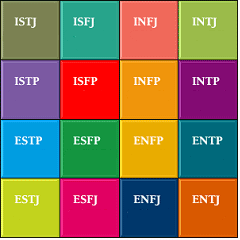
Looking at Myers-Briggs types typically associated with doctors, I found that INFJs, ISFJs and ESFJs are the most common. Obviously, they all have in common the FJ (not to say TPs, FPs, TJs couldn’t be doctors, though it might be harder for them.) This is interesting, because Feelers (F) are pretty subjective and use an emotionally-based approach to solve things. But when you figure in the sympathetic nature of the Feeler—as opposed to the objective, logical, calculating Thinking (T) person—it makes sense. Doctors want to help people; they are compassionate. The J for Judging is where we get the typical traits associated with Type A. Checking off to-do lists, being organized, planning their lives and schedules. You can see how this would mesh well with a doctor.

So while I was surfing the Internet, I found a cool website about the Myers-Briggs personality types under stress you can access here. I'd read up on how all the types might likely respond to stress, but keep in mind the ones ending in FJ in particular. College is definitely a stressful time for students, and Chandra’s intellect won’t protect her from it, but might, in fact, exacerbate it.

Now a word about her big change of heart. You mentioned in our emails back and forth to one another that Chandra would have many interactions with this Christian man who she doesn’t quite know what to make of. In order for her to accept a new philosophy of life that includes Christ, these interactions will really have to be bone jarring.

Her upbringing with a father that heads up a hate group almost makes her like someone from a cult background. Cults have a psychological power about them that truly does include brainwashing and other methods of mind control that are used for a reason: they absolutely work.

But our God can work miracles, so it’s not a stretch for people to break free from that sort of bondage. The key will be to make these interactions with this Christian powerfully disturbing for your protagonist. She needs to ruminate and ponder about them. Question why he doesn’t fit with her perception or with what she’s been told. Maybe even question the higher-ups involved in the hate group, seriously-rocking-her-world type stuff.

Perhaps each interaction could go against the grain of some inherent lie she was led to believe about Christians. Just peel them back like the layers of an onion, one-by-one until she’s left with the barest, rawest truth: Christians—at least the one Christian—aren’t at all like she thought. This will be a true discovery for her, one that will surprise her even as she comes to grip with the new reality. You could use her personality type to your advantage. Have her crisis of belief—whether she’s going to embrace Christianity or not—hinge on whether she has to actually act to save this Christian man’s life. Her doctor’s instincts would be engaged, but her heart and emotions would also be engaged. If she saves him, she goes against what she’s been taught. If she lets him die, she risks never learning the truth of the life he lives. And it’s a great juxtaposition against her career values to never cause another harm (or let them be harmed if she could prevent it). It could be a wonderful climactic ending (in my opinion, of course!).

But just to clarify, all my assessments are just my own opinions, based on my years of study and practice. Hopefully this has been somewhat helpful, giving you a look into traits of doctors that can work for you or against you. :)

As always, questions or additional comments welcome below.


This service is for fictional characters only, so any resemblance to real life examples is entirely coincidental. Any other fictional character assessment questions can be directed to charactertherapist@hotmail.com.


Q4U: Do you do the Myers-Briggs type indicator for any of your characters? If so, have you found out anything useful about your character you didn’t previously know?

Wordle: signature

Monday, December 28, 2009

Got Questions?

Now's the time to ask them. The queue is fairly low for character therapy questions, so send them in if you've been thinking about it. You can see examples of the types of "assessments" I do if you look in my blog archives for Treatment Tuesday posts. It's a lot of fun for me to do and it seems most of the authors have fun with it, too.

Just because you've written in once doesn't mean you don't have other characters stewing on the backburner. I'd love to help out if I can, since I'm very appreciative of those who have already written in. :)

So what are you waiting for? Send those character/plot sketches in!


Wordle: signature

Tuesday, December 22, 2009

Treatment Tuesday - Down Syndrome & Foster Care

This week's assessment comes from Diana. She was preparing a Young Adult book for NaNo (yes, the queue for character therapy was a bit long) and ran this scenario by me.

She's got a 16-year-old boy in foster care in North Carolina for the past 3 years with his sister, who has Down Syndrome. They are there because they have had abusive parents. She was trying to decide whether to make the sister older or younger. If the sister were 18, she'd be old enough to be out of foster care but not capable of living on her own. Diana wondered if the girl could continue to live in foster care as a special needs case if the parents opted to continue fostering her. Would the financial support the family received transfer to social security of some kind?

Then she wanted to know the following: What kind of questions or fears would a very devoted brother have regarding his sister? How would the brother view potential relationships with girls? What kind of self-doubts, fears, anger, emotional blocks, etc., would he feel in having gone through broken trust with his father?

So part of Diana's question is therapeutic stuff, but part is logistics. Due to having been the foster care coordinator for a foster family agency, I knew a bit about the logistical part, too.

If the girl was in foster care, she would still move into a supported living type situation if she is capable of functioning on her own (and if the parents wanted this, perhaps I should state). There are some special foster care considerations where they will take a 19 year old. and if she stayed on somehow as special needs, the foster parents would get paid as usual, but I think it's more likely she'd move into supported living.

Most people with
Down Syndrome are fairly high functioning, so they can hold down jobs with job coaches and live on their own if they don't have some concurrent medical problems (and some get 24-hour care while living alone, so even that's not a deal breaker). I'm not sure about North Carolina, but California has programs to help pay for rent, utilities and the like so they can be as independent as they can be. Essentially the money that was going to her foster parents would be transferred to helping pay her bills. It's truly a wonderful program for these individuals.

On to the more therapeutic angle...

From a story plot line, if you're wanting to give the brother some fears, I'd definitely put her into this supported living situation. They have workers to drive them to meetings and grocery stores and the appointments. Usually this type service is coordinated throu
gh the local regional center who contracts out to an organization to do the actual ground-level care (like the non-profit I worked for).

This scenario would give the brother PLENTY of worries about her. I'd think he'd want her to be able to stand on her own two feet and succeed with as much quality of life as possible, but he'd be worried she might not do well on her own, not being around family every day.
Younger siblings often take on the role of Protector when an older sibling has some sort of disability. They take up for them in school, that sort of thing. Depending on how you've written his personality, he might be listless not having an outlet to feel needed, or he might be one to party it up if he'd begrudgingly taken care of his sister up until then.

Since you were interested in how he might view potential relationships with girls...I've said this before and will reiterate it here again. The best predictor of future behavior is past behavior. This can be a mantra of sorts to remember. This guy is going to do what comes best to him to do: protect. It might mean he'll meet a girl and absolutely smother her by being too attentive or too concerned for her welfare. It might mean he'll lose a girl or two until he strikes a balance and remembers not every girl is like his sister.

What might be really interesting is to pair him with or introduce him to a girl with some sort of high-functioning disability that always makes him come up short and surprised, because he'd be expecting her to fail or comparing her to his sister. Disabilities, even within the same type, can be so different person-to-person. You never want to develop some rule of thumb when dealing with people with disabilities because there isn't a single mold they'll all fit into.

Another thing to consider is the young man's feelings about relationships, for two reasons. 1) If he came from an abusive home, then he might see marriage as a breeding ground for discontent. "Look at what it did to my father. No thanks." If your hero's not a Christian initially, or doesn't place a high degree of respect on the institution of marriage itself, then he might want to steer clear. Abusive parents can really do numbers on their children.

But there's another reason he might be reluctant to enter into a relationship. 2) He might feel he can't hang his sister out "to dry" while he goes off to enjoy a regular life. Or he might keep girls at arm's length so things can't get serious. He could even think it's not fair for him to get this privilege when his sister can't, although more and more people with developmental disabilities are forming romantic partnerships and marriages, which is a plot twist to think about. That could be a potential growth area for him, to come to the realization that his sister can share her life with someone...and then having to give over the "reigns" (so to speak) to this other guy. Oooo--I like that if I do say so myself! Then he'd be pushed from his role as protector, usurped by someone who loves her even more. And how sweet could that be?

As to his relationship with his father and the broken trust there, he's going to feel anger. Especially if the father abused his sister, too. She's more defenseless, and he'd probably feel anger at himself for not having protected her better. There'd be some guilt, likely. Maybe some self-doubt as to whether he can really come through for her when she needs him, since he was unable to stand up to their father. I would think he'd do anything in his power to keep from having to see the father (no supervised or unsupervised visits, no accepting gifts from him, nothing like that), but it depends on how you've written the abuse and how it played out on the page, I suppose.

Feel free to leave questions in the comment section. I'd love to talk this out further if need be. Very interesting YA, Diana!

This service is for fictional characters only, so any resemblance to real life examples is entirely coincidental. Any other fictional character assessment questions can be directed to charactertherapist@hotmail.com.

Wordle: signature

Thursday, December 17, 2009

T3 - Obsessive-Compulsive Personality Disorder

For our last installment in the Personality Disorder series, I've picked one of my favorites. OCPD shares many features of OCD (Obsessive-Compulsive Disorder), but it's deeper, heavier. For example, if neurosis was water and a person was a sponge, a person with OCPD would be completely saturated while a person with OCD would just be wet.

People with OCPD are preoccupied with three things: 1) orderliness, 2) perfectionism, and 3) mental/interpersonal control. They obsess over these things at the expense of flexibility and efficiency. In other words, they get so tied down to washing the deck that they never set sail. In layman's terms, this person is "anal," or "Type A."

There are 8 diagnostic criteria for this disorder, and a person only has to have 4 of them to qualify. So let's get started.

1) They attempt to maintain a sense of control through painstaking attention to rules, trivial details, procedures, lists, schedules or form to the extent that the point of the major activity is lost. They can be repetitive and repeatedly check for mistakes, completely oblivious to how they are holding everyone up in the ATM line behind them. They often don't allocate their time well, and the self-imposed high standards of performance cause significant distress in these people.

2) They may become so involved in making every detail of a project perfect that they often don't finish the project. An OCPD novelist would just never make it. They'd always want to go back and re-write scenes over and over, to the point that they never finish a book. While they are obsessing over one area in their life like this, the other areas most definitely suffer.

3) They display excessive devotion to work and productivity, to the exclusion of friends and leisure activities. And this isn't because they can't pay their rent and need the money. They may put off vacations for years, and when they do take one, they might be extremely uncomfortable unless they took something along to work on. Often, household chores are concentrated on, like excessive cleaning and squeaky clean floors. If they do spend time with friends, likely it's in group activities (i.e. sports). Hobbies and recreational activities are approached just as seriously as work. The emphasis is on performance. They also turn play into a structured (and sometimes unhealthy) activity...like forcing an infant to put the graduated rings on the post in the right order.

4) They may be excessively conscientious, scrupulous and inflexible about matters of morality, ethics or values. Many insist on complete and literal rule compliance, with absolutely no "rule bending" for any reason. They may rigidly defer to any authority figure. This is the "no exceptions" person.

5) They may be unable to discard worn-out or worthless objects, even when they have no sentimental value. This is your pack rat. They don't want to throw anything away because it might be wasteful, or worse, they think they might need it later.

6) They are reluctant to delegate tasks or to work with others. Their belief is that no one can do it as right as they can. They often give very detailed instructions on how things should be done if they are forced to work with people (i.e., like there's only one way to wash dishes or fold towels). They will be surprised or irritated if someone were to challenge them or suggest an alternative way. They might even reject offers of help when they are behind, preferring to do it themselves to make sure it's done right.

7) They may be miserly and stingy, maintaining a standard of living well below what they can afford, because they want to control their spending to provide for future catastrophes. While this might not sound bad--everyone should save up money, right?--these people take it to the extreme.

8) They may be rigid and stubborn. They might plan ahead in meticulous detail and be unwilling to consider any changes. They may not go along with anyone else's ideas because things have to be done their way. They might even be able to realize that compromise might be in their best interest (as far as getting along with others), but they may simply refuse "out of principal."

For fun, I'll give you an example of an OCPD in action, to show you how extreme this disorder can be. Say a guy with OCPD picks up a date at her house even though he thinks he should be at the office finishing that proposal. When they get to the car, she opens her door and gets in, and he's irritated because clearly, the man is supposed to open the door for the female. It's an unspoken rule. Once inside the car, maybe he notices that she smells faintly of cigarettes. His first thought is that she's underaged and he might should call the cops. Then he wonders at the tar coating her lungs and whether the smell will infiltrate is newly-cleaned upholstery.

Once inside the restaurant, they are seated and given a few seconds to look over the menu. He notices a speck of dried food on his and begins to pick at it. After a few minutes, the waitress comes back for their orders, but he's forgotten to actually look at the menu while he's been picking at the food. He noticed several more water spots on his silverware by then, too, and took his napkin to buff them off. He orders his food, and when it comes out, it's not as he asked. The salad dressing isn't on the side, the bread clearly is sourdough, not French, and his steak is medium rare, not medium. The waitress only comes back once to ask if they needed refills, and at the time, he didn't. But when he does, he never sees her. He flecks off the chives on his bake potato that he'd asked to be left off, and he lines them up along the perimeter of his plate.

Instead of getting angry at the poor service, he mulls over how much of a tip to leave. He misses just about everything his date said while he figures this amount up in his mind. Then he goes through his list of credit cards, determining which he needs to utilize. Back in the car, he persists in going 55 miles an hour even though they are running a tad late and will likely miss the beginning of the movie if he doesn't step on it a tad. At the theater, he insists on tearing his own ticket stub, because clearly the attendant on duty will rip it too fast and cause it to tear unevenly. He disdainfully picks the only row that doesn't have leftover trash in it, irritated at how people can't follow instructions to throw trash in properly marked receptacles. During the movie, a person's phone goes off and he nearly gets up to report it to the theater officials.

Do you get an idea of the neurosis this individual has? I mean, WAY over the top.

This disorder is diagnosed about twice as often in males as it is in females and it's only found in about 1% of the general population. However, around 3-10% of inpatient individuals have this personality disorder. It's important to realize that some OCPD traits--in moderation--might be adaptive, especially in situations where high performance is rewarded. The traits have to be inflexible, maladaptive, persisting and causing significant functional impairment for them to constitute OCPD. In my above example, the guy would have to be aware of how he puts off his date and everyone else, and not really sure what to do to stop it. I'm trying to say that they don't enjoy their lives this way.

Q4U: Now for truth-telling time. Anyone out there have even one or two of these symptoms? I know I do (like the ticket stub tearing thing...I didn't just make that up). :) Want to share your Type A neurosis?


Wordle: signature

Tuesday, December 15, 2009

Treatment Tuesday - A Teen Mother's "Brother"

We’ve got our first secondary character assessment on The Character therapist, people! I nearly clapped when Steena from Chocolate Reality emailed me back and confirmed that Rhonda* is indeed secondary in this spiritual thriller! But I gotta tell you…she’s WAY interesting. Read on.

Rhonda is a 46-year-old cookbook author. Never married, although she had one child, Ned*, when she was 16 years old who was the result of a rape. Her parents, local ministers, “covered up” the pregnancy by telling the congregation that Rhonda’s mother was pregnant. So Rhonda’s little boy becomes her “brother.” Ned—30 by the time the book starts—is the main character. Rhonda was raped by Stan*, a boy 4 years older than her whose alcoholic father murdered his mother. Rhonda’s family took him in, and he had been Rhonda’s hero. Now, at 50 years old, he’s the “bad guy,” playing head games with Rhonda and using his sphere of influence to manipulate her. Rhonda suffers panic attacks when she sees Stan and has an intense fear of him.

* Names have been changed to protect the fictional.

Steena has re-written Rhonda many times, something we can all relate to. When she started, she thought Rhonda was 30 in her head, but when she discovered Rhonda’s relationship to Ned, the main character (i.e., when Steena realized Ned was Rhonda’s son), Steena needed her to be older, but not “too old.” (Steena, by any chance are you a Pantster?)

Steena wants to know how she can make Rhonda’s reactions to the rapist and her “brother”/son be more realistic. Also, she wants more consistency with Rhonda at her current age of 46.

Let's start with young Rhonda. At the tender age of 16, she gets raped...for many women, their worst nightmare. But she wasn't raped by a stranger. She was violated by someone she knew; worse, someone she looked up to. Then, just as the initial shock wears off, she misses her monthly period and then her body begins to change, from that of a youth to a soon-to-be-mother. Her nightmare doesn't end, but now includes a 9-month gestation of a child conceived in the worst way possible.

Being raped is a traumatic and shaming thing, but Rhonda's is even more so because the ramifications of her rape--a child--are now being "covered up." Francine Rivers wrote an excellent book about a woman who carries her baby to term after being raped. It's called The Atonement Child. So good, and it gives some ideas of how Rhonda might feel, even though the heroine is older in Francine's book.

Depending on how Rhonda handles stress, her response could be very different. But I imagine that any young teen faced with the difficulty of raising a child she hadn't wanted, conceived in an act of violence with someone she probably thought she could trust, would feel some relief at her parents stepping in to help take care of the child. She likely doesn't know how to feed a baby or change diapers or deal with cholic or burp or bathe a baby. She's really just a child herself. With that in mind, it's feasible that she could slip right into her normal teenage role, but things wouldn't be business as usual.

Why? Because she gave birth. Any female who's ever sat on that table, legs splayed wide, to bring life into this world, knows the other-worldly connection a woman can have with this tiny infant that she's never met. A 16 year old might not fully grasp all the significance in the way of say, a 26-year-old, but she's certainly old enough to feel a bond. I imagine her being in awe of this child she carried, perhaps even scared to hold him, thinking she's not experienced enough or might hurt him. She might even be proud of how beautiful he is as she lets her mother cradle him in her more matronly arms.

As she watches him grow from her "sisterly" role, I imagine she looks on with more interest than average as Ned learns to crawl, walk, potty train, and ride a bike. Depending on how the parents deal with this, it may or may not look odd. Many 16-year-old older siblings babysit and have a lot of involvement with younger siblings, so it's not a stretch, really, for any level of involvement she'd have. She could easily go in lieu of her parents to the school principal's office at 30 years old when her 14-year-old "brother" gets suspended. So lots to play with there, even if these interactions never make the book. They still make up Rhonda.

The older she gets, maybe the more she'd want to "claim" him, too. More life experiences = more confidence. Her parents might try to talk her out of it..."for the health and well-being of Ned." This could be a source of contention with her parents, for sure. But you mention that her parents die (or at least her mother) and that Rhonda steps up to take care of Ned more, so it might be a very natural response for her to want to tell him. But I'd think as his mother, she'd also take into account how the revelation would affect him.

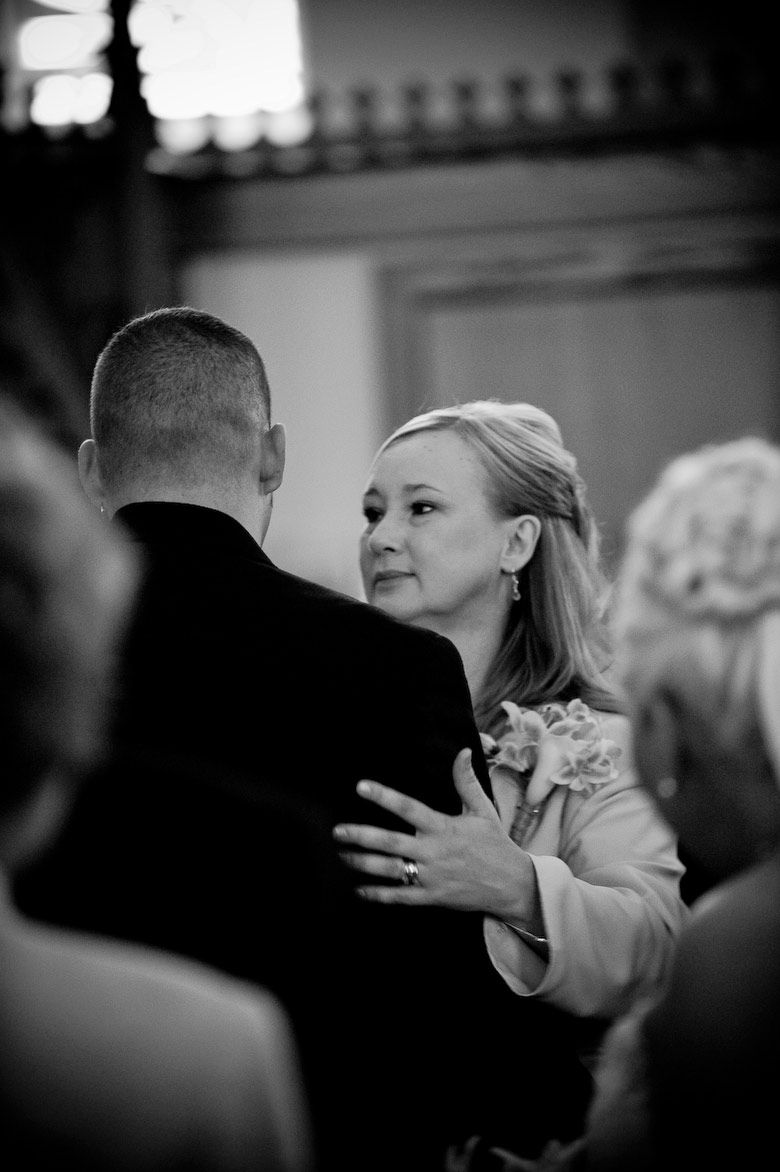
Oooo--total aside here, but one scene I'd just love to read...gosh! it'd be so poignant...is a scene where Ned gets married. Every mother has the right to sit at the front of the church while her offspring ties the knot, and I just wonder what Rhonda felt in her sisterly role relegated to a position other than her own? My own heart just about breaks thinking about that. And what about when she would get to dance with him? Oh...so sad.

But back to my assessment...ah, yes. The revelation. You mentioned in our emails that Ned experiences a heartbreaking loss of his family in a car crash. He gets mad at God, and turns his back on him, at which point lots of bad things happen in the town in which he is a pastor. Only once he starts to believe in God again does he learn the secret that Rhonda is his mother. Talk about PUNCH. Best-seller, Steena. Seriously gripping stuff.

I think it would be better on Ned to learn the truth in some sideways manner. I would think Rhonda wouldn't tell him due to everything else going on with him. If he truly leans on Rhonda for emotional and moral support, than her revelation would possibly devastate him. But if he kind of put two-and-two together on his own, I would think he'd be more likely to see past the 30-year lie and know his mother had lied to him with good reason, at least in her heart. (And no, I won't get into the debate about good lies v. bad ones, but feel free to do so in the comments section.)

One way I thought about doing this would be for Ned to have some contact with Stan. A cool twist could be some little-known fact about Stan, like a health deficit or allergy, also being present in Ned. Give them both an unlikely mannerism to boot and it wouldn't take a smart preacher-man to figure it out, especially given Rhonda's reactions to Stan, but it's just a suggestion.

So on to those reactions to Stan. Panic attacks would be a result of some post-traumatic stress Rhonda has regarding her rape. If you're wanting the man to be really mean, I'd have him play with her mind by sending her to the place where the rape happened. That would really do a doozie on poor Rhonda. (Aren't we authors mean?) People with PTSD will go to extreme lengths to avoid anything that reminds them of the trauma, including people, places and things. Extreme lengths. So this could garner Ned's attention.

Her fear isn't going to lessen because she gets older. The old adage of "time heals all wounds" just isn't true for everyone. The way you wrote Rhonda's initial meeting with Stan sounds like it's dead on. She's be beside herself, so it's very likely she'd let something slip, like the fact she had a baby, so kudos on that. But she's a MOMMA at heart. If Stan were to threaten Ned in any way...big Momma Bear would come roaring. I think it'd be a fantastic way to get Rhonda to face her fears of Stan.

Man, I want to read this book! Great job. Hopefully I've been of some help. As always, questions welcome in the comments section to continue the "session."

This service is for fictional characters only, so any resemblance to real life examples is entirely coincidental. Any other fictional character assessment questions can be directed to charactertherapist@hotmail.com.

Wordle: signature

Thursday, December 10, 2009

T3 - Schizotypal Personality Disorder

For our second to last installment in the Personality Disorder Parade, we're going to look at Schizotypal Personality Disorder. (It's pronounced skitso-TYPE-al for those who were wondering.)

Obviously, it shares a similar base word with the word schizophrenia. The Greek origin of "schizo" is "to split," and a person with Schizotypal PD experiences some of the same altered perceptions as someone with schizophrenia, just not usually for as long a duration.

The dominant feature of Schizotypal is a pattern of social and interpersonal deficits marked by acute discomfort with, and reduced capacity for, close relationships. They also have cognitive or perceptual disturbances and eccentricities of behavior. There are nine symptoms associated with this personality disorder, and a person has to have five or more of them to be diagnosed with it. So let's get started!

1) They often have ideas of reference, meaning that they'll interpret some casual event of happening as having particular meaning for specifically for them. (This is different from delusions of reference in which they hold the belief with delusional conviction.)

2) They may be superstitious of overly preoccupied with paranormal phenomena (and no cracks about me liking vampires, folks). Usually these preoccupations are outside the norms of their culture, like thinking they have special powers to read thoughts or some sort of sixth sense to see events before they happen. More commonly, the might believe in witches and aliens, focused on magic control and ritual. (They might think that because their spouse cooked spaghetti that night it was adirect result of them having thought only an hour or so ago that they would like spaghetti.)

3) They may have perceptual alterations, like hearing their name being murmured or sensing another person's presence. This can be a transient psychotic episode, but usually it only lasts a few minutes to a few hours, insufficient in duration to have full-blown Brief Psychotic Disorder or something else.

4) Their speech patterns might be unusual with how they phrase words or construct their sentences. It might be "loose"speech, where the thoughts just don't seem to go together, and it can be vague or chasing rabbits, but they don't actually come across as incoherent (where they string words together in no sense whatsoever--called word salad). These are the people that you sorta look at your friend after you hear them say something and go, "Huh?"

5) They are often suspicious and may have paranoid ideation, which means that think people are out to get them, or get the best of them, or undermining them. These are very cautious, distrustful people.

6) They often appear inappropriate and stiff because they usually can't use the full range of emotional interpersonal cues that are required for successful relationships.

7) They are often considered to be odd or eccentric because of unusual mannerisms and weird, unkempt manner of dressing. They don't follow the mold, and definitely march to their own drummer. They may pay very little attention to the usual social conventions of chatting over the water cooler at work, or happy hour banter. They usually don't look put together quite right.

8) They experience interpersonal relatedness as problematic and are uncomfortable relating to other people. They usually have no friends or confidants other than first-degree relatives.

9) They are often anxious in social situations, in particular those involving unfamiliar people. They honestly prefer to keep to themselves, because they don't have to worry about fitting in. this anxiety never really goes away, even after spending several hours in a situation, because their anxiety revolves around a suspiciousness of other peoples' motives.

You've got to consider a person's cultural background, in particular about religious beliefs and rituals. For example, a person into voodoo or speaking in tongues or the "evil eye" phenomenon, or sixth sense, shamanism, mind reading and magical beliefs...all to the uninformed outsider might look "crazy" or "odd," but for the person practicing them, not be eccentric at all.

People who develop this PD, commonly thought to be about 3% of the population, are usually solitary in childhood, with poor peer relationships, social anxiety and underachievement in school. They usually have bizarre fantasies and peculiar thoughts, which often serve to isolate them. They usually attract teasing.

People with this PD can go on to develop other disorders, namely schizophrenia or Delusional Disorder or some other similar type problems, but only a small percentage have this happen. Usually, the course of the disorder is pretty stable. Antipsychotics can help, as can talk therapy, but this is a long-term, chronic illness.

Q4U: Not to end on a bummer note, so let's have a discussion about how this type of person could really liven up a novel or movie. Do you have any examples from movies or books of someone who might fit this description? Think side-kicks and the like. I'll go first. In Failure to Launch, Zooey Deschanel played Kit, Sarah Jessica Parker's eccentric roommate. She dressed funny, usually brought the comic relief in any scene she was in, was obsessed with the bird outside the window, thinking it was there only to annoy just her. She might not have Schizotypal full-blown, but you get the idea. Who else?

Wordle: signature